Getting around Dubai is easy enough, but you can’t plan the city like a compact European centre. Dubai Marina is tens of kilometres from the old quarters, the sights are spread out, and “near the metro” can mean another twenty minutes on foot in the heat.
Over years of tours, concerts and guests’ trips, one lesson keeps repeating itself: the problem is rarely a lack of transport. It’s underestimating the last kilometre, the traffic and the time it takes to leave after an event. The metro, taxis and a car solve different problems. A good route uses them together.
Checked in October 2026. Fares and rules are set by the RTA and do change, so check the official site before a big trip.
What to choose: a quick table
| Situation | Best default | Keep in mind |
|---|---|---|
| One person, stops along the Red Line | Metro | The walk from the station to the entrance |
| Family of 3–4 | Taxi | Traffic and a child seat |
| Old Dubai | Metro + walking + abra | Heat and souk opening hours |
| Abu Dhabi, Al Ain, the east coast | Car or transfer | Intercity logistics |
| Concert or New Year | Metro + a walking plan | Road closures and taxi queues |
| Several distant stops in a day | Car with driver | Parking and waiting aren’t always included |
The metro: when it really works
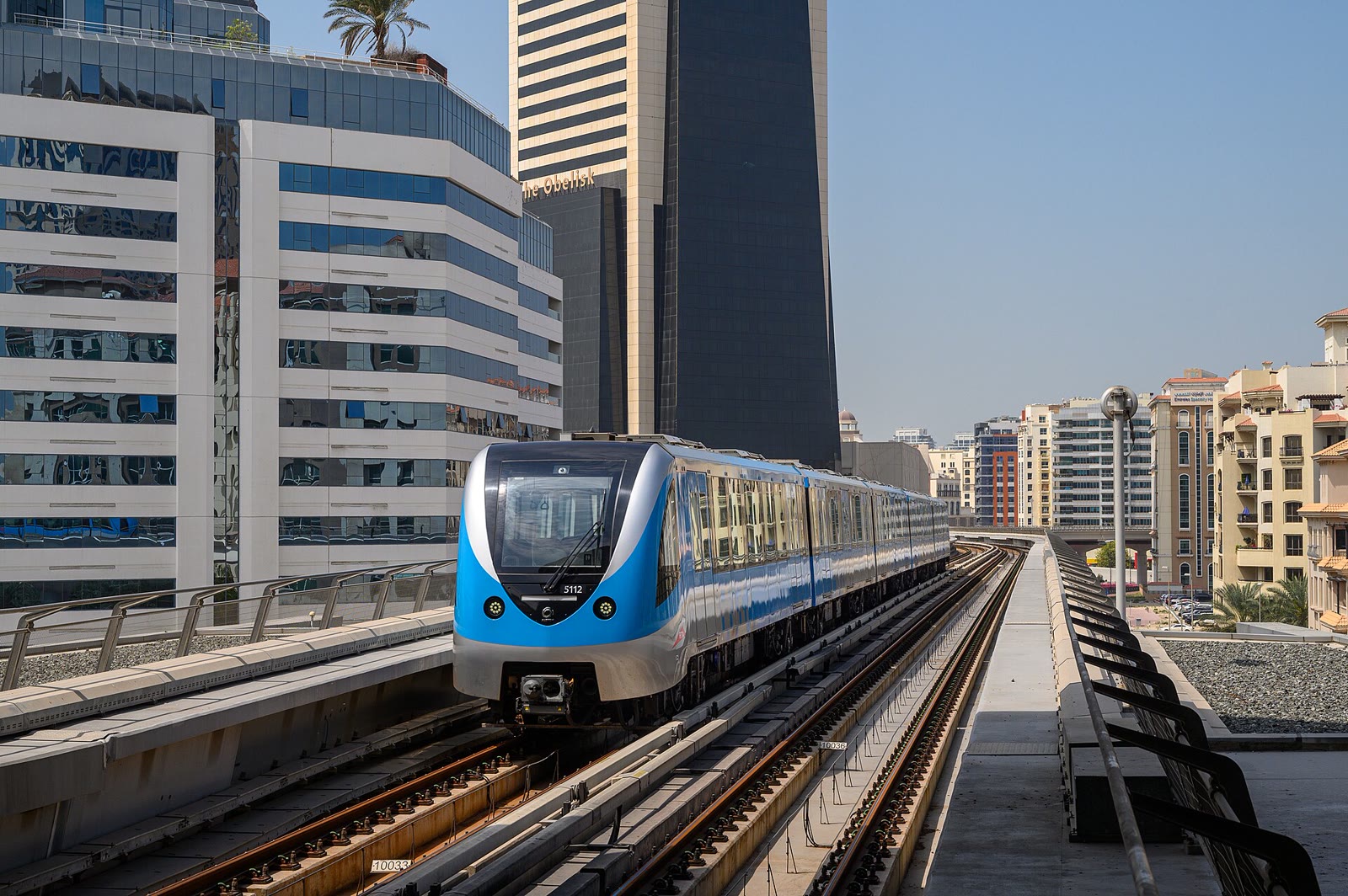
The metro links the airport, Deira, Bur Dubai, Downtown, Business Bay, Mall of the Emirates, Dubai Marina and the Expo area well. It’s especially useful at rush hour, when Sheikh Zayed Road is at a standstill and your destination is close to a station.
But the map creates the illusion that the whole city is on rails. Palm Jumeirah, the beach districts, many Jumeirah hotels, the art spaces of Al Quoz and the new residential areas all need a tram, a bus or a taxi on top.
How the nol card works
The nol card pays for the metro, buses, the tram and some water transport. Most tourists are best served by the Silver Card: according to the RTA it costs 25 AED, of which 19 AED stays on the card as credit. Fares are calculated by zone. You tap the card on the reader both when you enter and when you leave.
Watch your balance. The RTA requires a minimum of 7.50 AED to start a journey. If you change from the metro to a bus, do it within 30 minutes: then the system can combine the legs into one journey priced by the total number of zones.
Gold Class: is it worth paying more
Gold Class gives you a separate carriage on the metro and tram, at a higher fare. It isn’t a panoramic sightseeing train: at rush hour the carriage can be full too. It makes sense if you want a better chance of a seat and the difference in price doesn’t matter to you.
Taxis: convenient, with caveats
Official city taxis are easy to find at hotels, malls and attractions, and ride-hailing apps work too. For a family or a group of three or four, a taxi is often more sensible than four separate fares and a long walk from the metro.
The real variable isn’t the price per kilometre, it’s the traffic. In Downtown after the fountain show, at an arena after a concert or on New Year’s Eve, the car can take longer to reach you than the ride itself.
I remember one evening after a big concert: the walk to the taxi pick-up area turned out to be about four kilometres, and the wait for a car stretched to roughly an hour and a half. That isn’t everyday Dubai, but it’s a useful lesson: for a mass event, decide in advance which station or hotel you’re prepared to walk to.
Travelling with children
Don’t rely on a promise that “there will be a child seat”. Give the child’s age, height and weight, ask for a photo of the type of seat, and check that it will be fitted before the car arrives.
I once booked a transfer for guests to the cruise terminal and went over the child seat details several times. The driver arrived with the seat but didn’t know how to fit it. Since then I check not whether the seat is in the boot, but whether the company can actually use it safely.
For a short everyday ride, an app may offer a child-seat category, but availability varies. For the airport, a cruise, an early start or a tour, book in advance.
Renting a car
A car is useful if you’re staying far from the metro, driving to Hatta, Al Ain or Abu Dhabi, or covering several distant districts in a day. The roads are good, navigation works and petrol stations are convenient.
The difficulties are elsewhere:
- multi-lane interchanges mean you need to be in the right lane early;
- parking at popular places can be paid or full;
- at rush hour a short stretch becomes a long one;
- fines and toll gate charges come through the rental company;
- roads can close after concerts and during holidays.
If you don’t enjoy complicated interchanges, your holiday isn’t the best time to learn on Sheikh Zayed Road.
Old Dubai: the best mixed route
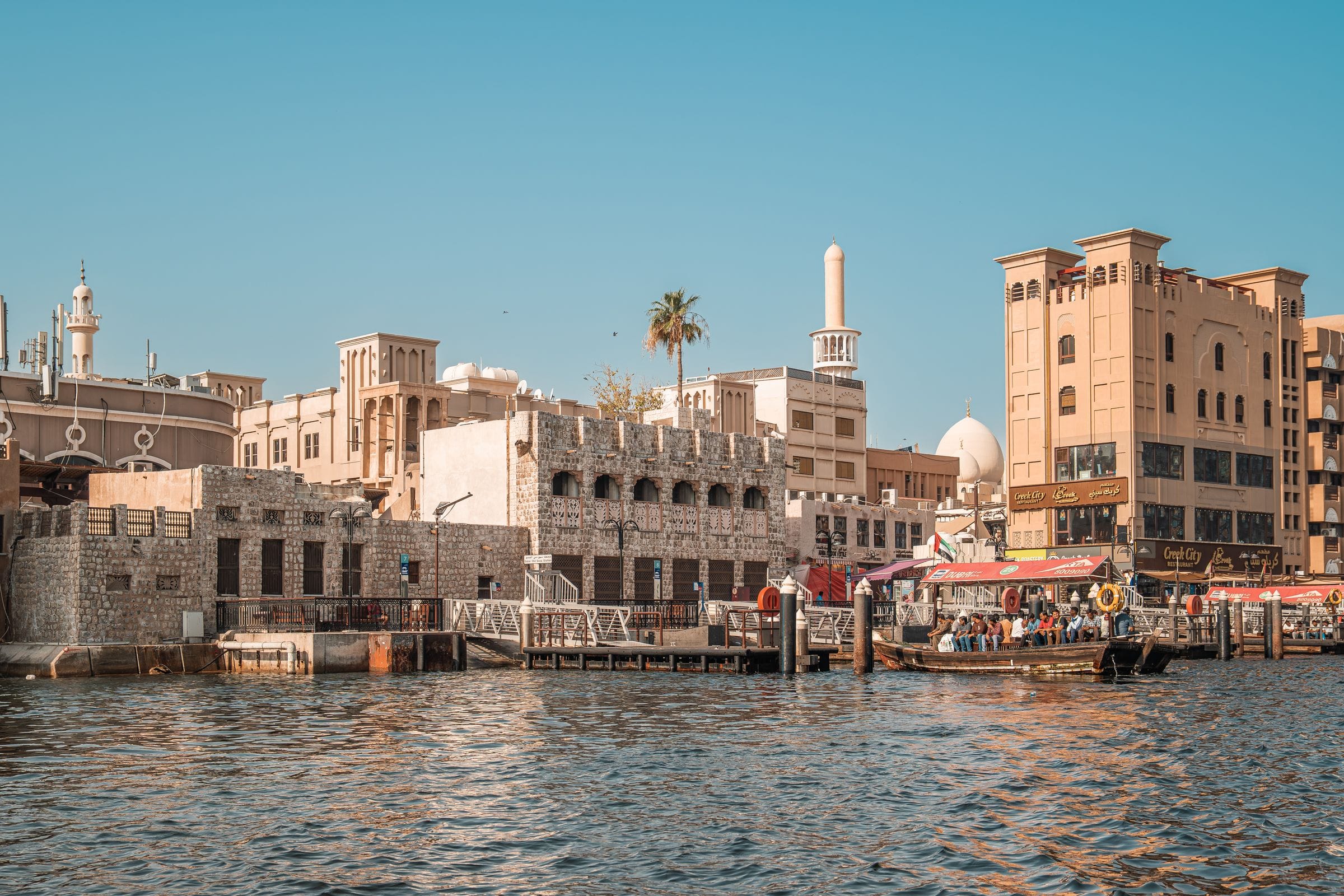
Historic Dubai is easy to see without a car: take the metro to Bur Dubai, walk through Al Fahidi, come out on the Creek, cross by abra and carry on through the Deira souks. You don’t have to go back for the car or hunt for parking in narrow streets.

In the old town, the right order of stops matters more than the speed between them.
In summer, add short breaks indoors in the air conditioning. In the cooler season, a full four-hour walk works well.
Concerts, New Year and big events
For an event, the question isn’t only “how do I get there”. It’s “how do I leave together with thousands of other people”. Check:
- until what time your line runs on that specific date;
- where the official taxi pick-up area is;
- which station stays open after the road closures;
- how far you’re prepared to walk;
- whether your driver is allowed to wait nearby.
On New Year’s Eve, Downtown can close to cars long before midnight. Booking a restaurant with a view and planning to drive up to it at 22:00 are two plans that don’t fit together.
Five common mistakes
- planning the day by straight-line distance;
- judging the walk to the metro from the map without allowing for the heat;
- putting the Marina, Old Dubai and Abu Dhabi into one day;
- calling a taxi after the encore along with the whole stadium;
- booking a transfer with a child without checking the seat.
My advice
First decide on the stops for the day, then choose the transport, not the other way round. Sometimes the metro saves an hour, sometimes a car spares a family three changes, and sometimes the best route is to walk a block and cross the Creek by abra in a few minutes.
Send me the area of your hotel and the list of places you want to see. I’ll help you cut out unnecessary journeys and tell you where you need a driver and where one would just be waiting for you in a car park.
If you want to see the Creek, the souks and Al Fahidi without parking headaches, have a look at my Old Dubai tour. For a trip of several days, my ready-made plan for Dubai in 3 days will help too.
Sources
Practical answers
Frequently asked questions
Which nol card should a tourist buy in Dubai?
For several days of regular travel, the anonymous Silver Card is usually the easiest: 25 AED including 19 AED of credit. For just one or two rides, a Red Ticket can be enough.
Can I tap my bank card at the Dubai Metro gates?
The gates work with nol. You can buy or top up a nol card with a bank card at machines and in the apps, but you pass the gate with the nol card or a supported virtual nol, not with your bank card.
Is the Dubai Metro faster than a taxi?
Along the Red Line at rush hour the metro is more predictable. For areas far from a station, for families or for several people travelling together, a taxi is often more convenient.
Do Dubai taxis have child seats?
Not by default. For a small child, book a suitable seat in advance through the app or a transfer company and confirm the age, weight and that the seat will be fitted before pickup.
Should I rent a car in Dubai?
Yes if you plan trips outside Dubai and are used to multi-lane highways. For the central districts, parking and traffic can cancel out the benefit.