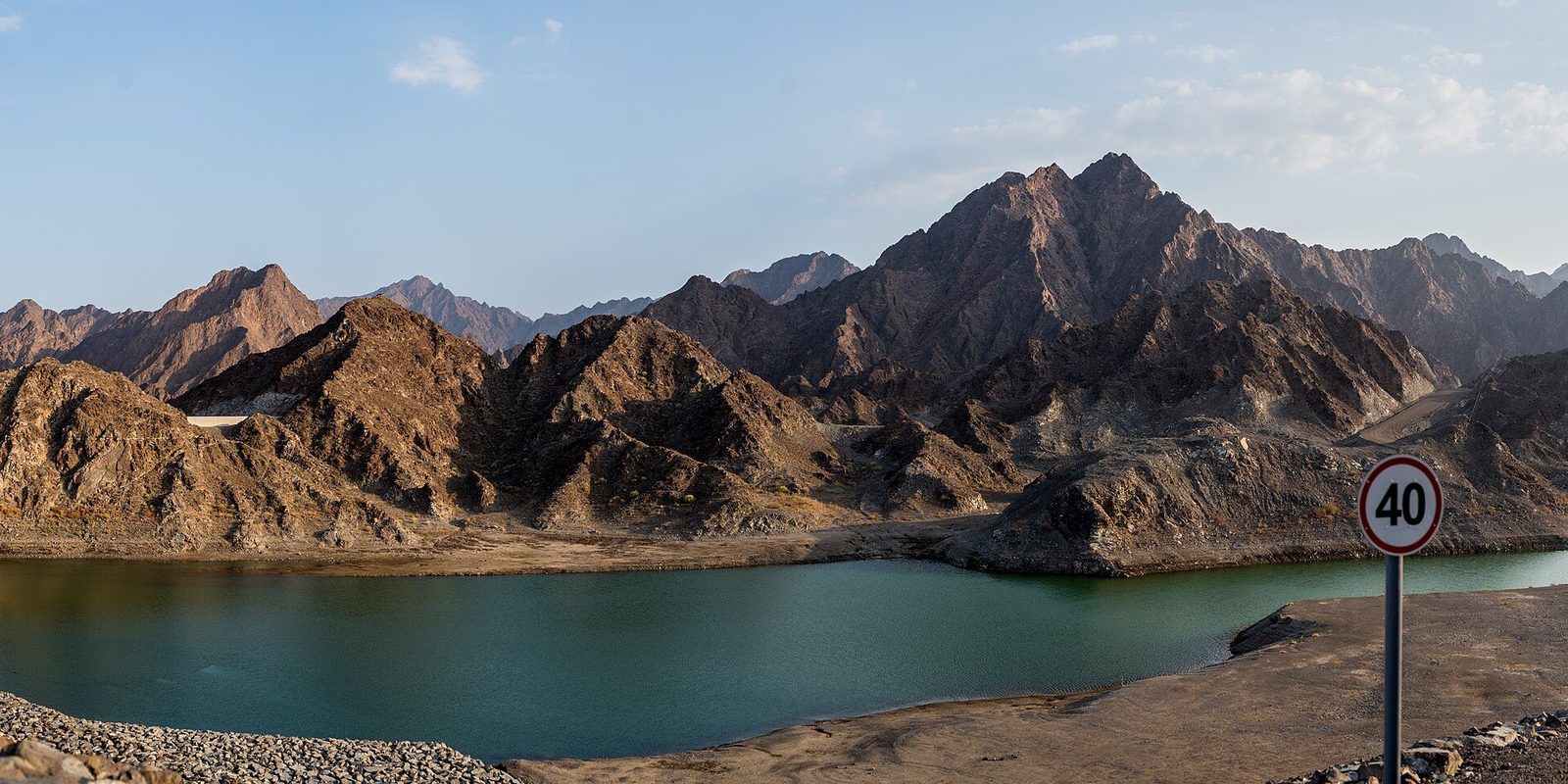
Hatta is mountains, turquoise water and an old village an hour and a half from the skyscrapers. Formally it’s still Dubai: an exclave of the emirate in the Hajar Mountains by the border with Oman. But it feels like a different country: cooler air, quiet, brown rock all around, and date gardens and a 19th-century fort instead of malls.
Dubai residents come here for the weekend: to kayak, hike a trail or spend a night camping. Visitors usually don’t know about Hatta. Below: how to get there, what you can fit into a day and when to go so that everything is open.
In short
| Question | Answer |
|---|---|
| Where | Hajar Mountains, south-east of the emirate of Dubai, by the Oman border |
| Getting there | About 90 minutes by car; the H02 bus takes about an hour and a half |
| Time needed | A full day |
| Season | Almost everything runs from 1 October to 5 May |
| Who it suits | Active travellers, families, anyone who has already seen central Dubai |
| What to bring | Comfortable shoes, a hat, water, a change of clothes for kayaking |
Hatta Dam and kayaking
Hatta’s postcard view is the dam reservoir: turquoise water in a ring of dark mountains. Hatta Kayak operates on the water daily from 7:00 to 21:00.
What you can rent:
- Single kayak: one adult aged 16 or over, up to 110 kg.
- Double kayak: two adults and a child aged 2–4, up to 110 kg per person.
- Pedal boat: a single for ages 16 and up and up to 75 kg, or a double.
- Yellow boat: up to three adults and a child under 10.
- Donut boat: up to four adults and two children under 10.
Prices aren’t published on the official page. Bookings are made on hattakayak.com or by phone; in season and at weekends, book ahead.
The dam is now an energy site too. Above it DEWA built an upper reservoir with a 72-metre wall and a 1.2 km tunnel. It’s the Gulf’s first pumped-storage hydroelectric plant, at 250 MW: in the daytime solar power pumps water up, and at peak hours it falls back through the turbines. Testing began in January 2025.
Hatta Heritage Village
Hatta Heritage Village is a restored mountain village of about 30 buildings made of mud and straw. Entry is free, open 7:30–20:30.
What to see:
- The fort from 1896, built by Sheikh Maktoum bin Hasher Al Maktoum. Inside are a majlis, the ruler’s room and a weapons tower.
- Two watchtowers on the hills, built in 1888.
- The old mosque, about 200 years old.
- House museums: a traditional house, the house of folklore, the crafts house, and the palm house with a press for date syrup.
- The falaj, an old irrigation channel that still waters the palms.
There’s little shade here, only inside the houses. A hat is a must even in winter.
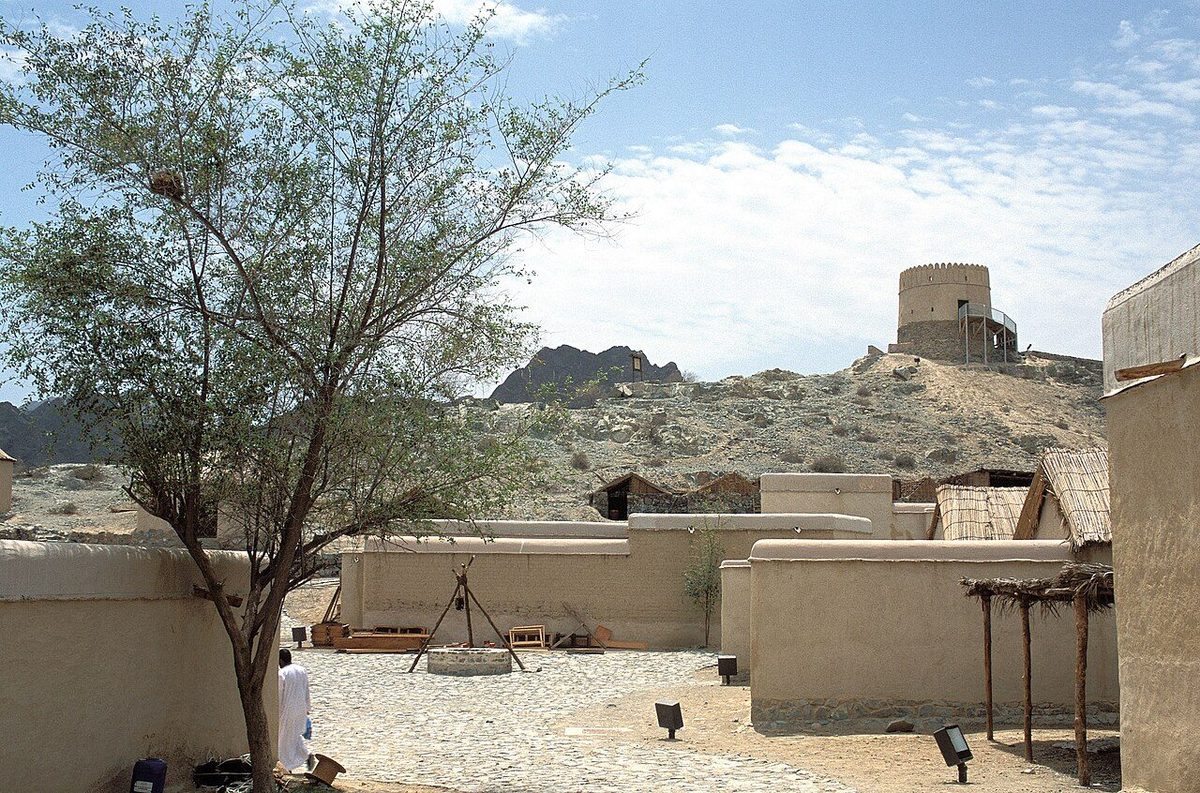
Hatta Heritage Village: mud houses, a courtyard and a watchtower on the hill. Photo: CultureArts, CC BY-SA 3.0, Wikimedia Commons
Wadi Hub, trails and mountain biking
Hatta Wadi Hub is an outdoor activity base on the Dubai–Hatta road, about 3 km from the roundabout by the fort. It has bike rental with protective gear, toilets and changing rooms, food trucks and barbecue gazebos. Activities are booked on site only. Most are for children aged 6 and up, and some of the extreme ones for 16 and up.
What’s there:
- Hiking and biking trails: five colour-coded routes totalling 32.6 km, from easy to hard.
- Hatta Outdoor: a ropes course, ziplines, a giant swing, archery, axe throwing, a climbing wall and trampolines.
- Kids activities: children’s quad bikes, swan boats, horse and pony rides.
The season is short: most activities run from 1 October to 5 May. They close when it rains; hiking, cycling and kayaking stay open, but at your own risk. Don’t drive near wadi beds in the rain: entering valleys during rain carries a 2,000 AED fine.
Getting there without a car
RTA runs the H02 express from the Dubai Mall bus station to Hatta bus station:
- about an hour and a half on the road;
- 25 AED one way, paid with a Nol card;
- buses run roughly every two hours from 7:00 to 19:00; the last bus back is at 19:00.
In Hatta itself a hop-on hop-off tourist bus loops between Wadi Hub, Hatta Hill Park, the dam and the heritage village every 30 minutes, at 2 AED per stop. Sources give different route numbers for it, so check the timetable in the RTA S’hail app on the day. More on the Nol card and getting around in my guide to Dubai public transport.
A plan for the day
A realistic in-season day by car:
- 7:30: leave Dubai. Early, to catch calm water and soft light.
- 9:00–10:15: the dam and a kayak. Cooler and quieter in the morning.
- 10:45–12:30: Wadi Hub. One or two activities or a short trail. Don’t try to do everything.
- 12:30–13:30: lunch at the Wadi Hub food trucks or a local restaurant.
- 14:00–15:30: the heritage village. The fort, the house museums, the falaj.
- 15:30–16:00: a viewpoint at Hatta Hill Park or by the dam.
- 16:00: head back, and you’re in Dubai by 17:30–18:00.
By bus the plan is similar, but take the first H02 at 7:00 and don’t miss the last bus back.
I started 1 January 2026 with exactly this trip. On the way into the mountains, look out for the gravel “ramps” beside the road: they’re runaway lanes for cars and lorries whose brakes fail on the descent, and the gravel kills their speed. And on the Hatta farms we found bananas. In mountains in the middle of the desert, that still surprises even me.
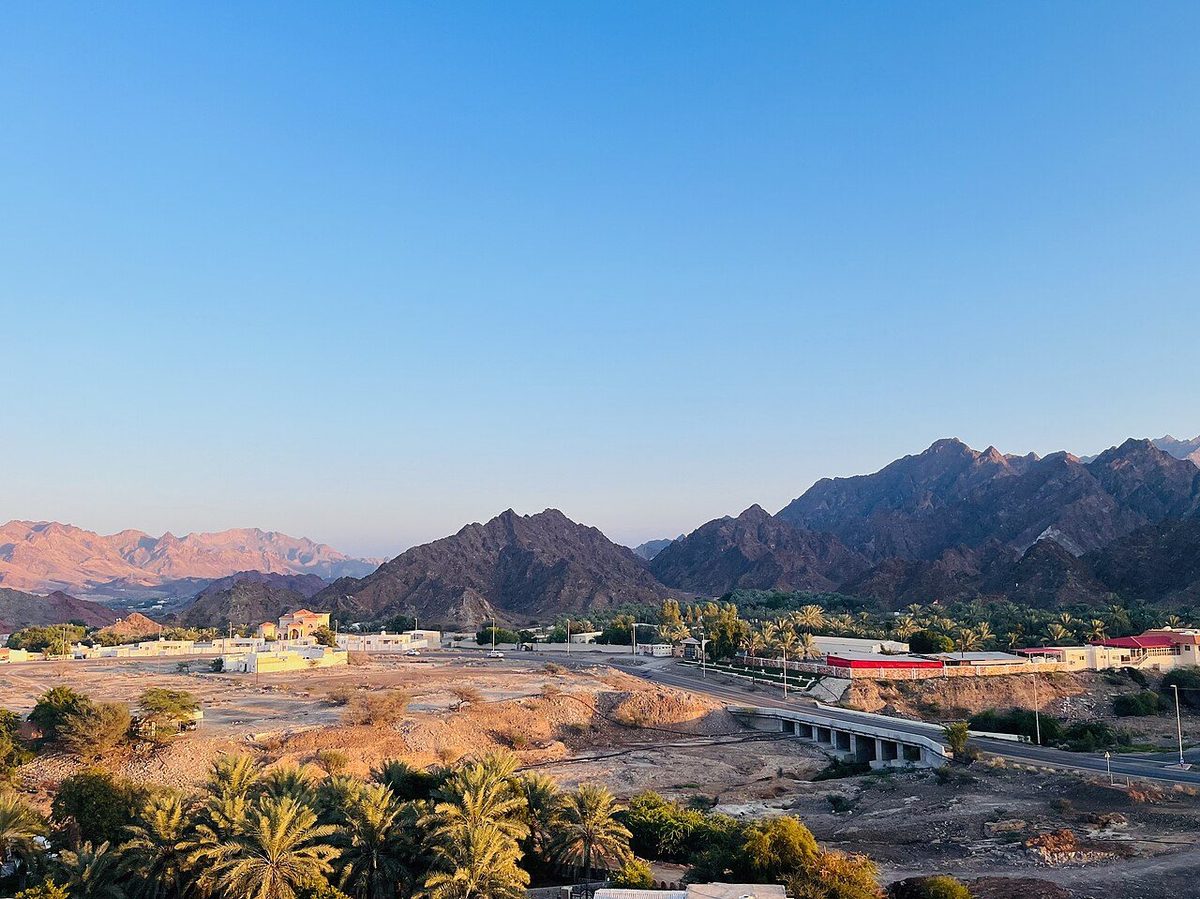
The Hatta valley: palm gardens, the road and the Hajar Mountains on the horizon. Photo: GMarcury, CC BY-SA 4.0, Wikimedia Commons
Common mistakes
- Going in summer. Most activities are closed and the mountains are hot.
- Planning Hatta as a half day. The round-trip drive alone is about three hours.
- Forgetting a change of clothes. You’ll want it after the kayak or the pedal boat.
- Putting Hatta and the east coast in the same day. They’re two different trips. If you want the sea and the mountains, see my route for Kalba and Khor Fakkan from Dubai.
How I can help
I run private trips with hotel pickup: I’ll collect you in the morning, plan the route around your children’s ages and your pace, book the kayaks, and we’ll be back in Dubai in the evening. It’s a private day we put together around you. Have a look at my tours, and if you’d rather have the desert than the mountains, the desert safari. Another calm nature trip is the Al Qudra Lakes.
Checked on 11 October 2026. Sources: Visit Hatta, Dubai Municipality, Dubai Media Office, RTA, Gulf News. Timetables and seasonal dates change, so check before you go.
Practical answers
Frequently asked questions
How do you get to Hatta from Dubai without a car?
Take the RTA H02 express from the Dubai Mall bus station: about an hour and a half, 25 AED, paid with a Nol card. In Hatta itself a circular tourist bus runs between the sights.
How long is the drive from Dubai to Hatta?
About 90 minutes. Visit Hatta says the fastest route is usually the E102 via Sharjah and Kalba.
Do you need a passport to go to Hatta?
Hatta is part of the emirate of Dubai, so no separate visa is needed. Take your passport or Emirates ID with you anyway.
When is the best time to visit Hatta?
From October to early May: most Wadi Hub activities run from 1 October to 5 May. In summer the mountains are very hot and some activities are closed.
How much does kayaking in Hatta cost?
The official Hatta Kayak page does not publish prices; bookings are made on hattakayak.com or by phone. Check the current price before you go.
Is Hatta good for small children?
Yes: a child aged 2–4 can ride in a double kayak, and there are family boats and kids activities. Most Wadi Hub adventures are for ages 6 and up, and some for 16 and up.

