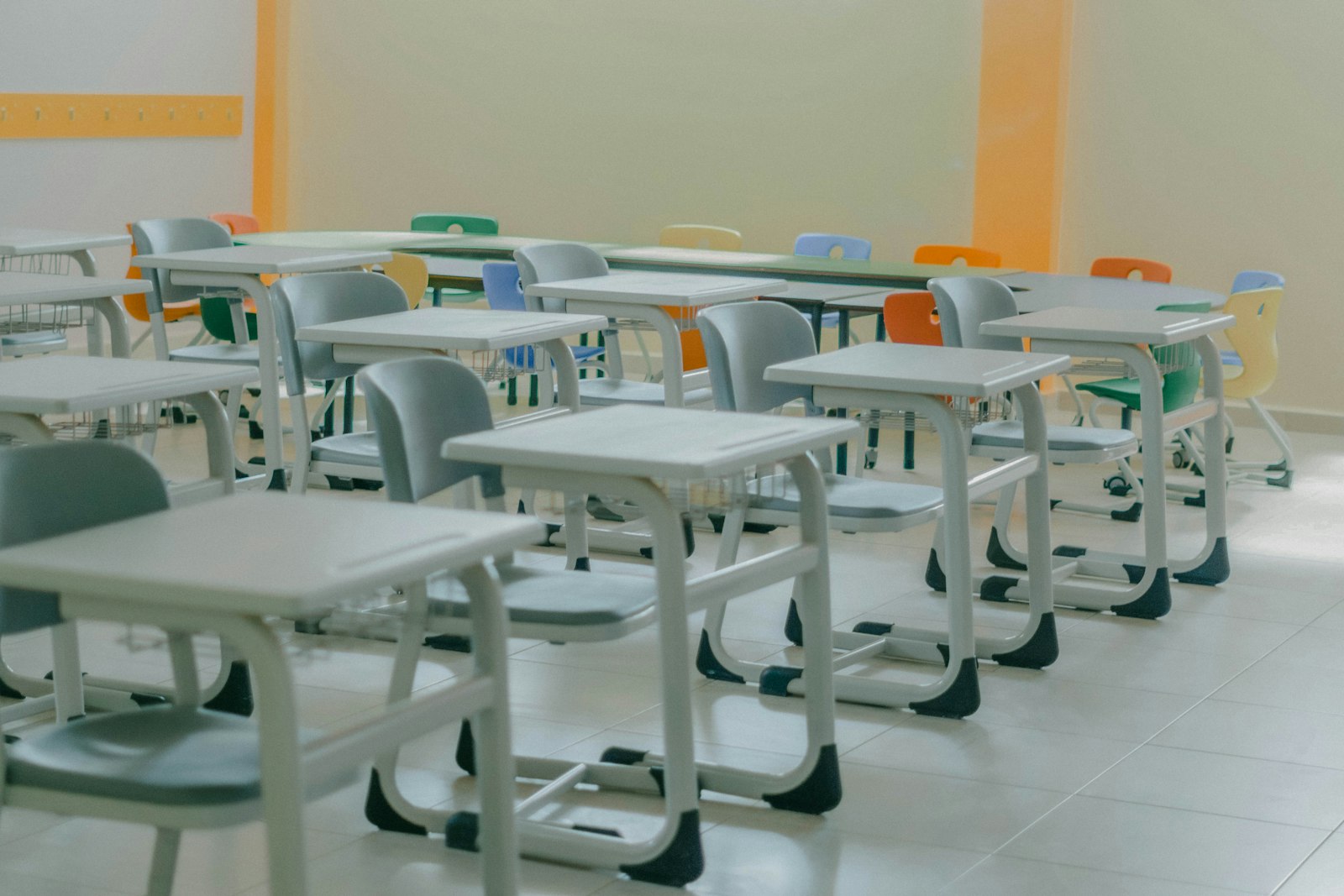
Choosing a school is the first step of any move with children, and it usually decides everything else: the neighbourhood, the flat, the commute. I’ve chosen a school in the UAE myself as a parent, and I know how easy it is to drown in ratings, acronyms and parent chats.
This article is a calm order of steps: which curricula exist, what there is for Russian-speaking children, how to read a KHDA rating, what tuition costs for 2026/27, when the school year starts and what you need for admission. All figures come from official sources and school websites as of October 2026.
Curriculum first, then the school
Dubai’s private schools are regulated by KHDA, the Knowledge and Human Development Authority. The emirate’s private schools offer 17 different curricula. According to KHDA data for 2024/25, the most popular are:
- British: 37% of students;
- Indian: 26%;
- American: 14%;
- IB (International Baccalaureate): 7%;
- British plus IB: another 4%.
Beyond these there are French lycées, German, Japanese and other curricula, and for Russian-speaking families, the Russian one.
I usually suggest settling the curriculum question before you look at specific schools. If you plan to stay in the UAE for a long time, or your child will later apply to university abroad, people look at British, IB or American schools. If keeping the Russian system and sitting Russian exams matters, the choice is much narrower.
The Russian school in Dubai and Abu Dhabi
Russian International School in Dubai is in Al Muhaisnah 4, in the east of the city. Teaching is in Russian, from KG1 to Grade 11. Students sit at least four exams at the end of Grade 9 and at least five at the end of Grade 11, with Russian and mathematics in the format of the Russian Unified State Exam (EGE). English and Arabic are part of the programme too.
The school’s KHDA rating is Good: that’s what the latest inspection report on the school’s website and its official fee sheet show.
Tuition fees for 2026/27, according to the school:
- KG1: 15,722 AED, KG2: 16,092 AED;
- Grades 1–8: from 21,372 to 24,197 AED;
- Grades 9–11: from 23,385 to 25,180 AED.
On top come mandatory fees (from 1,372 to 5,453 AED depending on the grade) and exam fees, and for new students a 500 AED application fee including assessment and a registration fee of 1,500 to 2,400 AED.
In Abu Dhabi, a Russian School linked to the Primakov Gymnasium has been open since 2022. If you’re considering the capital, check admission terms and fees directly with the school.
How to read a KHDA rating
The rating is the result of an inspection on a six-level scale: Outstanding, Very good, Good, Acceptable, Weak and Very weak. In the 2023/24 inspections, 23 Dubai schools were rated Outstanding. Most of them are British; there are also IB, American, Indian and two French schools.
What matters in 2026:
- Ratings haven’t been updated for a while. In 2025/26 KHDA carried out no full inspections, except at schools in their third year. Most schools currently hold ratings from previous years.
- Inspections are back from 2026/27, but not all of them are the same. A full inspection gives a new rating, while a monitoring visit only produces a report on specific topics and the rating stays as it was. Schools get no more than 24 hours notice.
- New schools have no rating. Schools in their first and second years don’t go through a full inspection. That doesn’t mean they’re bad: there’s simply no rating yet.
My advice: don’t stop at a single word like “Good” or “Very good”. Open the school’s full report on the KHDA website or app: it shows where the school is strong and where it’s weaker, for example in Arabic or in support for children who need extra help.
What school costs in Dubai in 2026/27
The big news of the year: tuition fees at Dubai private schools are not going up for the 2026/27 school year. KHDA confirmed the decision on 22 May 2026. A year earlier, schools could ask for an increase of no more than the education cost index, 2.35%.
Guide tuition fees per year:
| Segment | Example | Fee per year, AED |
|---|---|---|
| Affordable Indian schools rated Very good | GEMS Our Own English High School | from 7,858 (KG1) to 16,549 (Grade 12) |
| British schools rated Very good | The Winchester School | from 14,950 to 33,352 |
| Russian curriculum | Russian International School | from 15,722 to 25,180 |
| Schools rated Outstanding | from Lycée Français International Georges Pompidou to Dubai British School Jumeirah Park | from 29,488 to 111,799 |
The figures come from 2026 Gulf News and Khaleej Times reports based on KHDA data, and from the Russian school’s website. Check the exact fee for your child’s grade with the school itself.
Keep in mind that “fees frozen” doesn’t mean the bill stays the same. Each grade up usually costs more, and on top come the uniform, books, exams, activities and the bus. Every school has an official School Fees Fact Sheet in the KHDA format: it lists tuition, mandatory fees, optional services, the enrolment deposit (up to 10% of tuition at the Russian school) and any discounts, for example for a second and third child.
The school year and holidays
The first thing that surprises families from Russia and the former Soviet countries: there’s no First of September ceremony here. Back in autumn 2021 I wrote on my blog that Emirati children simply turn up for another school day at the end of August, with no assemblies or speeches. That’s still how it is.
Most Dubai schools follow a calendar that starts in September. For 2026/27:
- start: 31 August 2026;
- winter break: 14 December 2026 to 4 January 2027;
- spring break: 5 to 12 April 2027;
- end: 2 July 2027.
Indian, Pakistani and Japanese schools start the school year in April and have two months off in summer. Each school’s own calendar can differ slightly, so check travel dates against its schedule.
In spring 2026, against the background of events in the region, Dubai private schools switched to distance learning for a few weeks. By May, according to the Dubai authorities, more than 95% of students were back in class. In my memory it wasn’t the first time: in March 2020 I told my followers how UAE schools moved online within a few days because of the coronavirus. So when choosing a school, I’d also ask how its online learning works.
Age, documents and tests
From 2026/27, schools with a September start count age as of 31 December of the year of entry:
- Pre-KG / FS1: 3 years;
- KG1 / FS2: 4 years;
- KG2 / Year 1: 5 years;
- Grade 1 / Year 2: 6 years.
For schools with an April start, age is counted as of 31 March. The rules apply to children registered in the KHDA system for the first time; children already at school in Dubai are not affected. A child arriving from abroad is placed according to the last grade completed, once their school documents are recognised.
What schools usually ask for at admission, using the Russian school’s list as an example: the child’s and a parent’s Emirates ID and passports, a birth certificate with translation, and a vaccination record in English. For Grades 2–11, a report card or certificate translated into English or Arabic and attested in the country you’re coming from, including by the UAE embassy; for Grades 10–11, also by the Ministry of Foreign Affairs office in Dubai. Attestation takes time, so start before you move. The Emirates ID comes with the residence visa: see my article on the UAE residence visa.
Schools often run an assessment or an interview: at the Russian school, the test is part of the 500 AED application. At popular schools, especially in the younger grades, places run out early, so apply to two or three schools at once.
The school bus and the commute
The school bus is a separate paid service, and the price depends on the area. At the Russian school, for example, the bus cost from 10,230 to 17,830 AED a year in 2024/25. The school’s routes run from Mirdif, JVC, Dubai Marina, JBR, Downtown, Business Bay, Dubai Hills and other areas, as well as from Sharjah.
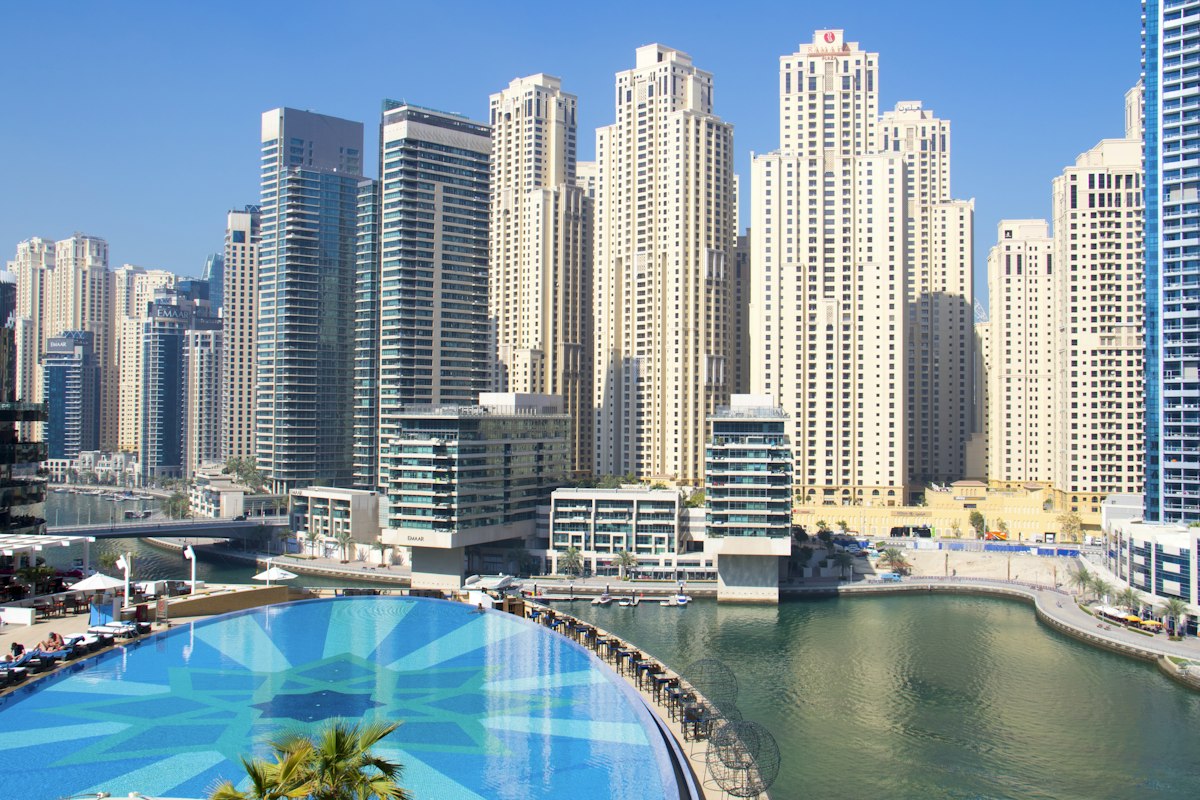
Dubai Marina and JBR are popular places to live, but a school on the other side of the city can be a long drive in the morning traffic. Photo: Nick Fewings, Unsplash.
The main rule I repeat to everyone I know: school first, then the flat. At rush hour, a drive across the city can take far longer than the map shows in the evening. More on neighbourhoods in my article on the best areas to live in Dubai.
Abu Dhabi: its own regulator, ADEK
In Abu Dhabi, private schools are regulated not by KHDA but by ADEK, the emirate’s Department of Education and Knowledge. Inspections there run under the Irtiqa’a programme with the same six-level scale, from Outstanding to Very weak. In recent years permitted fee increases there have been based on a cost index and the school’s rating, so the capital has its own rates and rules. If you’re choosing between Dubai and Abu Dhabi, compare schools on the ADEK website.
A scouting week: how I’d plan it
If you’re coming to look at Dubai before a move, a week could look like this:
- Before the trip: choose the curriculum and shortlist 5–6 schools by rating and fees on the KHDA website. Write to the schools and ask for a tour on specific days.
- Days 1–3: two schools a day, in the morning while lessons are on. In between, the neighbourhoods nearby.
- Day 4: test the drive from the areas you liked to the school at morning rush hour.
- Days 5–6: apply to two or three schools and sit assessments if a school sets one.
- Day 7: a day off with the children: they need to fall in love with the new city too.
How I can help
I don’t handle school admissions, visas or relocation. But if you come to see the country before moving, I’ll show you Dubai’s neighbourhoods on a private tour: hotel pick-up, by car and at a pace that suits children. You’ll see what the residential areas look like, where the parks and shops are, and how long it takes to get around the city.
For days when you just want to relax as a family, there are my UAE with kids programmes and my guide to Dubai with kids.
Checked on 11 October 2026. Sources: KHDA (2026/27 calendar, inspection decision), Dubai Media Office, Russian International School website, Gulf News, Khaleej Times, Abu Dhabi Media Office.
Practical answers
Frequently asked questions
Is there a Russian school in Dubai?
Yes. Russian International School in Al Muhaisnah 4 teaches the Russian curriculum from KG1 to Grade 11. In Abu Dhabi, a Russian School linked to the Primakov Gymnasium has been open since 2022.
How much are school fees in Dubai?
From about 7,000–8,000 to more than 110,000 AED a year in tuition, depending on the curriculum, grade and rating. At schools rated Outstanding, 2026/27 fees run from 29,488 to 111,799 AED. The bus, uniform and mandatory fees are extra.
Are Dubai school fees going up in 2026?
Tuition fees, no: KHDA has barred Dubai private schools from raising them for the 2026/27 school year. But the next grade up is usually priced higher, and transport and extra services can change.
What does a KHDA school rating mean?
It is the inspection result on a six-level scale: Outstanding, Very good, Good, Acceptable, Weak and Very weak. The rating and the full report for every school are on the KHDA website and app.
When does the school year start in Dubai?
At most private schools it started on 31 August 2026 and ends on 2 July 2027. Indian, Pakistani and Japanese schools start their year in April.
Do you help with school admissions?
No, I don't handle school admissions. But if you come to see Dubai before moving, I'll show you the neighbourhoods on a private tour, so you can see where to live and how long the drive to school takes.

