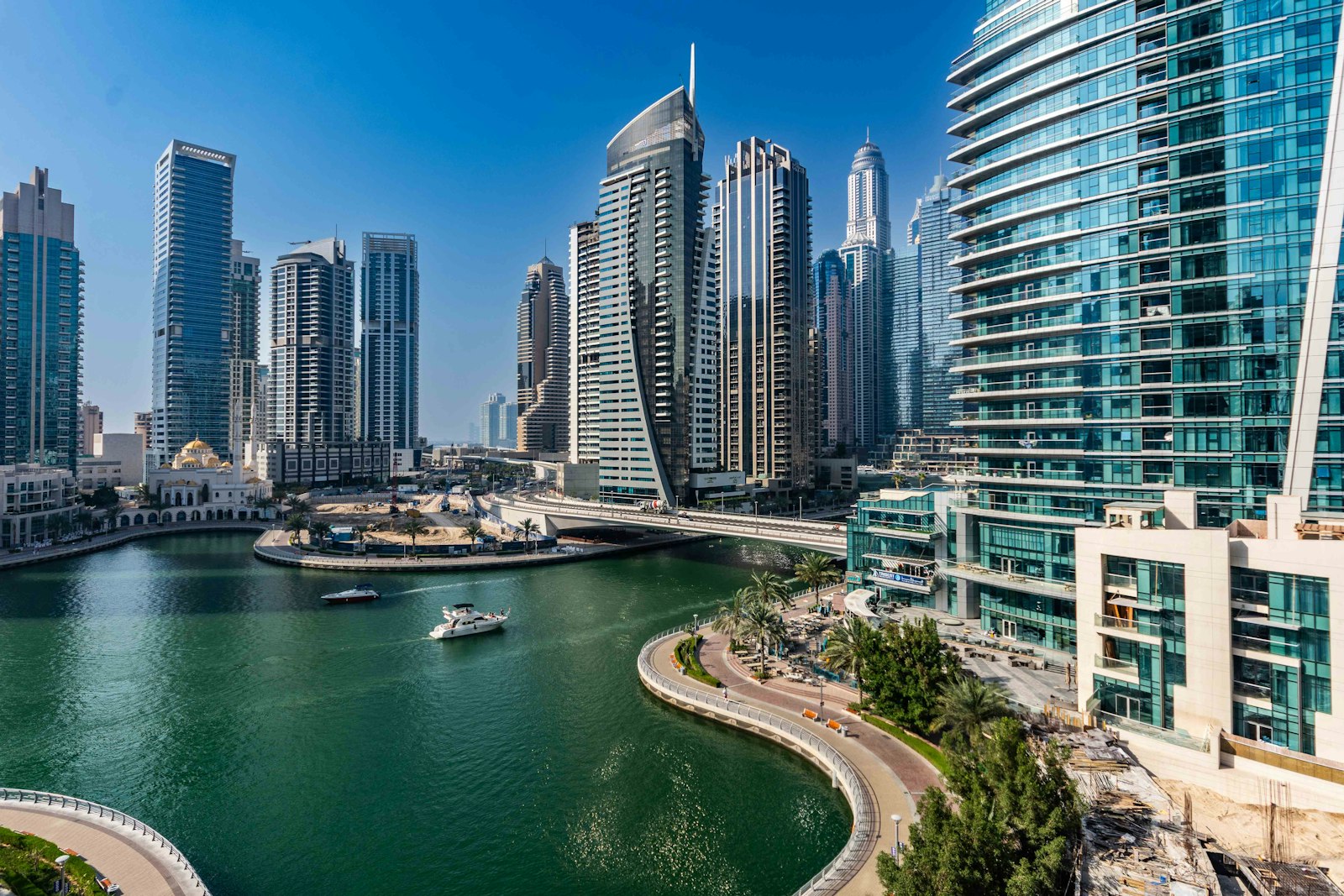
“Where’s the best place to live in Dubai?” I get asked this almost as often as “what should we see?” There’s no right area for everyone. There’s a right area for your situation: with children or without, with a car or without, where you’ll work and where the school is.
I’ve lived in the UAE for more than 15 years and drive around the city with guests every week. Below are the areas expat families and professionals consider most often, with what matters day to day: metro, schools, the commute and rent levels. Prices are Bayut’s average asking prices for September–October 2026. Real deals are usually a little lower and prices change, so treat them as a guide.
Three questions first
Before you look at apartments, answer these for yourself:
- Where’s the job? Crossing the whole city at rush hour can take more than an hour. Choose the area by the route to the office.
- Do you need a school? If yes, choose the school first, then an area near it. More in schools in Dubai.
- Will you have a car? Without one, only look at areas with a metro station within walking distance. In summer even a 15-minute walk to the station is an ordeal.
Areas without a car: the metro is close
Dubai Marina and JBR
Towers along the canal, the promenade, JBR beach. The Marina has two metro stations on the Red Line, Sobha Realty and DMCC, and the tram runs through the area. A one-bedroom averages about AED 93,000 a year, a two-bedroom about AED 144,000.
Good for singles, couples, and people working in Media City, Internet City or JLT. The downside is density: in the evenings and at weekends the promenade is full of people and cars.
JLT
The area of lakeside towers next to the Marina, across Sheikh Zayed Road. The same metro stations, DMCC and Sobha Realty, and footbridges to the tram. Rents are a bit lower than the Marina: a one-bedroom is about AED 87,000, a two-bedroom about AED 132,000. A good option if you want to live by the metro without paying extra for a water view.
Downtown and Business Bay
Burj Khalifa, Dubai Mall, the fountains, and the business centre next door. Business Bay has Business Bay station and Downtown has Burj Khalifa/Dubai Mall, both on the Red Line. According to Bayut, the drive to DIFC takes about 13 minutes from Downtown and about 18 minutes from Business Bay.
A one-bedroom rents for about AED 121,000 a year in Downtown and about AED 94,000 in Business Bay. Downtown is for people who want to live in the postcard and walk to Dubai Mall. Business Bay is cheaper and closer to the canal, but some buildings are far from the station, so check the walk from your particular tower.
Al Barsha
A calm area around Mall of the Emirates with two metro stations, Mall of the Emirates and InsuranceMarket. Several well-known schools are here or nearby: Dubai International Academy, GEMS Dubai American Academy, Kings’ School Al Barsha. A one-bedroom in Al Barsha 1 is about AED 71,000 a year, a two-bedroom about AED 98,000, and there are villas too.
Al Barsha is a rare area where the metro, schools and moderate rents all come together. There’s no sea and no postcard views.
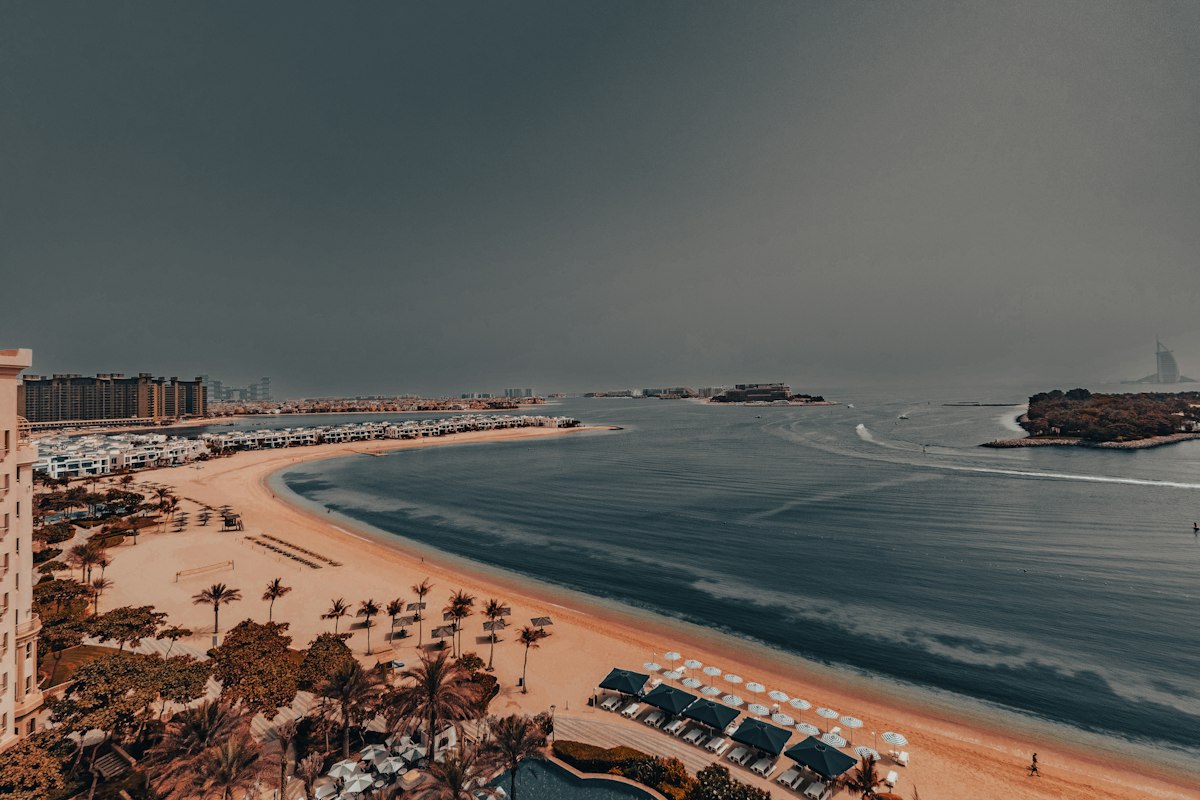
Living by the sea in Dubai isn’t only about the Marina towers. There are low-rise neighbourhoods too, but they’re harder without a car. Photo: giggel, CC BY 3.0, Wikimedia Commons
Family areas with a car
Dubai Hills Estate
A large new area with parks, a golf course and Dubai Hills Mall at its centre. There’s no metro inside the area and most residents drive; the exits are onto Al Khail Road and Umm Suqeim Street. GEMS Wellington Academy and GEMS International School are nearby.
In Bayut listings at the end of September 2026, apartments rent from AED 95,000 a year and villas from AED 220,000. Prices are higher than in neighbouring areas: you pay for newness, parks and tidy infrastructure.
In January 2023 I walked around one of a big developer’s new communities and told my Instagram followers that for a second I even thought about moving: everything new and shiny, lots of sports courts and playgrounds. And straight away I noticed the main catch with projects like this: the apartments are compact by the standards I’m used to. Worth remembering when you compare price per bedroom.
Arabian Ranches
The classic “suburban” community: villas with gardens, pools, walking paths, a golf club and the Dubai Polo equestrian club nearby. Inside are JESS and Ranches Primary School. There’s no metro, and Bayut says plainly that the D63 and D54 roads are busy at rush hour.
A three-bedroom villa rents for about AED 265,000 a year, a three-bedroom townhouse for about AED 233,000. It suits families who are happy to drive and want their own garden.
Mirdif
An area of villas and low-rise buildings close to the airport: about 10 minutes’ drive to DXB. The main mall is City Centre Mirdif. The metro is a fair way off, and people take a bus to Centrepoint station, so you need a car. Mirdif is loved by families who value quiet, the airport nearby and schools close by.
JVC
Jumeirah Village Circle is a dense area of inexpensive new buildings and townhouses laid out in a ring. There’s no metro: the J01 bus to Mall of the Emirates or a taxi. Rents are among the most affordable of the popular areas: a one-bedroom about AED 74,000, a three-bedroom townhouse about AED 212,000. There’s a school in the area, JSS International.
If you have a car, JVC is a sensible compromise. If not, neighbouring Al Furjan, with its own station on the Red Line, may be more convenient for similar rent.
Palm Jumeirah
Islands, beaches, hotels. The Palm monorail is not running at the moment, and public transport links to the rest of the city are limited. Rents are high: the apartment average is about AED 268,000 a year, studios from AED 99,000. It’s an area for people who care about the sea and the view, and who are ready to pay for the address and get around by car or taxi.
In short: where to look
- Single or a couple without a car: the Marina, JLT, Downtown, Business Bay.
- A family with a car: Arabian Ranches, Dubai Hills, Mirdif.
- A family without a car: Al Barsha by the metro.
- On a tighter budget: JVC with a car, Al Furjan by the metro.
- For the sea and the view: the Palm, the Marina, JBR.
How to rent (Ejari, cheques, deposit, DEWA) is covered in detail in renting an apartment in Dubai. If you’re thinking about buying, start with rent or buy in Dubai, and for buy-to-let, Dubai areas for investment.
How I can help
I’m not a property agent. But an area is best chosen with your own eyes, not from listings. In a single day I can drive you through the areas on your list: in the morning, the rush-hour drive from the Marina to Downtown; in the afternoon, schools and communities; in the evening, the waterfront. I’ll pick you up from your hotel and bring you back, and then introduce you to agents I trust.
If it’s your first time in Dubai, start with my Arabian Dream city tour: in one day the city’s geography and where everything is will make sense.
This isn’t legal or investment advice: rules and prices change, so check them before any deal.
Checked on 11 October 2026. Sources: Bayut area guides (September–October 2026), asking-price data from listings.
Practical answers
Frequently asked questions
Which area of Dubai is best for families?
Families with children most often choose villas and townhouses in Arabian Ranches, Dubai Hills, Mirdif or Al Barsha: schools, parks and quieter streets. But the commute to work and school decides it: choose the school first, then the area.
Where can you live in Dubai without a car?
Where the metro is within walking distance: Dubai Marina and JLT, Downtown and Business Bay, Al Barsha near Mall of the Emirates station. In JVC, Dubai Hills, Arabian Ranches and on the Palm, life without a car or taxis is hard.
How much does it cost to rent an apartment in Dubai?
By Bayut's average asking prices for September–October 2026, a one-bedroom costs about AED 71,000 a year in Al Barsha 1, 74,000 in JVC, 93,000 in the Marina, 94,000 in Business Bay and 121,000 in Downtown. Listing prices are higher than real deals.
What is the cheapest area to live in Dubai?
Among areas popular with expats, JVC, Al Furjan and Al Barsha are cheaper. Areas further from the sea and the centre are cheaper still, but there the commute matters more: work out your time in traffic to the office.
Where should a single person or a couple without children live in Dubai?
Most often Dubai Marina, JLT, Downtown or Business Bay: metro, restaurants and work nearby. The Marina and JBR if the beach and promenade matter; Downtown and Business Bay if you work in DIFC or the centre.
Can you show us areas before we move?
Yes. I'm not an agent, but I can drive you through the areas you're considering in one day and introduce you to agents I trust.