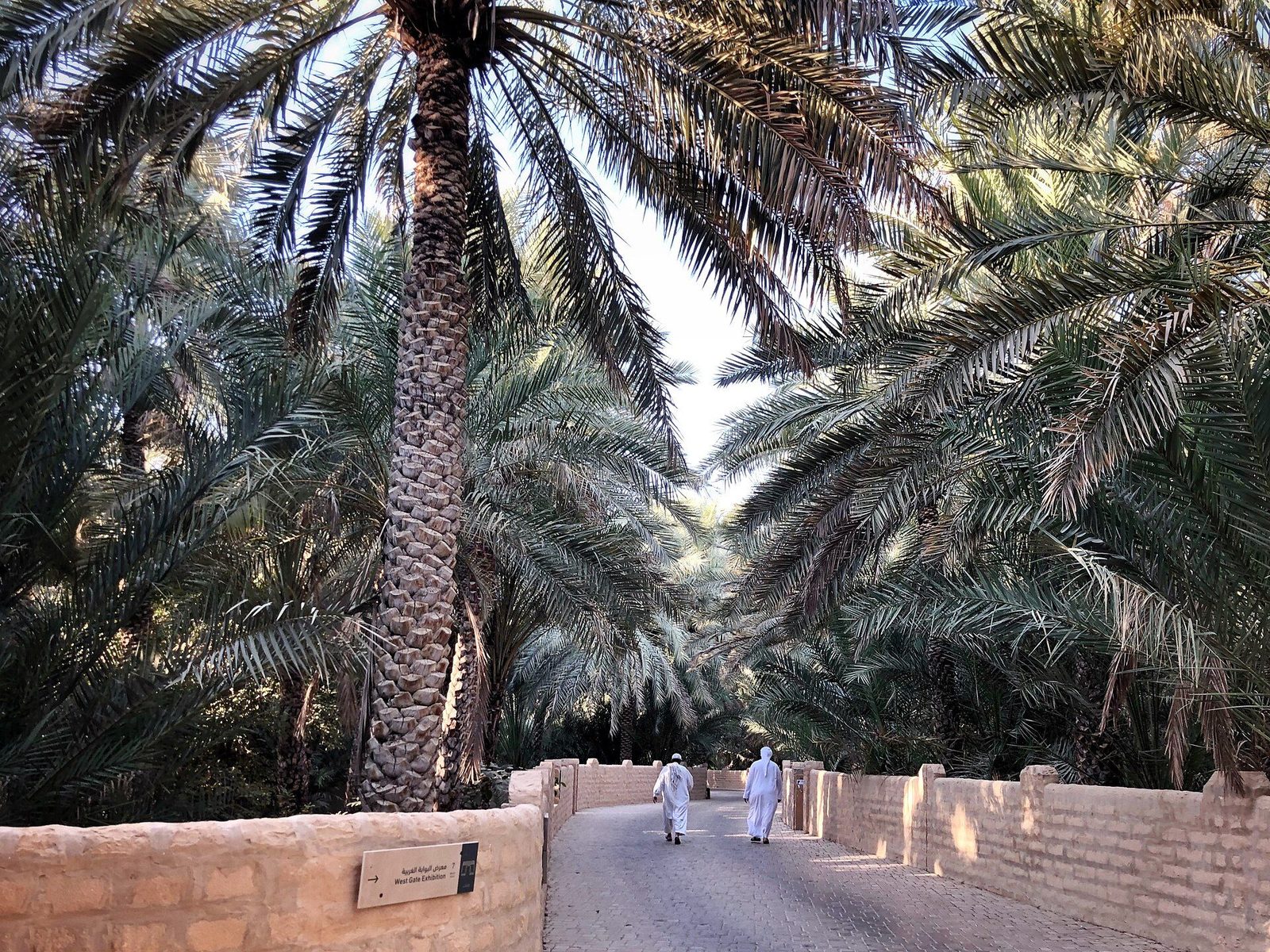
Al Ain is called the Garden City, and inside the oasis you see why. Behind a mud-brick wall there’s shade, the sound of water in the channels and palms as far as you can see. Outside is desert; inside are gardens thousands of years old.
In my Al Ain day trip guide I put together the overall route for the day. This post goes deeper into the heart of the city: how to walk the oasis, what to see at Al Jahili Fort and Qasr Al Muwaiji, how to get into the camel market and in what order to do it all so you’re not standing in the sun at noon.
In spring 2026 I showed Al Ain in my Instagram stories and was surprised all over again by how different it is. Mountains right in the middle of the city, plenty of new fashionable places, and architecture that in places even reminds me of Paris. Locals relax in their own way here too: they don’t stroll, they pull up at street cafes, order from the car and eat right there.
At a glance
| Place | Hours | How long |
|---|---|---|
| Al Ain Oasis | Daily 9:00–19:00 | 1.5–2 hours |
| Al Ain Museum | Daily 9:00–19:00 | 45–60 minutes |
| Al Jahili Fort | 9:00–18:00 | 45 minutes |
| Qasr Al Muwaiji | Daily 9:00–19:00, free entry | 45 minutes |
| Camel market | By prior arrangement, best in the morning | 45–60 minutes |
During Ramadan the forts open from 10:00 to 22:00. Hours change over the Eid holidays, so check them on the Abu Dhabi Culture site.
Al Ain Oasis: how to see it
Al Ain Oasis is the largest of the city’s six oases that make up the UNESCO site. It has more than 147,000 date palms of over 100 varieties, with citrus, bananas, guava and figs growing beneath them. The plots are divided by old mud-brick walls, with shaded paths and benches winding between them.
How to do it:
- Start at the Eco-Centre by the entrance. It’s free, and the interactive exhibition explains the oasis’s history and how it works. The walk is far more interesting afterwards.
- Hire a bike or an electric buggy at the entrance if you’re with children or older parents. The oasis is big, and walking in the heat tires you quickly.
- Look for the falaj. It’s the main reason to come.
The falaj: water that is 3,000 years old
A falaj (plural aflaj) is a system of channels that brings water to the gardens. Al Ain Oasis has two main ones: Al Aini and Dawoodi. Both start in the south-east, on the side of the Hajar Mountains. The channels are about 3,000 years old.
The water level depends on the season, so sometimes the channels are dry. Don’t be disappointed: even an empty channel shows how people lived in the desert before oil.
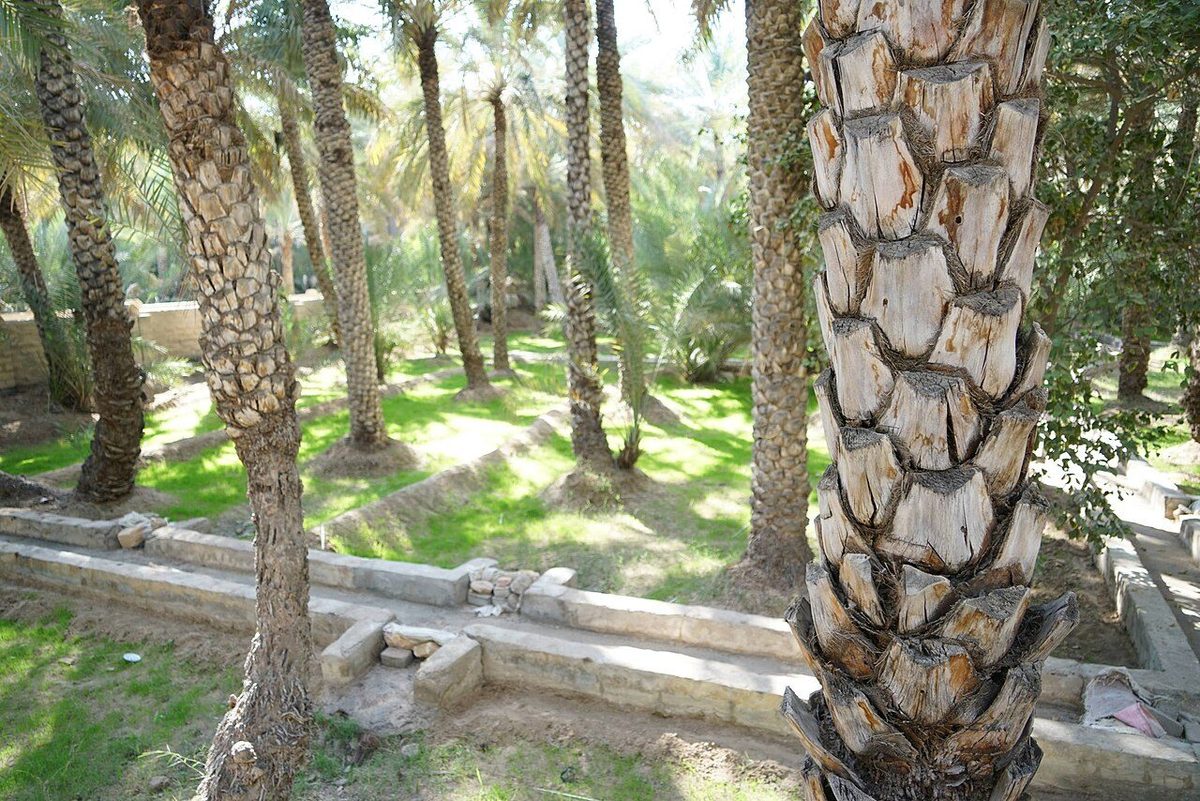
A falaj in Al Ain Oasis: a narrow stone channel that has watered the palms for centuries. Photo: Flounder Lee, CC BY-SA 4.0, Wikimedia Commons
Al Ain Museum
The museum stands just east of the oasis, in the historic Harat Al Hosn district. Sheikh Zayed founded it in 1969. After the redevelopment it includes the restored 1970s building, the early 20th-century Sultan Fort and four new galleries. Three of them are built directly over archaeological excavations, so finds are shown where they were discovered. The collection covers everything from the Palaeolithic to the 20th century. Open daily from 9:00 to 19:00, with a cafe.
Another museum nearby, Al Ain Palace Museum, closed for renovation on 1 July 2024. The official site has not yet announced a reopening, so check before you go.
Al Jahili Fort
One of the largest forts in the UAE. It was built between 1891 and 1898 on the orders of Sheikh Zayed bin Khalifa, Zayed the First, as a symbol of power and a summer residence for the ruler. In the 1950s the fort became part of the headquarters of British forces in the region. It was extensively restored in 2007–2008.
What to see:
- the round tower in four tiers that narrow towards the top, the most recognisable view in Al Ain;
- the courtyard and the sheikh’s majlis;
- the permanent exhibition on Wilfred Thesiger, the British explorer and photographer;
- temporary exhibitions and the information centre.
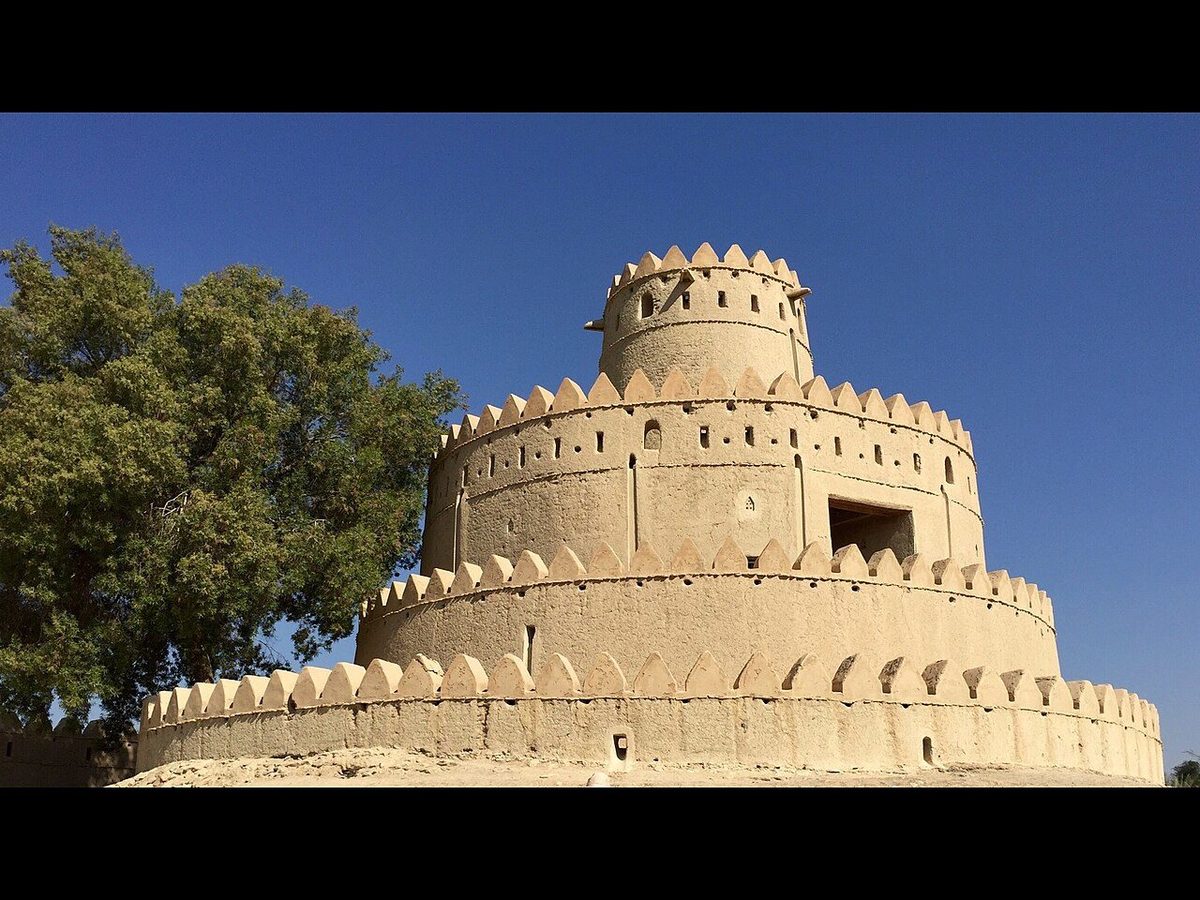
The tower of Al Jahili Fort: four tiers of mud brick. Photo: Okhtyartist, CC BY-SA 4.0, Wikimedia Commons
Qasr Al Muwaiji: Sheikh Zayed’s home
From 1946, when Sheikh Zayed became the Ruler’s Representative in Al Ain, this fort was his home and working diwan. Sheikh Khalifa bin Zayed, the future President of the UAE, was born here in 1948. In 1966, when Zayed became Ruler of Abu Dhabi, the family moved to the capital. The fort opened to the public in 2015.
In the courtyard is a glass exhibition hall: the family’s history, oral accounts of Sheikh Khalifa’s life and of how water shaped life in Al Ain. Entry is free, and you can book a free guided tour. Next door is Al Muwaiji Oasis, with about 21,000 palms and a working falaj. If you’re interested in the story of the country’s founder, read my post on Sheikh Zayed.
The camel market
The Al Ain camel market is a working market where traders buy and sell camels. It’s on Zayed Bin Sultan Street, about 15 km from the city centre. It’s liveliest in the morning, when trading is under way.
One important detail: according to Abu Dhabi’s official tourism site, visits must be arranged in advance and take place with market staff. So don’t plan it as a spontaneous stop. Ask before photographing people, and don’t approach the animals without the seller: this isn’t a petting zoo.
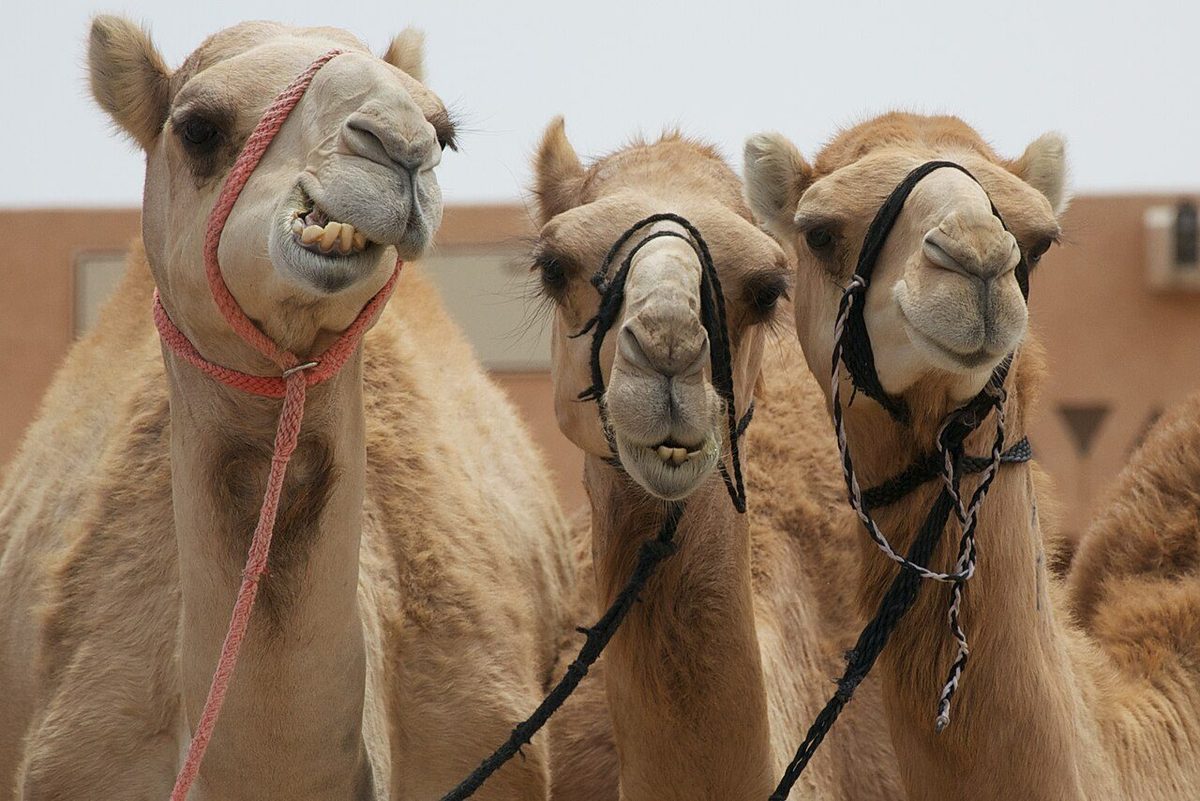
Camels in Al Ain: the market is a workplace, not an attraction. Photo: Jon Connell, CC BY 2.0, Wikimedia Commons
A one-day plan from Dubai
A realistic order from October to April, by car:
- 7:00: leave Dubai. Al Ain is about 120 km away.
- 9:00–10:00: the camel market (if your visit is arranged).
- 10:30–12:15: Al Ain Oasis: the Eco-Centre, the falaj, a walk or an electric buggy.
- 12:15–13:15: Al Ain Museum next to the oasis.
- 13:15–14:30: lunch.
- 14:45–15:45: Al Jahili Fort.
- 16:00–17:00: Qasr Al Muwaiji.
- Then two options: back to Dubai by 19:00, or sunset on Jebel Hafeet and back around 21:00.
With children, swap one fort for Al Ain Zoo: it’s on my safaris and zoos page.
Common mistakes
- Going to the oasis at noon without a plan. There’s shade, but walking a large oasis in the heat is hard. Take an electric buggy.
- Arriving at the camel market without an arrangement. Visits are agreed in advance.
- Putting Al Ain and Abu Dhabi in one day. They’re two separate days.
- Not checking holidays. Hours change during Eid and Ramadan.
How I can help
I run private trips to Al Ain with transfers from your hotel in Dubai or Abu Dhabi. I’ll put the day in the right order, so you’re in the shade of the oasis and at the forts before closing, and tell the story of the Al Nahyan family on the spot. If you’d like to see the capital too, look at my day in Abu Dhabi tour and all my Abu Dhabi tours.
Checked on 11 October 2026. Sources: Abu Dhabi Culture, Experience Abu Dhabi, Visit Al Ain. Opening hours and visiting rules change, so check before you go.
Practical answers
Frequently asked questions
What are Al Ain Oasis opening hours?
Daily from 9:00 to 19:00; hours may change during the Eid holidays. Allow up to two hours for a walk.
Can I just turn up at the Al Ain camel market?
Abu Dhabi's official tourism site says visits must be arranged in advance and take place with market staff. Go in the morning, when trading is under way.
How much does it cost to visit the forts in Al Ain?
Qasr Al Muwaiji is free. Tickets for Abu Dhabi's cultural sites are issued through the official site tickets.abudhabiculture.ae, so check current terms there.
What is a falaj?
An ancient system of channels that carries water from the mountains and underground sources to the gardens. The channels in Al Ain Oasis are about 3,000 years old, and some still work today.
Why is Al Ain a UNESCO World Heritage Site?
In 2011 UNESCO listed the Cultural Sites of Al Ain: the Hafit and Hili tombs, Bidaa Bint Saud and the oases. Together they show the shift from a nomadic to a settled way of life.
What is there to do in Al Ain with children?
The oasis by bike or electric buggy, Al Ain Zoo, and the warm springs at Green Mubazzarah at the foot of Jebel Hafeet. Do the forts in the morning, before it gets hot.


