The drive from Dubai to Abu Dhabi is the best time to talk about the man whose name you’ll hear twenty times that day: Sheikh Zayed Grand Mosque, Sheikh Zayed Road, Sheikh Zayed Bridge, Zayed National Museum. For Emiratis he isn’t just the first President. They call him the Father of the Nation, and once you hear his story you understand why.
You’ll see his name spelled a few ways, Zayed, Zayid, Zaid, but it’s always the same man: Sheikh Zayed bin Sultan Al Nahyan.
In short: the key dates
- 1918: born in Abu Dhabi, at Qasr Al Hosn fort.
- 1946: becomes the ruler’s representative in Al Ain.
- 6 August 1966: becomes ruler of Abu Dhabi.
- 18 February 1968: agrees a union of the two emirates with Sheikh Rashid of Dubai.
- 2 December 1971: the rulers unanimously elect him the first President of the UAE.
- 2 November 2004: dies in Abu Dhabi, aged 86.
- 2018: the Emirates declare the Year of Zayed, for the 100th anniversary of his birth.
Childhood at Qasr Al Hosn
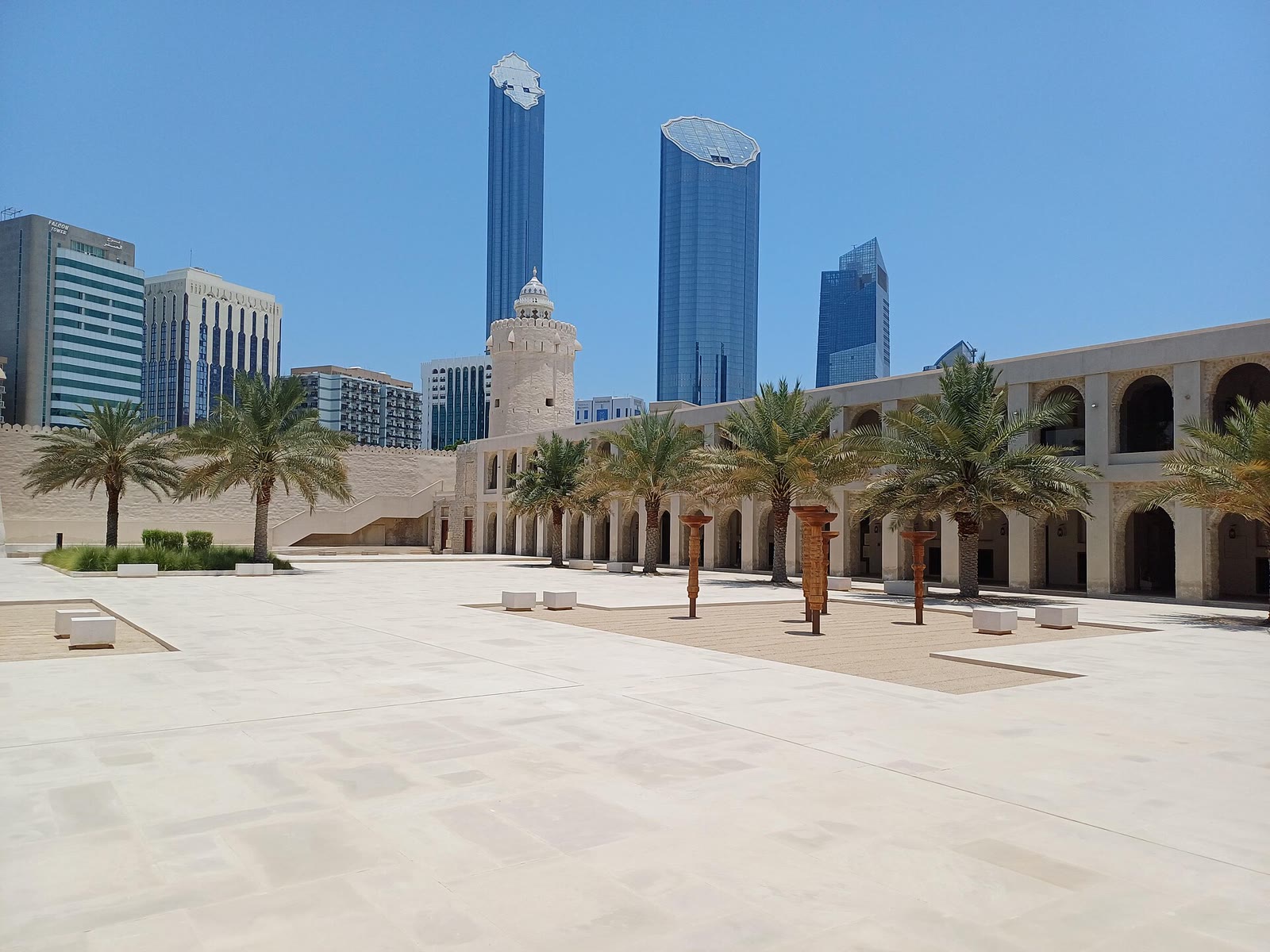
Sheikh Zayed was born in 1918 at Qasr Al Hosn. Today it’s a white fort among skyscrapers in the centre of Abu Dhabi; back then it was the ruling family’s palace. It stands on the site of a 1790 watchtower, the city’s first permanent building, and is considered the oldest surviving building in Abu Dhabi.
Abu Dhabi was a very different place. While Zayed was growing up there wasn’t a single modern school on the whole coast. The pearl trade, the main source of income, was collapsing. I describe how people lived in those years in the UAE before oil.
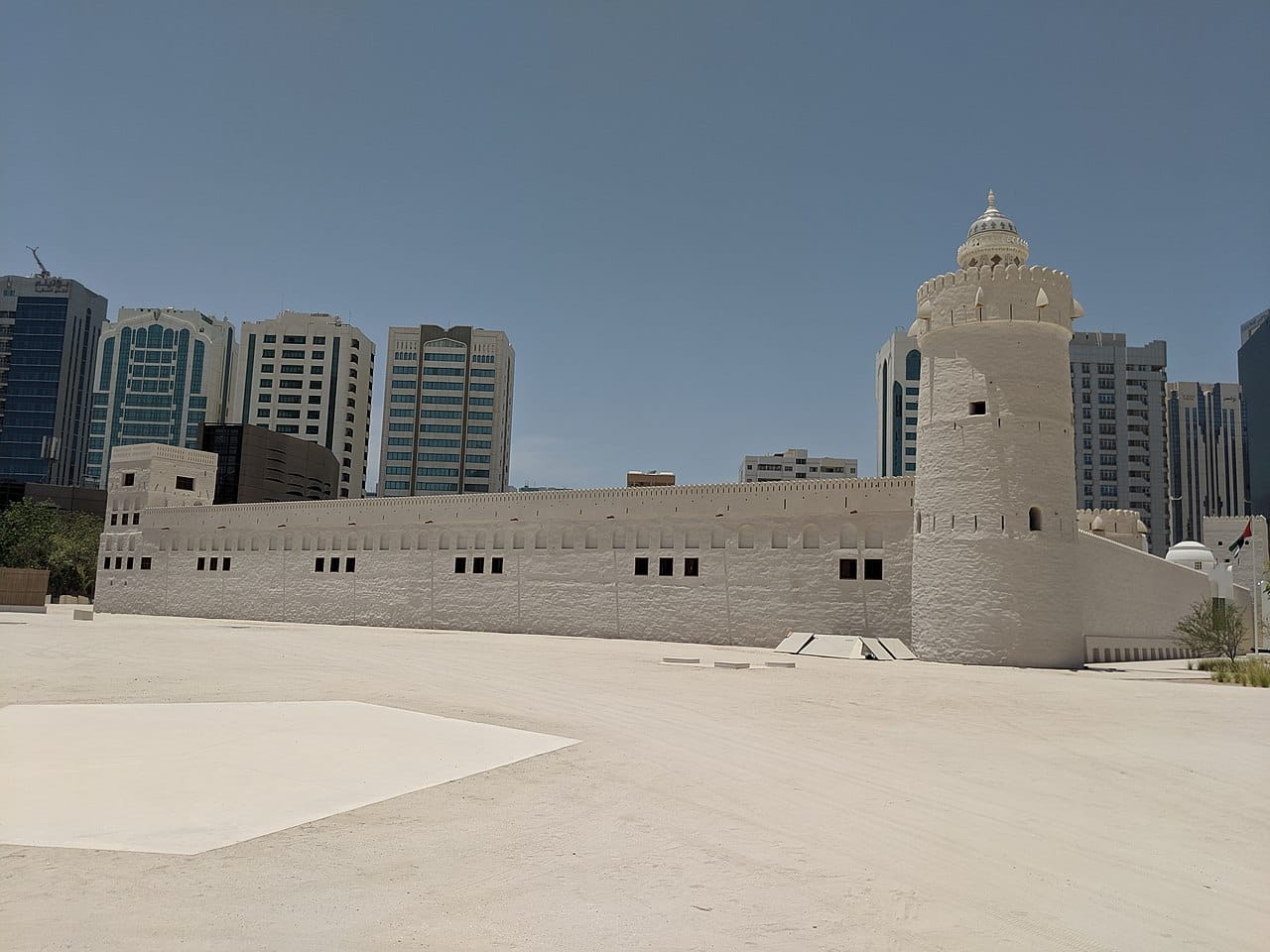
Qasr Al Hosn, the fort where Sheikh Zayed was born in 1918. Today it is a museum of Abu Dhabi’s history. Photo: Peturrunar, CC BY-SA 4.0, Wikimedia Commons
Al Ain: twenty years learning to govern
In 1946 Sheikh Zayed became the ruler’s representative in Al Ain, an oasis at the foot of the Hajar Mountains. Qasr Al Muwaiji fort became his home and working residence. He spent twenty years here, and this, I think, is where his style took shape: settling matters in person, in the majlis, with people, not from a distance.
Al Ain’s great concern was water. Sheikh Zayed paid particular attention to restoring the aflaj, the ancient channels that carry water from the mountains to the date gardens. In 1959 Al Nahyaniya School opened in Al Ain, the first modern school in the city.
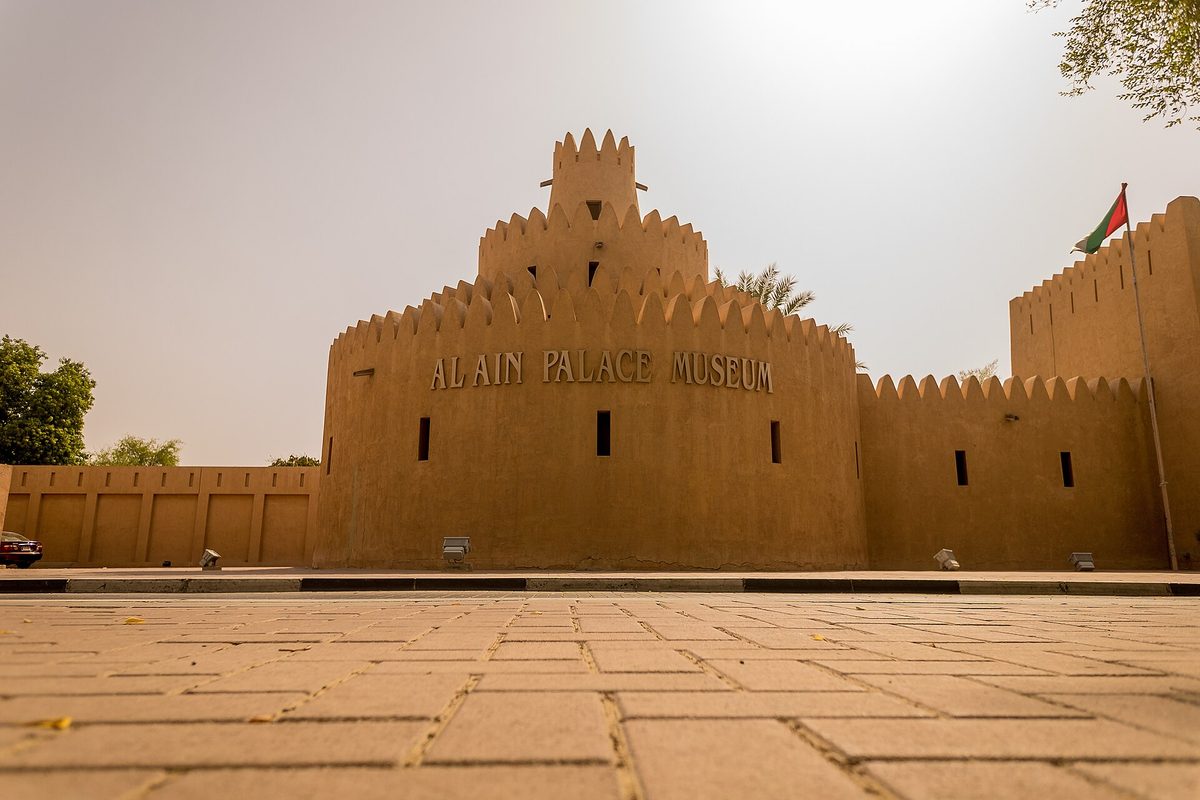
Al Ain Palace Museum. Sheikh Zayed lived here with his family until 1966; the palace became a museum in 1998. Photo: Glenn2, CC BY-SA 4.0, Wikimedia Commons.
The palace in Al Ain was built in 1937 on the western side of the oasis. Today it’s a museum, and it shows how modestly, by today’s standards, the ruling family lived: courtyards, majlis rooms, wells, a tent. If you go to Al Ain, start with my Al Ain day trip from Dubai: the oasis, Qasr Al Muwaiji and Jebel Hafeet.
1966: ruler of Abu Dhabi
On 6 August 1966 Sheikh Zayed became ruler of Abu Dhabi, succeeding his brother Sheikh Shakhbut. By then Abu Dhabi had been selling oil for four years: the first tanker left in 1962. For the first time the emirate had real money, and Sheikh Zayed didn’t spend it on Abu Dhabi alone. Abu Dhabi became the largest contributor to the Trucial States Development Fund, shared by all the sheikhdoms on the coast.
How he brought the country together
In January 1968 Britain announced it was leaving the Gulf. Sheikh Zayed went to Dubai to see Sheikh Rashid bin Saeed Al Maktoum, and on 18 February 1968 the two rulers agreed on a union. Three years of negotiations with the neighbours followed.
On 2 December 1971 six emirates declared the UAE, and the rulers unanimously elected Sheikh Zayed as President. Ras Al Khaimah joined in February 1972. Sheikh Zayed remained President for the rest of his life. I tell the story of those three years, and where the union was signed, in how the UAE was formed.
A green desert
There’s one topic I especially love talking about on the road: how Sheikh Zayed felt about nature. Look out of the window on the motorway to Abu Dhabi: trees along the road, parks, green central reservations. In the desert none of this is an accident. Every tree has irrigation behind it.
In 1971 Sheikh Zayed declared Sir Bani Yas Island a nature reserve. Today it holds the 1,400-hectare Arabian Wildlife Park, where thousands of native animals and birds live in the open. An international environmental prize bears his name: in 2001 it went to former US President Jimmy Carter. And in the Al Ain oases the aflaj Sheikh Zayed looked after as a young man are still working.
The mosque that bears his name
The Grand Mosque in Abu Dhabi was Sheikh Zayed’s dream. He wanted a mosque that would show the moderation of Islam and be open to everyone. Design work began in the late 1980s, construction started on 5 November 1996, and the mosque opened at Eid Al Adha in 2007. Sheikh Zayed didn’t live to see it open. He is buried next to the mosque, and at his mausoleum reciters take turns reading the Quran around the clock.
The mosque holds about 55,000 worshippers, and its grounds cover more than 555,000 square metres. How to dress, when to go and what to look for inside are all in my Sheikh Zayed Grand Mosque tips. Check the opening hours and entry rules before you go.
His legacy
In August 2017 President Sheikh Khalifa declared 2018 the Year of Zayed, for the founder’s 100th birthday. The announcement was timed to the anniversary of 6 August, the day Sheikh Zayed became ruler of Abu Dhabi. The themes of the year were the values he left behind: wisdom, respect, sustainability and human development.
In May 2022, on the day the country said goodbye to Sheikh Khalifa, I wrote that he had been a worthy successor to his father. Sheikh Khalifa was born in 1948 in Al Ain, in the fort Sheikh Zayed had built two years before his first son was born. To me it’s a good picture of how, in the Emirates, it isn’t only power that passes from one generation to the next, but the work itself.
On Saadiyat Island, Zayed National Museum tells the story of this land over 300,000 years in six permanent galleries. And my Abu Dhabi day tour includes a stop at the Founder’s Memorial.
Where to feel this history in one day
For a day in Abu Dhabi from Dubai, I usually suggest this order:
- Morning: Sheikh Zayed Grand Mosque. Before the heat and the crowds.
- The Founder’s Memorial and Qasr Al Hosn. The place where he was born and the place that remembers him.
- The Corniche and Emirates Palace. The city that grew from a fishing village in his lifetime.
- If you like: Louvre Abu Dhabi or the date market.
And if you have one more free day, Al Ain shows you the young Sheikh Zayed: the oasis, the aflaj and the palace where he lived for twenty years.
How I can help
I run private tours to Abu Dhabi and Al Ain with pick-up from your hotel in Dubai or Abu Dhabi. On the way I tell the story of Sheikh Zayed and the country he built, so that the mosque, the fort and the museums come together as one picture. Send me your dates and how many of you there are, and I’ll suggest a route at your pace.
Checked on 11 October 2026. Sources: u.ae, Sheikh Zayed Grand Mosque Centre, Visit Abu Dhabi, Abu Dhabi Department of Culture and Tourism, UAE Ministry of Foreign Affairs, The National.
Practical answers
Frequently asked questions
Who was Sheikh Zayed?
Sheikh Zayed bin Sultan Al Nahyan was the founder and first President of the UAE. He ruled Abu Dhabi from 1966, and from 1971 until his death in 2004 he was President of the country. In the Emirates he is called the Father of the Nation.
When was Sheikh Zayed born and when did he die?
He was born in 1918 in Abu Dhabi, at Qasr Al Hosn fort, and died on 2 November 2004, aged 86.
Why was 2018 the Year of Zayed?
Because 2018 marked 100 years since Sheikh Zayed was born. President Sheikh Khalifa declared it in August 2017, on the anniversary of the day Sheikh Zayed became ruler of Abu Dhabi.
Where is Sheikh Zayed buried?
In Abu Dhabi, next to Sheikh Zayed Grand Mosque. At the founder's mausoleum, reciters take turns reading the Quran around the clock.
What can I see in Al Ain connected with Sheikh Zayed?
Al Ain Palace Museum, where he lived with his family until 1966, and Qasr Al Muwaiji fort, his home and residence from 1946. Entry to Qasr Al Muwaiji is free.
Is it Zayed, Zayid or Zaid?
You will see all three. Zayed is the official spelling used in the UAE, in the name of the mosque, the museum and the streets, while Zayid and Zaid are older or academic transliterations of the same Arabic name.

