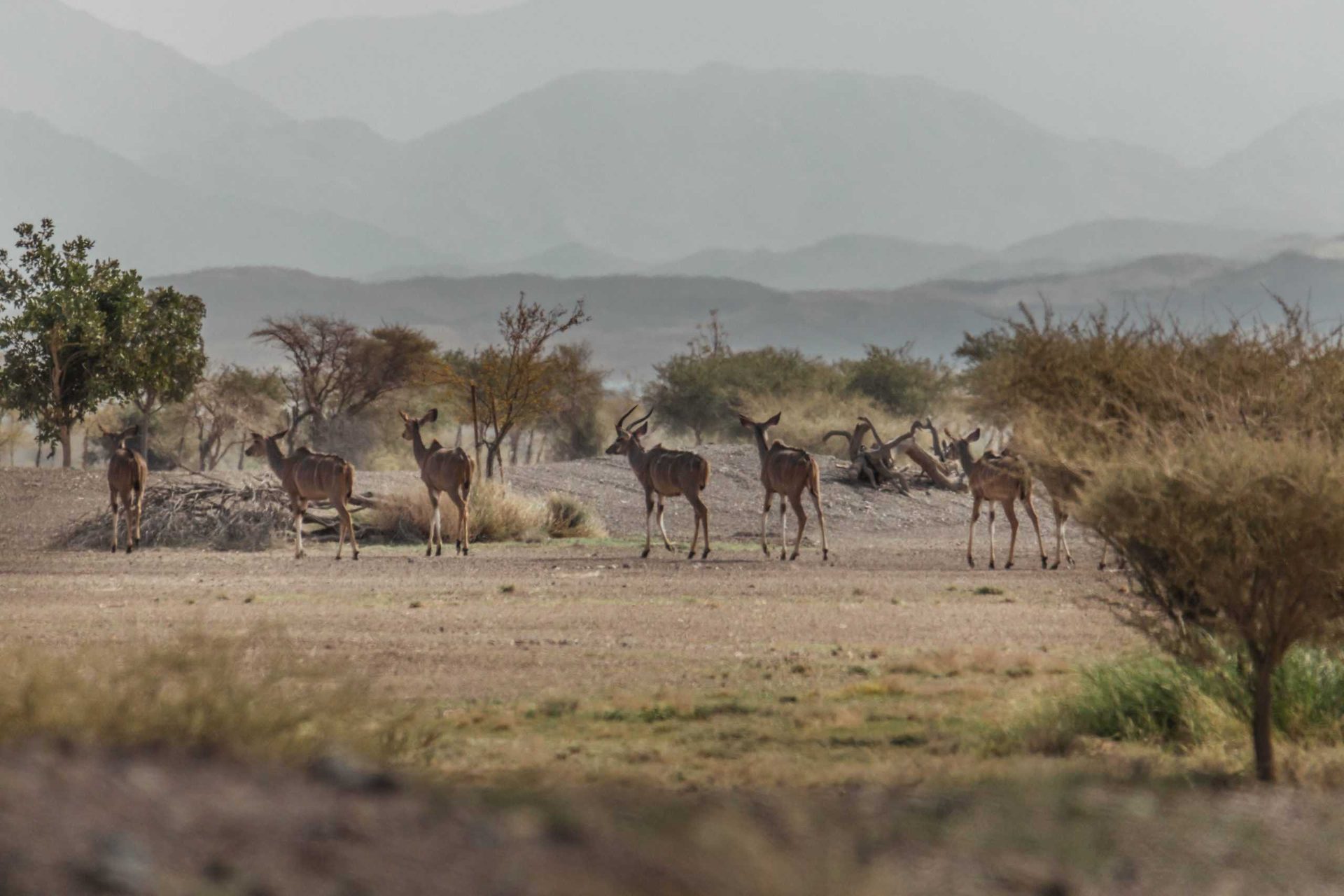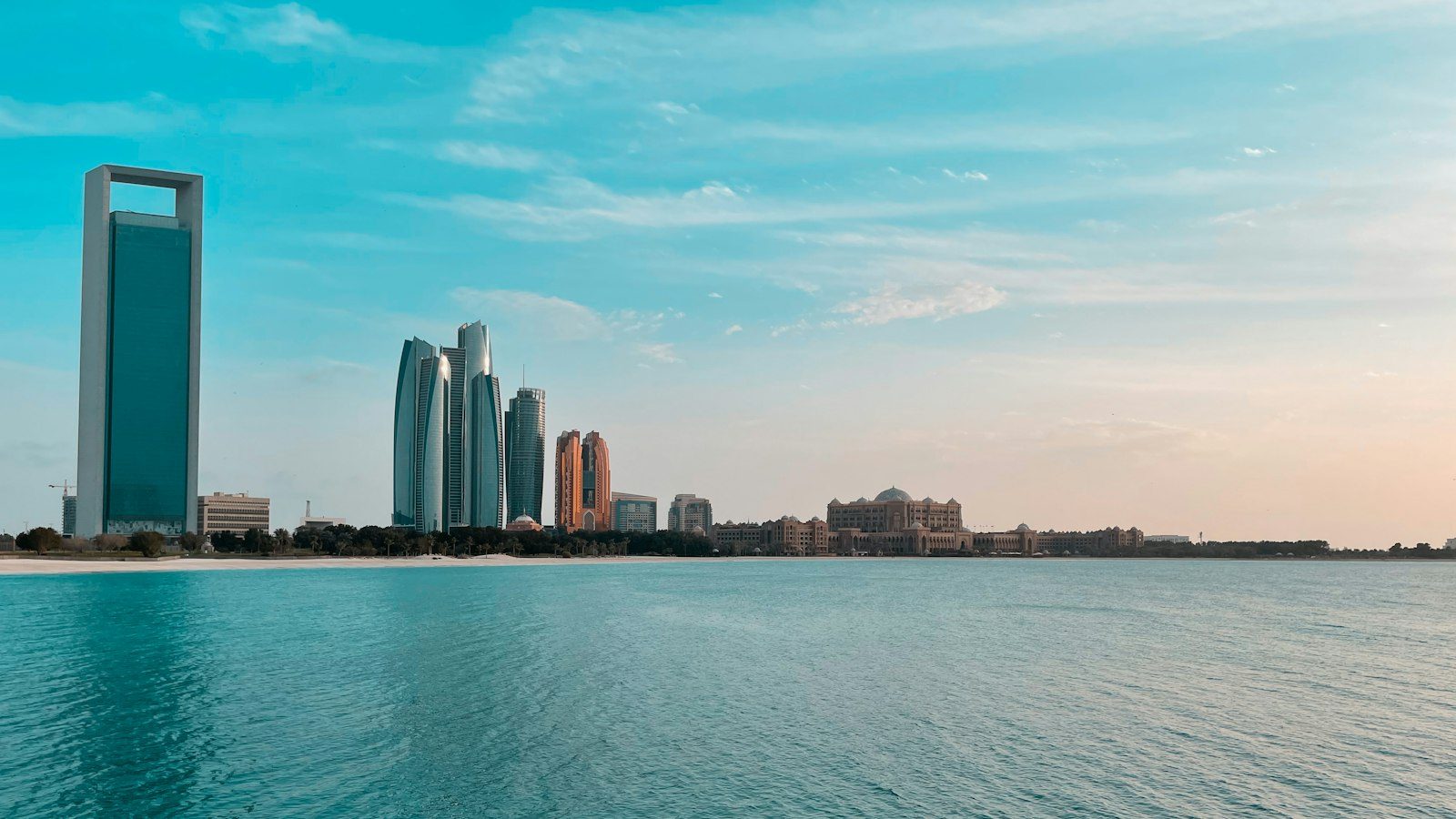
When guests ask me “what else is there in the Emirates besides Dubai?”, I tell them: six very different countries inside one. Dubai is the shop window. Abu Dhabi is the capital and the museums. Sharjah is culture and strict rules. Ajman and Umm Al Quwain are quiet shores. Ras Al Khaimah is mountains and all-inclusive resorts. Fujairah is a different sea and coral reefs.
Below is a short portrait of each emirate, how long it takes to get there from Dubai and what’s worth seeing. Each emirate also has its own post with a one-day route.
The seven emirates at a glance
Driving times are from Dubai Mall without traffic, according to the OpenStreetMap route planner. At rush hour allow more, especially towards Sharjah.
| Emirate | Character | From Dubai | Why go |
|---|---|---|---|
| Abu Dhabi | the capital, the largest | ~1.5 hours to the centre | Sheikh Zayed Grand Mosque, the Louvre, Qasr Al Watan |
| Dubai | the shop window | n/a | skyscrapers, the old town, the desert |
| Sharjah | culture, no alcohol | ~30 minutes | the old centre, museums, Rain Room, a safari park |
| Ajman | the smallest | ~40 minutes | the fort museum, the beach, the fish market, mangroves |
| Umm Al Quwain | the quietest | ~55 minutes | the old town, mangroves, empty beaches |
| Ras Al Khaimah | mountains and resorts | ~1 h 20 min | Jebel Jais, the zipline, Dhayah Fort, all-inclusive |
| Fujairah | the east coast | ~1.5 hours | the oldest mosque, the fort, snorkelling |
The UAE was formed on 2 December 1971. Six emirates signed the union straight away, and Ras Al Khaimah joined on 10 February 1972. The country covers about 83,600 km², and more than 67,000 of them belong to Abu Dhabi.
Abu Dhabi: the capital and the largest emirate
Abu Dhabi is the federal capital and the largest emirate, at 67,340 km². It includes not just the city but also the oasis of Al Ain. The pace is calmer than in Dubai, and the cultural programme is the strongest in the country: Sheikh Zayed Grand Mosque, Louvre Abu Dhabi and the Qasr Al Watan presidential palace.
From Dubai it’s a full day. I take guests there every week on my Abu Dhabi day tour, and I usually suggest starting with the mosque in the morning, before the heat. For more, see my Abu Dhabi page, and read Dubai or Abu Dhabi if you’re choosing where to stay.
Dubai: the country’s shop window
The second-largest emirate and the best known. Almost all my guests stay here, so I measure every other emirate from Dubai. If you’ve just landed, start with a city overview day and the old town, and save the neighbouring emirates for the second half of your trip.
Sharjah: culture and strict rules
Sharjah begins right at Dubai’s border: from Dubai Mall to the old centre is about 25 km. It’s the third-largest emirate and a city of museums: the restored old centre, Heart of Sharjah, the Museum of Islamic Civilization and Rain Room.
Two things to know in advance. First, Sharjah is a dry emirate: alcohol is banned. Second, decency rules have applied since 2001: no bare midriffs or backs, no short skirts and no very short shorts in public places. Outside the city Sharjah has the Sharjah Safari park, the archaeological site of Mleiha and even a coastline on another sea, Kalba and Khor Fakkan. It’s all in my post Sharjah: things to do.
Sharjah’s enclaves on the east coast are a world of their own. In May 2026 I showed Kalba and Khor Fakkan in my stories: for a country not known for forests, the mangroves of Kalba and the rocky mountains are a rarity, and there are birds here you won’t see in Dubai.
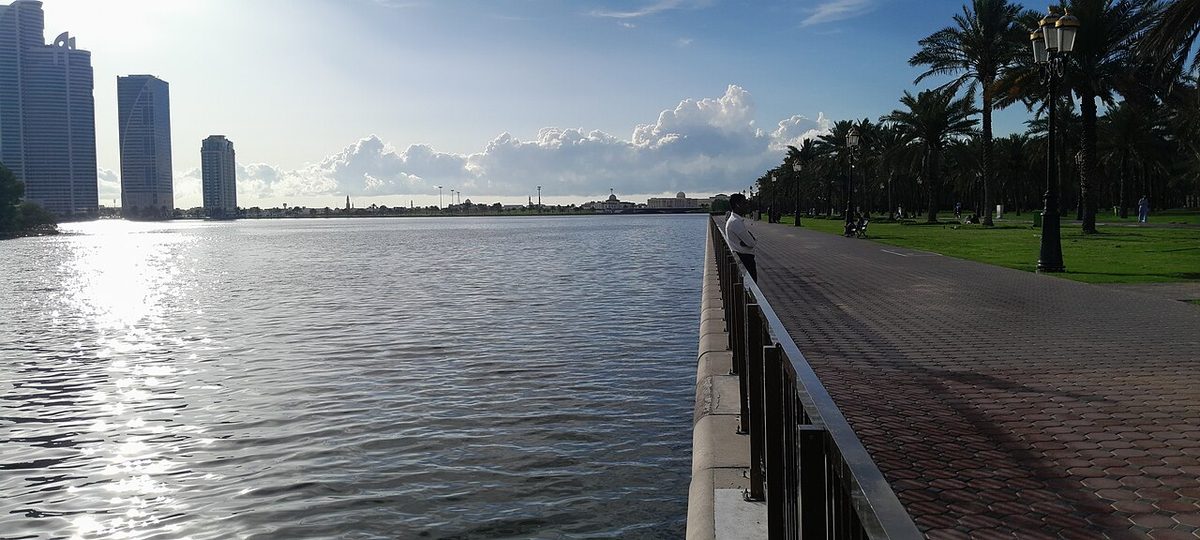
Sharjah means walks by the water, museums and a quiet evening by Al Noor Mosque. Photo: Musatalha, CC BY-SA 4.0, Wikimedia Commons.
Ajman: the smallest emirate
Ajman is the smallest emirate in the country, and almost everyone there lives in the city of the same name. It has 16 km of sandy coast, an 18th-century fort that is now a museum, a fish market and the Al Zorah mangrove reserve with flamingos. It makes a good half day, especially combined with neighbouring Umm Al Quwain. The route is in my post Ajman: things to do.
Umm Al Quwain: the quietest
The second smallest by area and, to my mind, the most unhurried emirate. People come here for the quiet: an old town with wind towers, a fort from 1768, mangroves, a lagoon and empty beaches. It’s also where, in 2023, the discovery of the oldest pearling town in the Persian Gulf was announced, on Al Sinniyah Island. The details, and an honest list of what’s actually open, are in Umm Al Quwain: things to do.
Ras Al Khaimah: mountains and resorts
The fourth-largest emirate and the most “outdoors” one. Here is Jebel Jais, the highest point in the UAE at 1,934 m, and Jais Flight, the world’s longest zipline at 2.83 km. Down below are Dhayah Fort on its hill, the abandoned village of Al Jazirah Al Hamra and the resorts on Al Marjan Island, many of them all-inclusive. It’s also the closest emirate to Musandam in Oman. All of it is in Ras Al Khaimah: things to do.
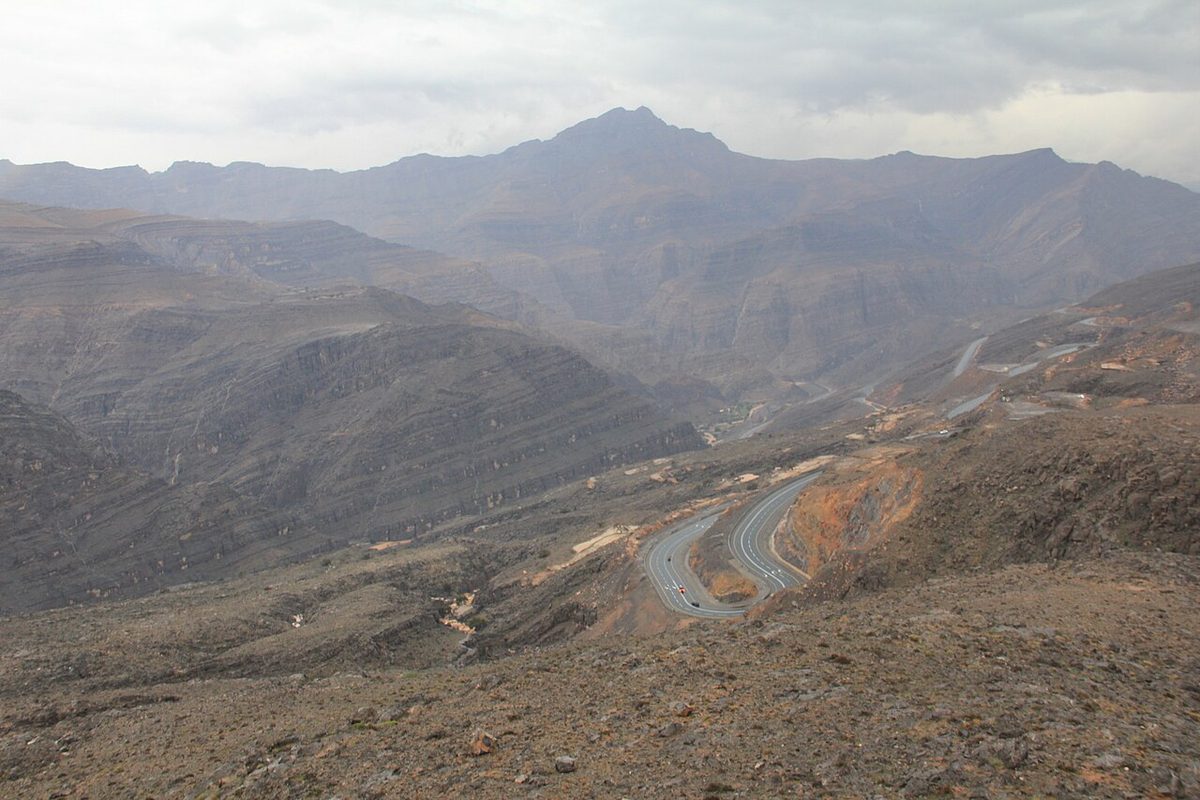
The Hajar Mountains on the road up to Jebel Jais. In winter it’s noticeably cooler at the top than on the coast. Photo: Carole Marxer, CC BY-SA 4.0, Wikimedia Commons.
Fujairah: a different sea
The only emirate that lies entirely on the east coast, on the Gulf of Oman. The sea is different here, the mountains come right down to the water, and off Al Aqah beach there’s a coral reef with good snorkelling. Fujairah also has Al Bidya Mosque, the oldest surviving mosque in the country, and the 16th-century Fujairah Fort. A one-day route is in Fujairah: things to do, and if you’d like to get out on the water, there’s the Fujairah cruise.
How I’d spread the emirates over a week
This is how I usually suggest building a week if you want to see more than Dubai:
- Days 1–2: Dubai. A city overview, the old town, an evening in the desert.
- Day 3: Abu Dhabi. The mosque in the morning, the Louvre or Qasr Al Watan in the afternoon.
- Day 4: Sharjah. The old centre and the museums or, with children, Sharjah Safari in the morning.
- Day 5: Ras Al Khaimah or Fujairah. Mountains and the zipline, or snorkelling and the oldest mosque. Either one is a full day.
- Half a day: Ajman and Umm Al Quwain. They sit one after another along the coast, so they’re easy to combine in one outing.
What I don’t recommend: trying to “tick off” all seven emirates in one day. That’s 6–7 hours in the car, and mostly what you’ll see is the motorway.
When to go
The season for trips around the emirates is October to April. In Ajman, according to the emirate’s tourism authority, average temperatures from November to March stay between 14 and 30 °C, while in summer they reach 48 °C. In summer, set off early in the morning, and save the mountains for the cooler months: on Jebel Jais it can drop below zero in winter.
What to know before you go
- Passport. There are no borders between the emirates, but Musandam is in Oman, so you need your passport and an Omani visa under the rules for your nationality. Check before the trip.
- Clothing. For Sharjah and for mosques, cover your shoulders and knees. Swimwear only on the beach or by the pool.
- Alcohol. Don’t bring any into Sharjah.
- Friday. Some museums open only in the afternoon on Fridays.
- The road. There are traffic jams into Sharjah in the morning and evening; I plan departures to miss the rush hour.
How I can help
I run private trips with pickup from your hotel and get guests back on time. For Abu Dhabi there’s my day in the capital tour; Sharjah with children works well through Sharjah Safari; and on the east coast and in Oman you can head out on the water with the Fujairah cruise or Musandam. Tell me how many days you have and what you love, and I’ll suggest which emirates are worth your time.
Checked on 11 October 2026. Sources: u.ae, Visit Jebel Jais, Visit Ras Al Khaimah, Visit Sharjah, and the tourism authorities of Ajman and Fujairah.
Practical answers
Frequently asked questions
How many emirates are in the UAE and what are they called?
Seven: Abu Dhabi, Dubai, Sharjah, Ajman, Umm Al Quwain, Ras Al Khaimah and Fujairah. Six of them united on 2 December 1971, and Ras Al Khaimah joined on 10 February 1972.
Which is the largest emirate and which is the smallest?
The largest is Abu Dhabi, at 67,340 km². The smallest is Ajman, with Umm Al Quwain second smallest.
Which emirate is on the Indian Ocean side?
Fujairah is the only emirate that lies entirely on the east coast, on the Gulf of Oman. Sharjah also has land on the east coast: Kalba and Khor Fakkan.
Can you visit several emirates in one day?
The neighbouring ones, yes: Sharjah, Ajman and Umm Al Quwain sit one after another along the same coast. I suggest giving Ras Al Khaimah and Fujairah a day each, because the drive there and back alone takes 3–4 hours.
Where in the UAE is alcohol not allowed?
In Sharjah. It is a dry emirate, and it also has stricter rules on modest dress in public places. In the other emirates alcohol is served only in licensed venues.
Which emirate is best for a beach holiday apart from Dubai?
Ras Al Khaimah if you want all-inclusive resorts with mountains nearby, or Fujairah if you want coral and snorkelling. Both are about an hour and a half from Dubai without traffic.