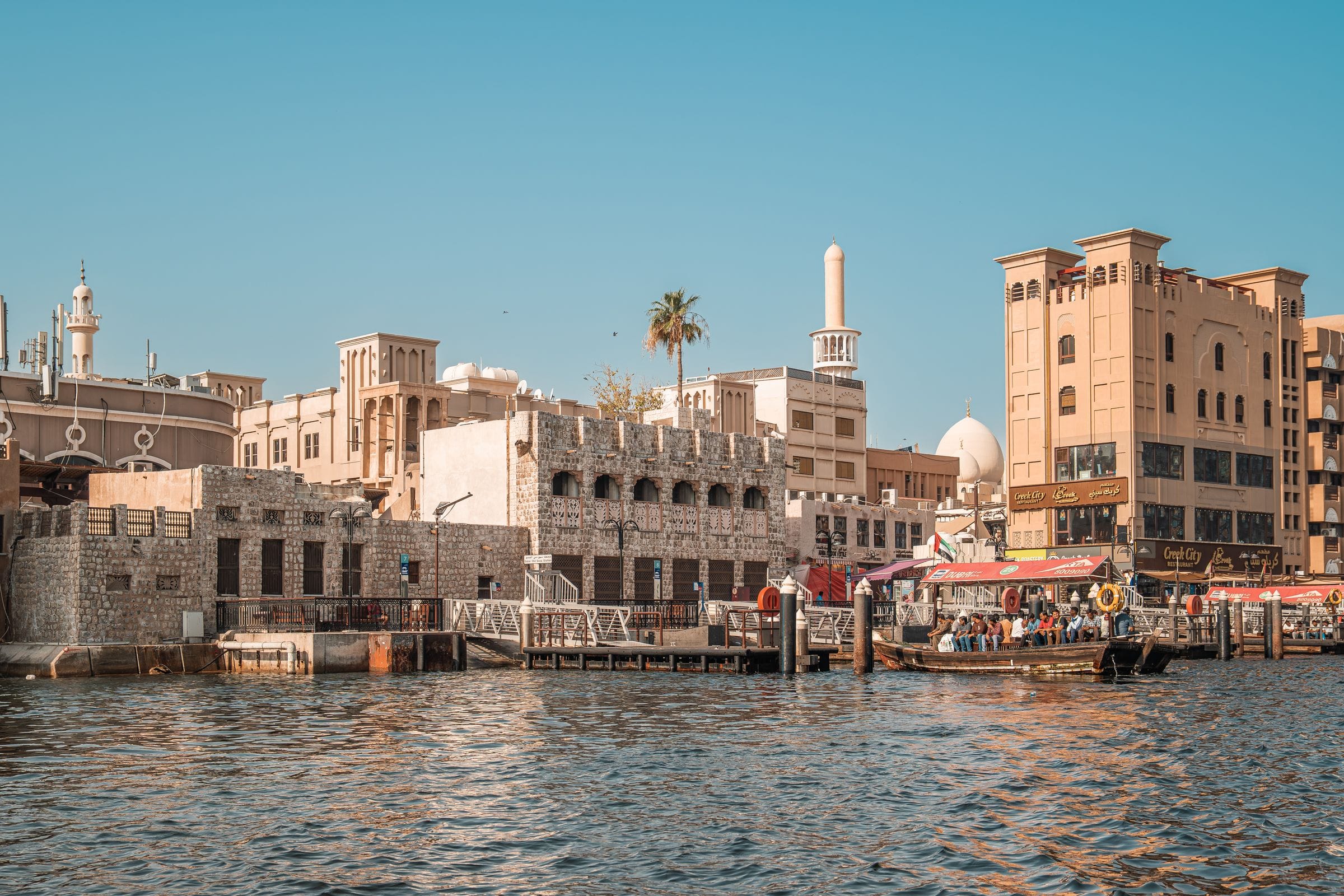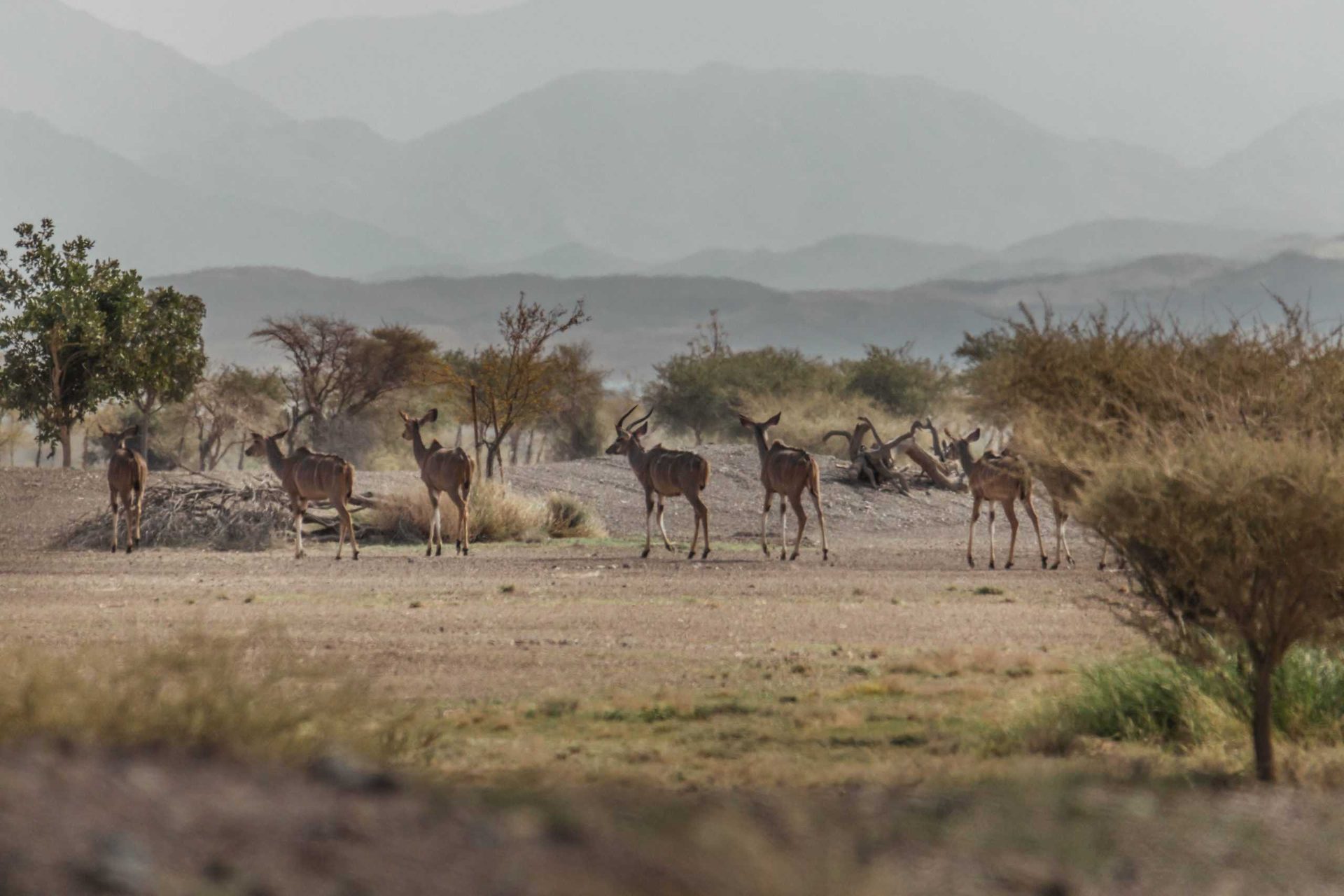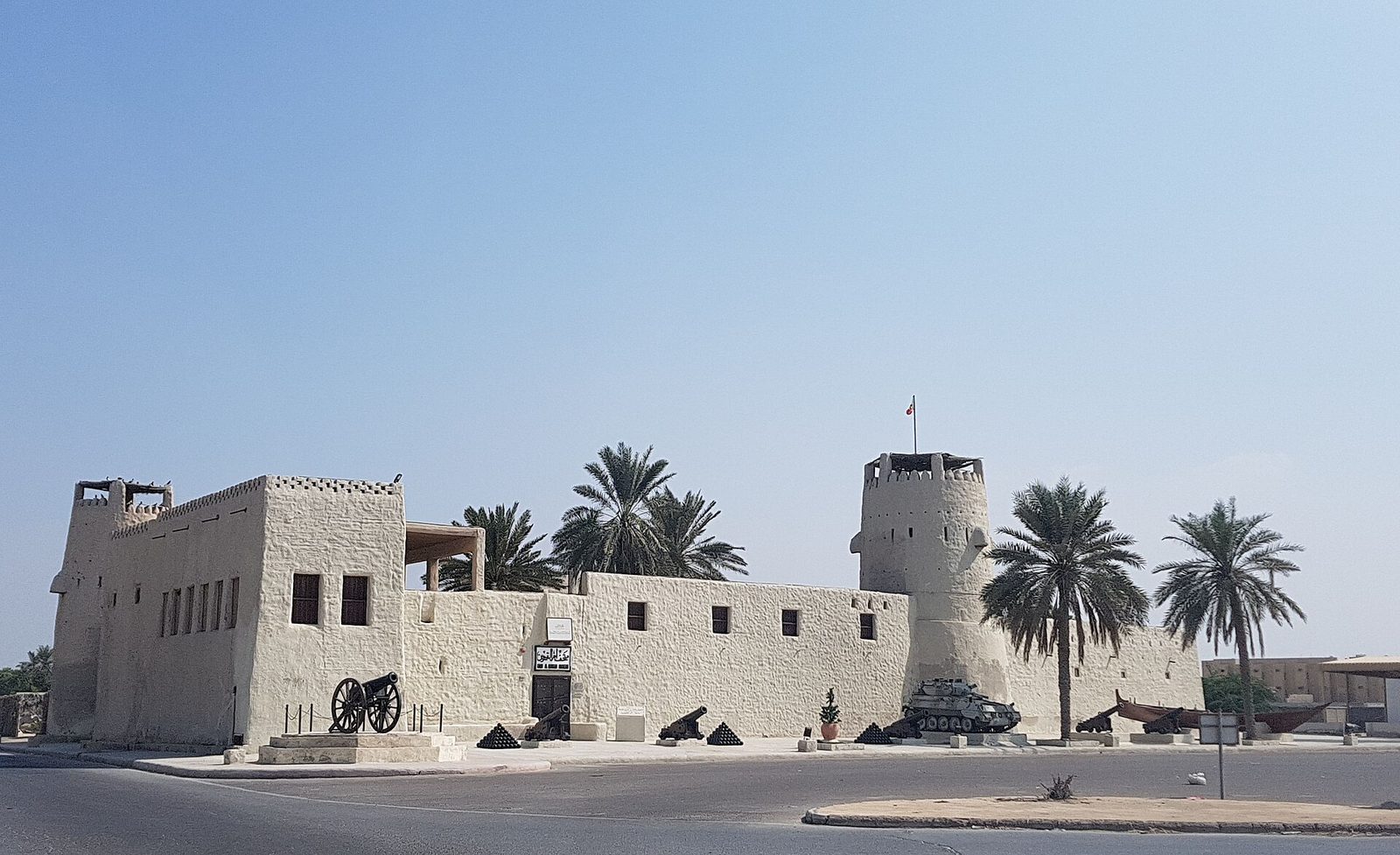
Umm Al Quwain is the second-smallest emirate in the UAE and, to my mind, the most unhurried. There are no skyscrapers and no big attractions. Instead there’s an old town on a narrow spit between the sea and the creek, an 18th-century fort, mangroves full of birds, a lagoon, and beaches that are almost empty on a weekday.
People don’t come here for a checklist of sights but for a mood: to see what the Emirates coast looked like before the big building boom. Below is what to see, what of it is actually open, and how to fit it all into one day.
Umm Al Quwain in brief
- Distance: about 64 km from Dubai Mall, roughly an hour without traffic.
- Character: a quiet lagoon emirate: the old town, mangroves, fishermen, beach hotels.
- How long: half a day, or a full day together with Ajman.
- Best season: October to April. In winter there are more birds in the mangroves.
- Important: many historic sites are excavations or under restoration. Check opening hours before you go.
The old town and the fort
The old town, Al Madina Al Qadima, sits on a narrow spit between the sea and the creek. It’s a cluster of small coral-stone houses, many of them now shops, with barjeel wind towers and ventilation openings shaped like stars and crescents. Some of the houses are more than 150 years old. Part of the old town wall with its watchtowers was restored and opened as a public park in 2006.
In the middle stands the fort, built in 1768 by Sheikh Rashid bin Majid Al Mualla. It was first the ruling family’s home, then a police station, and in 2000 it opened as the Umm Al Quwain National Museum. Inside are weapons and finds from the Ed-Dur excavations. I check the museum’s opening hours before every trip: the emirate’s official tourism site still has very little detail.
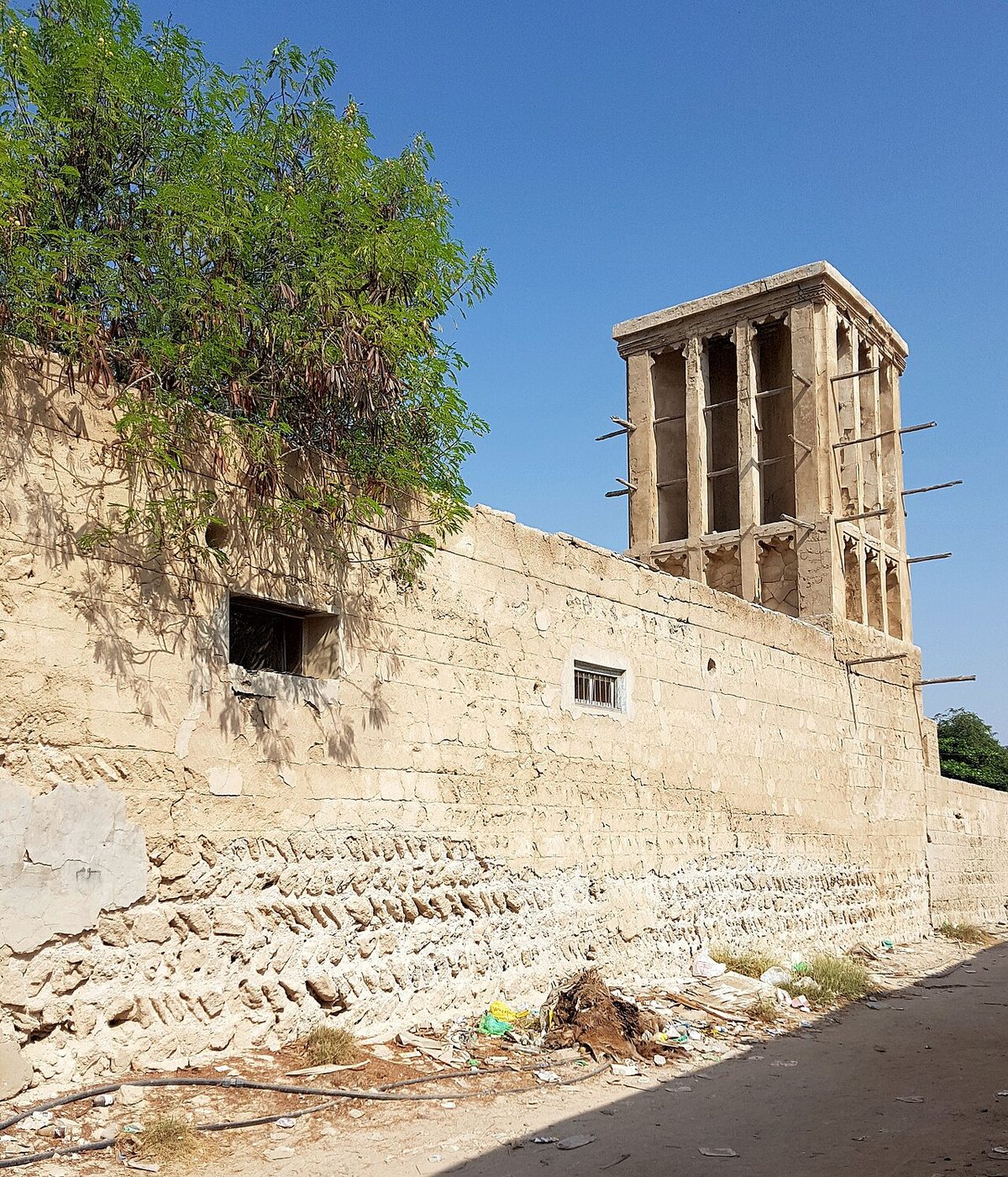
A wind tower on an old house in Umm Al Quwain. This is how homes were cooled before air conditioning. Photo: Alexandermcnabb, CC BY-SA 4.0, Wikimedia Commons.
Right by the old town is the harbour, with a dhow yard and fishing boats. Walk along the water in the morning, when the fishermen come back.
Al Sinniyah Island: the pearl divers’ town
Opposite the old town lies Al Sinniyah Island. The people of Umm Al Quwain used to live there, and moved to the mainland more than 200 years ago when the island ran out of drinking water.
In November 2022 a Christian monastery was announced on the island: a community lived here from roughly the late 6th to the mid-8th century, and it’s the second monastery found in the UAE. Then, in March 2023, Umm Al Quwain’s Department of Tourism and Archaeology announced the discovery of the oldest pearling town in the Arabian Gulf. It’s about 1,300 years old. Hundreds of houses stood on 12 hectares, home to several thousand people: wealthy merchants in courtyard houses and fishermen in one- and two-room huts. Archaeologists found pearls, a pearl diver’s weight, coins and pottery, some of it brought from India.
Important: this is an excavation, not an open museum. The archaeologists plan a visitor centre, but for now you need to ask separately about visiting the island. Even from the shore, though, once you know the story you look at the island differently.
The mangroves and Khor Al Beidah lagoon
Khor Al Beidah is a tidal wetland with mangroves, crabs, molluscs and wintering waders. BirdLife International and the UAE Ministry of Climate Change and Environment list it as an Important Bird Area. Here you can see the western reef heron and the crab plover.
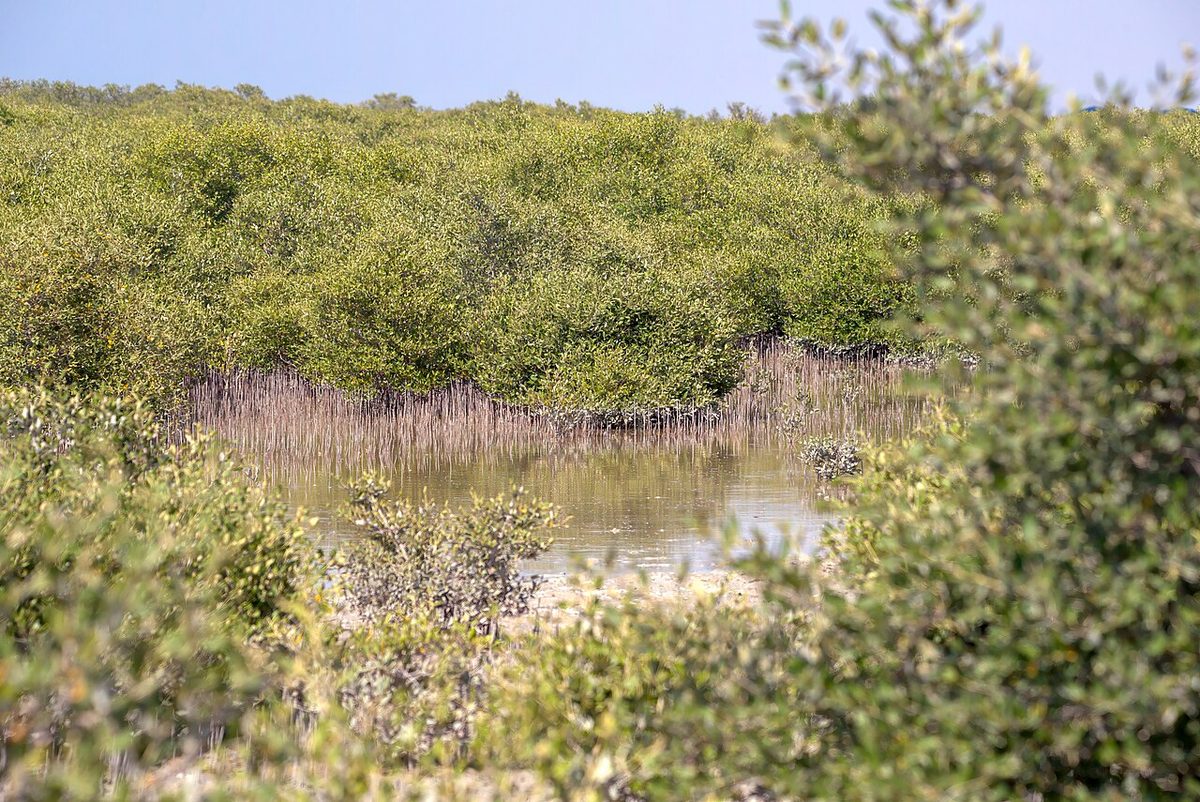
Grey mangroves in Umm Al Quwain. In winter there are more birds in the lagoon, and the water is calm. Photo: AmethystDreams, CC BY-SA 4.0, Wikimedia Commons.
The ecosystem is fragile: the mangroves suffer from clearing and construction. So look at them from the water or from the shore, don’t walk into the thickets, and don’t leave rubbish behind. Among the things to do, the emirate’s tourism authority lists fishing, Mangrove Beach and desert safaris; book them in advance.
Falaj Al Mualla: an oasis inland
About 30 km from the coast is the oasis of Falaj Al Mualla, with its date palm groves. It has a fort that was restored from 2009 and opened in December 2015. Inside are the majlis of Sheikh Saud and stalls selling embroidery, plants and sweets. It’s a good stop if you’re heading on to the mountains or to Ras Al Khaimah.
Ed-Dur: a 2,000-year-old port
On the emirate’s coast lies Ed-Dur, one of the largest archaeological sites in the country. The port flourished in the 1st century AD, and a temple to the sun god stands here. It’s an excavation site, not an open-air museum, and the temple is suffering from erosion. Finds from the dig are on show in the fort museum.
A one-day plan
| Time | What we do |
|---|---|
| 8:30 | Leave Dubai |
| 9:30 | The old town: coral houses, wind towers, the park by the wall |
| 10:30 | The fort and the national museum (I check the hours in advance) |
| 11:30 | The harbour and dhow yard, with a view of Al Sinniyah Island |
| 12:30 | Lunch at a beach hotel on the lagoon |
| 14:00 | A break by the water or on the beach during the hottest hours |
| 16:00 | The mangroves and the lagoon, birds before sunset |
| 17:45 | Sunset on the beach |
| 18:30 | Back to Dubai |
If you want two emirates in a day, spend the morning in Ajman (the museum, the dhow yard, the fish market) and come here after lunch for the mangroves and the sunset. And if you’re heading further north, Umm Al Quwain makes an easy stop on the way to Ras Al Khaimah.
Where to eat and stay
There’s no Dubai-style restaurant scene here, and that’s fine. The easiest option is the beach hotels listed by the emirate’s tourism authority: Palma Beach Resort with three pools and its own beach, Flamingo Beach with views of the mangrove islands (about a 10-minute walk from the fort museum), Barracuda Beach on the lagoon, and Vida Beach. The old town has simple cafes. If you’d like fish, ask what was caught today.
What to know
- Clothing: in the old town and the museum, cover your shoulders and knees. Swimwear only on the beach and by the pool.
- Shade and water: there’s little shade on the spit and in the mangroves. Take a hat and water, even in winter.
- Birds: a pair of binoculars changes the mangroves completely.
- Opening hours: the emirate’s official tourism site has few details so far, so phone or check in advance.
When to go
October to April. In winter there are more migrating birds in the lagoon, and walking around the old town during the day is comfortable. In summer, come only for the morning and the sunset.
How I can help
I pick guests up from their hotel and plan the day so it isn’t lost in the car: Umm Al Quwain pairs well with Ajman or works as a stop on the way to Ras Al Khaimah. If you’re curious about coastal life before oil, start with Old Dubai: pearls, dhows and wind towers are the main characters there too. And for an overview of every emirate, read The seven emirates of the UAE.
Checked on 11 October 2026. Sources: The National, u.ae, Visit UAQ (Umm Al Quwain Department of Tourism and Archaeology), BirdLife International. What is open to visitors changes, so check before you go.
Practical answers
Frequently asked questions
What is there to see in Umm Al Quwain?
The old town with coral-stone houses and wind towers, the 1768 fort with the national museum, the harbour and its dhow yard, the mangroves and Khor Al Beidah lagoon, and further inland the oasis and fort of Falaj Al Mualla.
How long does it take to get from Dubai to Umm Al Quwain?
About 64 km from Dubai Mall, roughly an hour without traffic. The road runs through Sharjah and Ajman, so outside rush hour the drive is much quicker.
Can you visit Al Sinniyah Island?
For now it is an excavation site, not an open museum. The archaeologists plan a visitor centre to show the pearling town and the monastery to the public. Check what is open before you go.
Is it Umm Al Quwain or Umm Al Qaiwain?
Both refer to the same emirate. The usual English spelling is Umm Al Quwain, often shortened to UAQ, but you will also see Umm Al Qaiwain on maps and signs.
Does Umm Al Quwain have beaches?
Yes, and they are usually calm and quiet. The easiest are at the beach hotels on the lagoon and the sea: the emirate's tourism authority lists Palma Beach, Flamingo Beach, Barracuda Beach and Vida Beach.
Is Umm Al Quwain worth visiting as a tourist?
If you love quiet, water, birds and old houses, yes. If you want attractions and big museums, choose Sharjah or Abu Dhabi instead, and come here for half a day together with Ajman.