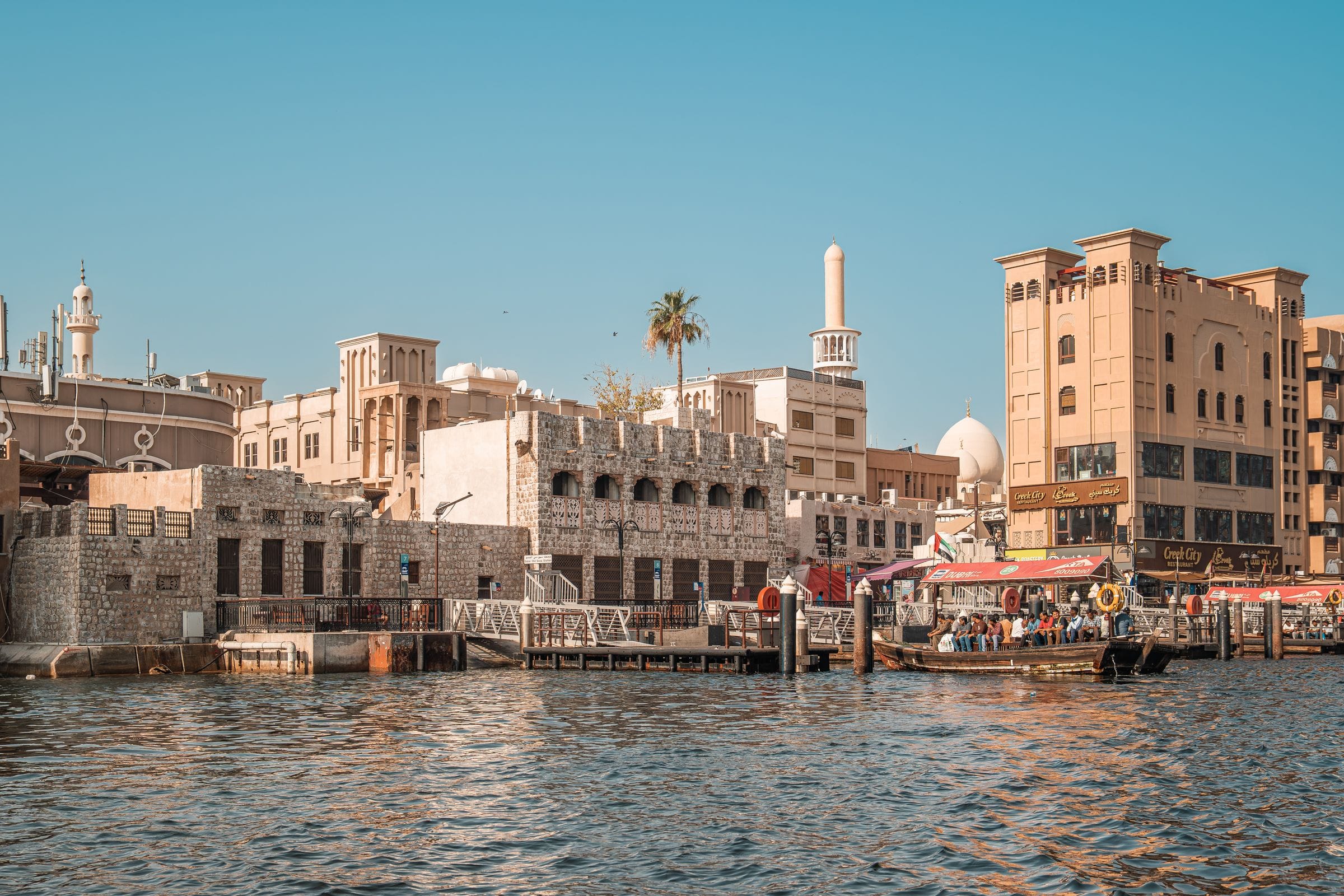
Old Dubai isn’t a single sight, and it isn’t a set dressed up to look old. It’s the two banks of Dubai Creek, tied together by trade, boats and people: Bur Dubai with the Al Fahidi quarter on one side, Deira with the spice and gold souks on the other. Drop the pins into a navigation app and you get a string of pretty stops. Walk them in the right order and you start to see where the modern city came from.
This walk has been on my Instagram for years: morning tours through Bastakiya, the shared boat across the Creek, the Spice Souk, the Friday life of the quarter, small galleries and lunch after the tour. The advice I repeat most often is simple: don’t come here just for the Gold Souk, and don’t skip the ordinary abra.
Checked in October 2026. Abra fares and museum hours change, so check them on the day.
The route in 3–4 hours
| Stage | Time | Why go |
|---|---|---|
| Al Fahidi | 60–90 minutes | Architecture, courtyards, the city’s history |
| The Creek waterfront | 20–30 minutes | Boats, the rhythm of trade, photos |
| Abra to Deira | 10–20 minutes with waiting | The crossing is part of the route |
| Spice Souk | 30–45 minutes | Scents, produce, talking to the traders |
| Gold Souk | 30–45 minutes | The jewellery trade and its windows |
Timing depends on the season and your interests. Add a museum, coffee, a proper lunch or buying jewellery, and the route easily stretches to six hours.
Al Fahidi: first, learn how to look
The historic quarter is often called Bastakiya. What matters here isn’t one “main” building but how the space works: the narrow lanes create shade, the inner courtyards separate family life from the street, and the wind towers pulled air into the houses long before air conditioning.
Don’t race through the quarter in twenty minutes. Step into one courtyard, choose one small exhibition and notice how the temperature changes between an open square and a tight alley. Details like that explain the architecture better than a list of dates.
Visit Dubai describes Al Fahidi as a pedestrian district of museums, galleries and cafés. That’s a good formula for the route: the history here comes through in short stops, not through one big attraction.
Don’t confuse it with Al Seef
Next door, Al Seef looks like a continuation of the old town, but it’s a modern development styled after historic architecture. On Instagram I’ve shown how even international chain brands fit their signs into that look. Al Seef is pleasant for an evening walk and dinner by the water, but it doesn’t replace Al Fahidi.
If you’re short on time, give the first hour to the real historic quarter and keep Al Seef for coffee or for coming back after sunset.
The Creek: not a backdrop but the reason the city exists
Dubai Creek was the city’s trading artery for a long time. You still see dhows, cargo boats and the small passenger abras on the water. That’s why it makes more sense to cross it the way residents and traders do, rather than drive around it by taxi.
Head for the Dubai Old Souk or Al Fahidi station and take an ordinary shared abra. A private boat ride can be lovely, but for a first visit a short crossing with other passengers captures the rhythm of the place better. On the two classic traditional lines the fare is 1 AED, paid in cash to the boatman; other abra routes cost a little more. Check the route and the station on the day.
The Spice Souk: ask, don’t just take photos
At the Spice Souk you’ll find saffron, dried lemons, tea, nuts, oils, incense and spice blends. Don’t buy the first pretty bag. Ask about the country of origin, the variety, the weight and the price for the same amount in two or three shops.
Bargaining is expected, especially if you buy several things. But the best conversation starts with interest in the product, not with a demand for a discount: how to use dried lime, how the different dates differ, how to store saffron. In my archive there’s a story of a chef pointing me to a particular stall with good saffron. A tip like that is worth more than a vague “buy it at the souk”, because quality really does vary.
The Gold Souk: the price has parts
The Gold Souk isn’t only a place to shop. It shows Dubai’s role in the region’s jewellery trade. First look at a few windows and decide on a style. Then ask about the purity, the weight, the current price of the metal and the making charge separately.
What you can usually negotiate is the making charge and the margin, not the market price of gold. Ask for a receipt and don’t let the seller’s urgency replace your own decision. If the piece is expensive or complicated, compare at least two shops.
When to go and what to wear
From October to April, it’s comfortable to start in the morning or a few hours before sunset. In the evening the souks are livelier, but museums and cultural spaces may close earlier than the shops. In summer, go out early, carry water and plan air-conditioned breaks.
Clothes should be light but respectful of the residential and religious setting of the area. Comfortable shoes matter more than smart ones: paving stones, kerbs, piers and a few kilometres on foot soon test your footwear.
Mistakes that spoil the walk
- coming at midday in summer;
- starting with the Gold Souk and losing the historical thread;
- taking Al Seef for the whole old town;
- crossing between the banks by taxi instead of abra;
- buying spices without comparing weight and origin;
- squeezing Old Dubai between the Marina and Palm Jumeirah into one overloaded day.
How I’d plan the day
Start in Al Fahidi, have an Arabic coffee, walk down to the Creek and cross to Deira. After the souks, leave time for a late lunch: Indian, Iranian and Arabic food feel more natural here than an expensive restaurant with a view.
If you’re going on your own, my guide to Dubai’s metro, taxis and the nol card will help. If you want more than the facades, and would like to hear the stories of the merchant families, the pearl diving and the city’s architecture, have a look at my Old Dubai tour.
Sources
Practical answers
Frequently asked questions
How much time do I need for Old Dubai?
Allow 3–4 hours for Al Fahidi, the abra and the two souks. With museums, lunch and unhurried shopping, it's almost a full day.
Where should I start an Old Dubai walk?
For a first visit, start in Al Fahidi on the Bur Dubai side, walk down to the Creek, cross by abra and finish at the souks in Deira.
Can I do the Old Dubai walk on my own?
Yes. Without context, though, the quarter easily becomes a photo walk: the signs and the buildings don't always explain the trading and family history of the city.
What is the best time to visit Old Dubai?
From October to April, mornings or the hours before sunset are comfortable. In summer, go early and alternate the street with air-conditioned stops.
Do I need cash in Old Dubai?
Cards are accepted in many places, but carry a little cash. The traditional abras between Bur Dubai and Deira take cash only, and so do some small shops and stalls.