If you’re thinking about doing business in Dubai, the first decision is where to register the company: in a free zone or on the mainland. That choice drives the cost, the office, the visas, the taxes and even who you’re allowed to sell to.
To be upfront: I’m a guide, not a business consultant. I don’t register companies or process visas. But many people come to Dubai first to see the city and only then decide whether to move their business here. So I’ve pulled together, from official sources, what’s worth knowing before your first conversation with a consultant.
Free zone or mainland: the key difference
A free zone is an economic zone with its own regulator, which issues licences and handles visas. Companies there are fully foreign-owned, and goods brought into the free zone and shipped on are exempt from customs duty. There’s one restriction, but it matters: a free zone company generally can’t sell directly to the UAE market. For that you need a local distributor, a branch or a separate mainland company. Since 2025 Dubai has had a separate procedure that lets free zone companies get a permit to operate on the emirate’s mainland: check the conditions with Dubai’s Department of Economy and Tourism.
A mainland company is licensed by the emirate’s economic department, which in Dubai is the Department of Economy and Tourism (DET). It can trade across the whole country and bid for government contracts. Since 2021 you no longer need a local partner holding 51%: a foreigner can own the company outright. The exceptions are activities of strategic importance: defence and security, telecoms, banking, insurance, currency exchange and a few other categories.
A simple rule of thumb:
- clients outside the UAE, consulting, online business, trading through the ports: usually a free zone;
- a shop, a restaurant, services for UAE residents, government clients: usually the mainland.
Licence types
The licence type follows the activity. According to the Ministry of Economy and Tourism, the UAE has six licence types: industrial, commercial, professional, tourism, agricultural and craft. In practice, three are the most common:
- commercial: trading goods;
- professional: services and consulting;
- industrial: manufacturing.
The UAE has more than 2,000 business activities, and you can put several on one licence. Each emirate and each free zone has its own list and formats: Dubai, for example, also has the eTrader licence for online trading.
How a company is set up: the steps
In a free zone
- Choose a free zone that fits your industry. Dubai has more than twenty: DMCC (JLT and Uptown Dubai), Meydan, Dubai Silicon Oasis, Dubai Airport Free Zone, Jebel Ali Free Zone and others. Other emirates have free zones too, such as RAKEZ in Ras Al Khaimah.
- Choose the company form: FZE, FZCO, LLC or a branch; not every free zone registers every form.
- Pick a name and get it checked.
- Apply on the free zone’s website and upload your documents. According to u.ae, after review the licence is issued within 14 working days in most cases. Some free zones offer fast-track online licences.
On the mainland
The standard route, as the Ministry of Economy and Tourism describes it: choose the activity and legal form (most often an LLC), register a trade name, get initial approval, sign the memorandum of association, find premises, get any extra approvals from the authorities, and pay for the licence. There are digital services for the mainland too: the federal Basher platform and the emirates’ economic departments’ online services.
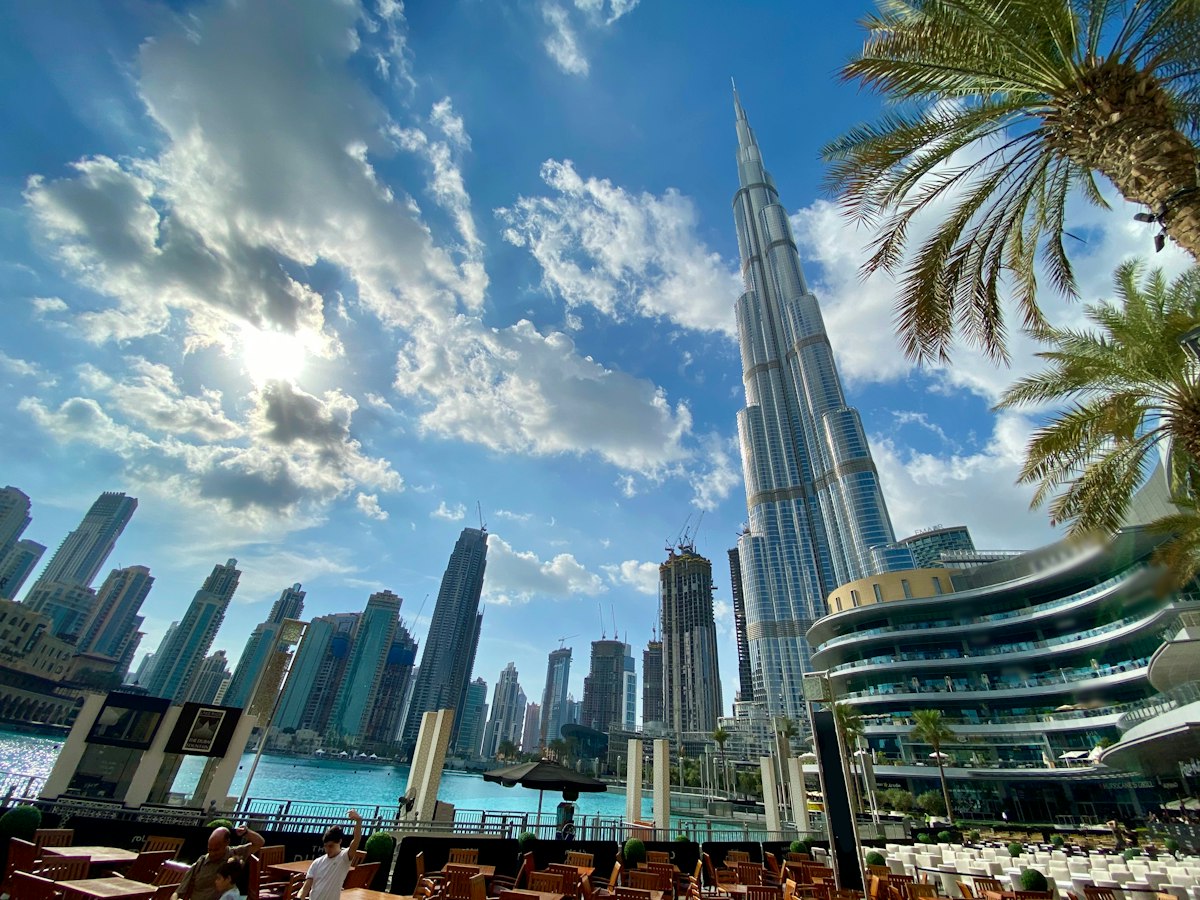
Downtown Dubai. A mainland office almost always means a registered tenancy contract, while in a free zone a flexi-desk is often enough to start. Photo: Jason Bagley from Cape Town, South Africa, CC BY-SA 2.0, Wikimedia Commons
What it costs: benchmarks for October 2026
There’s no single price: it depends on the free zone, the number of activities, the office and the visas. A few benchmarks from the free zones’ official websites:
- Meydan Free Zone: a digital licence with a flexi-desk from 12,500 AED, the instant Fawri licence from 15,000 AED. An investor visa from 4,000 AED, an employee visa from 3,500 AED, the company immigration card from 2,000 AED, and the medical test and Emirates ID from 2,250 AED. By the free zone’s own calculation, the first investor visa adds about 7,850 AED.
- RAKEZ (Ras Al Khaimah): the Biz Starter package from 6,000 AED and the All-Inclusive package with one visa for 14,000 AED.
On Dubai’s mainland, costs are made up of DET fees, office rent and approvals from the authorities, which differ by activity. Meydan Free Zone notes in its FAQs that the mainland usually requires an office with a tenancy contract registered in the Ejari system, while in a free zone a flexi-desk is usually enough.
Remember that the licence is renewed every year. Budget for the whole first year: licence, visas, insurance, accounting, an audit if you need one, and the office.
The cheapest options: a table for October 2026
Dubai isn’t the cheapest place for a company. Free zone licences in the neighbouring emirates (Ajman, Sharjah, Ras Al Khaimah and Umm Al Quwain) cost two to three times less, and a company from one of those free zones can open a bank account and sponsor visas just the same. You can still live and work in Dubai: the drive from Ajman or Sharjah takes 30–60 minutes.
Below are the cheapest packages the free zones publish on their official websites. Prices were checked on 17 October 2026. Almost all are “from” prices: the final figure depends on the activities, the number of partners and the visas.
| Free zone | Emirate | No visa, AED a year | With one visa, AED | What matters |
|---|---|---|---|---|
| Ajman Media City Free Zone | Ajman | 4,999 (Business Club) | 12,999 (Visionary, renewal 8,999) | Up to 10 activities, coworking, no physical office needed |
| SPC Free Zone | Sharjah | from 5,750 | from ~10,250: licence plus visa from 4,495 | Plus establishment card; discounts for multi-year payment |
| SHAMS | Sharjah | ~5,760 (Media package) | ~12,810 | Estimate from the free zone’s calculator, VAT included |
| RAKEZ | Ras Al Khaimah | 6,000 (Biz Starter) | 14,000 (All-Inclusive) | Instant online licence; extra visa 4,000 |
| Innovation City (formerly RAK DAO) | Ras Al Khaimah | from 6,600 (Idea) | from 13,200 (Seed) | Technology free zone |
| UAQ FTZ | Umm Al Quwain | n/a | 12,500 all-inclusive (UAQ Start) | Visa, Emirates ID, medical and insurance included |
| Meydan Free Zone | Dubai | from 12,500 | 14,350 + first visa ~7,850 | Online licence in one working day |
| GoFreelance freelance licence | Dubai | 7,520 | plus card 2,000 and visa 4,600 | IT, media, education and design only; no employees |
For comparison: at DMCC, one of Dubai’s best-known free zones, a basic package with a visa costs from 29,000–35,000 AED.
What’s not in the table. Ajman Free Zone (AFZ), IFZA and Fujairah Creative City don’t publish package prices: they quote on request or through partners. Online you’ll see figures from 5,500 to 13,000 AED for them, but there are no official prices on their sites, so ask the free zone itself for a quote. Dubai’s mainland has an inexpensive trader licence for online trading, but according to the Department of Economy and Tourism it’s meant for UAE and GCC nationals living in Dubai.
How not to overpay
- Look at the price with a visa. A no-visa package is a licence, not residency. If you need the company for a visa, compare the “with one visa” column.
- Factor in renewal. The licence is paid every year. Some free zones guarantee the same price on renewal, others don’t.
- Compare like with like. One package includes the medical test, Emirates ID and insurance, another doesn’t. The establishment card, e-channel and insurance are often separate lines.
- Think about the bank. A cheap licence doesn’t guarantee an account: the bank looks at your activity, your clients and your presence in the country.
- Remember the restriction. A free zone company generally doesn’t sell directly to customers in the UAE market. For online services and clients abroad that’s usually not a problem.
- Don’t trust old lists. Promotions change every few months. Open the package page on the official site and note the date.
Visas through your company
Your own company is one of the ways to get a UAE residence visa. The owner or partner gets an investor visa through the licence and can then sponsor a spouse and children. The number of visas depends on the licence package and the office you take. The process includes the entry permit, the medical test, biometrics for the Emirates ID and the visa itself, which requires you to be in the country.
Taxes: corporate tax and VAT
Corporate tax applies to financial years starting on or after 1 June 2023. The rates: 0% on taxable income up to 375,000 AED and 9% above that. It applies to all licensed companies, including those in free zones.
Free zone benefits remain only for companies that meet all the requirements and don’t do business on the mainland. The conditions are set out in the Federal Tax Authority (FTA) guide for Free Zone Persons, and they’re worth going through with a tax adviser before you register.
Small Business Relief. A resident with revenue of no more than 3 million AED in the current and all previous tax periods can elect to be treated as having no taxable income. The election is made for each period. Qualifying Free Zone Persons can’t use it. Under a Ministry of Finance decision, it applies to tax periods ending no later than 31 December 2026, so watch for news of an extension.
VAT is 5%. Registration is mandatory once taxable supplies and imports exceed 375,000 AED a year, and voluntary from 187,500 AED.
The bank account: the reality
A licence doesn’t mean an account. Banks check the owners, the source of funds, the actual business activity and the company’s connection to the UAE. Be ready to show what the company does and where the money comes from. Documents, balances and timelines are covered in detail in my article on how to open a bank account in the UAE.
What to check before you register
- Where your clients are: in the UAE or abroad. That decides free zone versus mainland.
- Whether your activity is allowed in the chosen free zone and needs separate permits. Food businesses, for example, are regulated by the municipalities, and media by the relevant authorities.
- How many visas you need at the start and in the first year.
- The full cost of the first year and of renewal.
- Your tax obligations: FTA registration, reporting, VAT.
- Whether your documents are ready for the bank: business history, contracts, proof of income.
If you’re coming to see the country
Before a big decision, it helps to spend a few days in Dubai and see how the city lives. I don’t help with company paperwork, but I can show you the country. On a Dubai city tour you’ll see the business districts, Downtown and the coast. A walk through Old Dubai shows where the city’s trading history began. And a day in Abu Dhabi shows you the capital, where the federal authorities are based. If you need an airport transfer, that’s in my transfers too.
This is not legal or investment advice: rules and prices change, so check them before you act.
Checked on 17 October 2026. Sources: the UAE government portal u.ae, the Federal Tax Authority (tax.gov.ae), the official websites of Ajman Media City, SPC Free Zone, SHAMS, RAKEZ, Innovation City, UAQ FTZ, Meydan Free Zone, DMCC and Dubai Development Authority.
Practical answers
Frequently asked questions
How much does it cost to set up a company in Dubai?
As of October 2026, the cheapest official free zone packages without a visa cost about 5,000–6,000 AED a year: Ajman Media City from 4,999 AED, SPC in Sharjah from 5,750 AED, RAKEZ from 6,000 AED. In Dubai itself, a Meydan Free Zone digital licence starts at 12,500 AED. Packages with one residence visa usually start at 12,500–14,000 AED. Renewal, insurance and accounting are extra.
What is the cheapest free zone in the UAE?
On official prices as of October 2026, the cheapest no-visa package is Business Club at Ajman Media City Free Zone for 4,999 AED a year. Close behind are SPC Free Zone in Sharjah (from 5,750 AED) and SHAMS (about 5,760 AED on the free zone's calculator). If you need a residence visa, compare packages with a visa: UAQ Start for 12,500 AED, Visionary at Ajman Media City for 12,999 AED, All-Inclusive at RAKEZ for 14,000 AED.
Free zone or mainland: which should I choose?
A free zone is simpler and usually cheaper to start, but direct sales to the UAE market are restricted. A mainland company can trade across the country and with government clients, but generally needs a physical office. It depends on where your customers are.
Can a foreigner own 100% of a company in the UAE?
Yes. Since 2021, foreigners can fully own mainland companies, except in certain activities of strategic importance such as banking, insurance, telecoms and defence. In free zones, 100% foreign ownership is the standard rule.
Does owning a company give me a UAE residence visa?
Yes, a company owner or partner can get a residence visa through their licence and then sponsor their family. Visa services are paid separately from the licence: at Meydan Free Zone, for example, the first investor visa adds about 7,850 AED.
What taxes does a UAE company pay?
Corporate tax at 0% on profit up to 375,000 AED and 9% above that, plus 5% VAT, with mandatory registration from 375,000 AED of turnover a year. Small businesses with revenue up to 3 million AED can use the temporary Small Business Relief.
Can I set up a company in Dubai remotely?
Many free zones issue licences online, and there are digital platforms for the mainland. But a visa needs a medical test and biometrics for the Emirates ID in the UAE, so you'll need at least one trip.