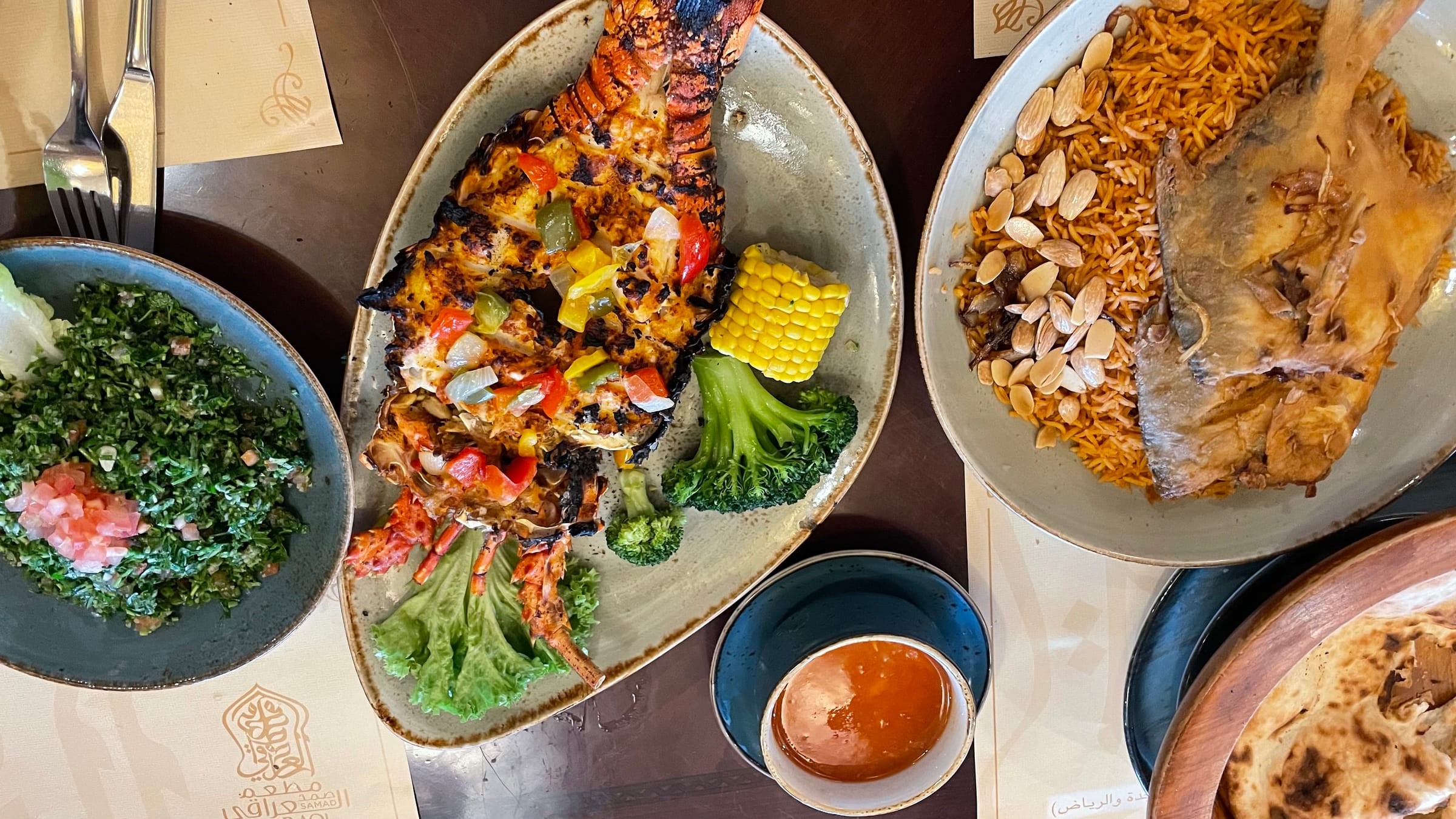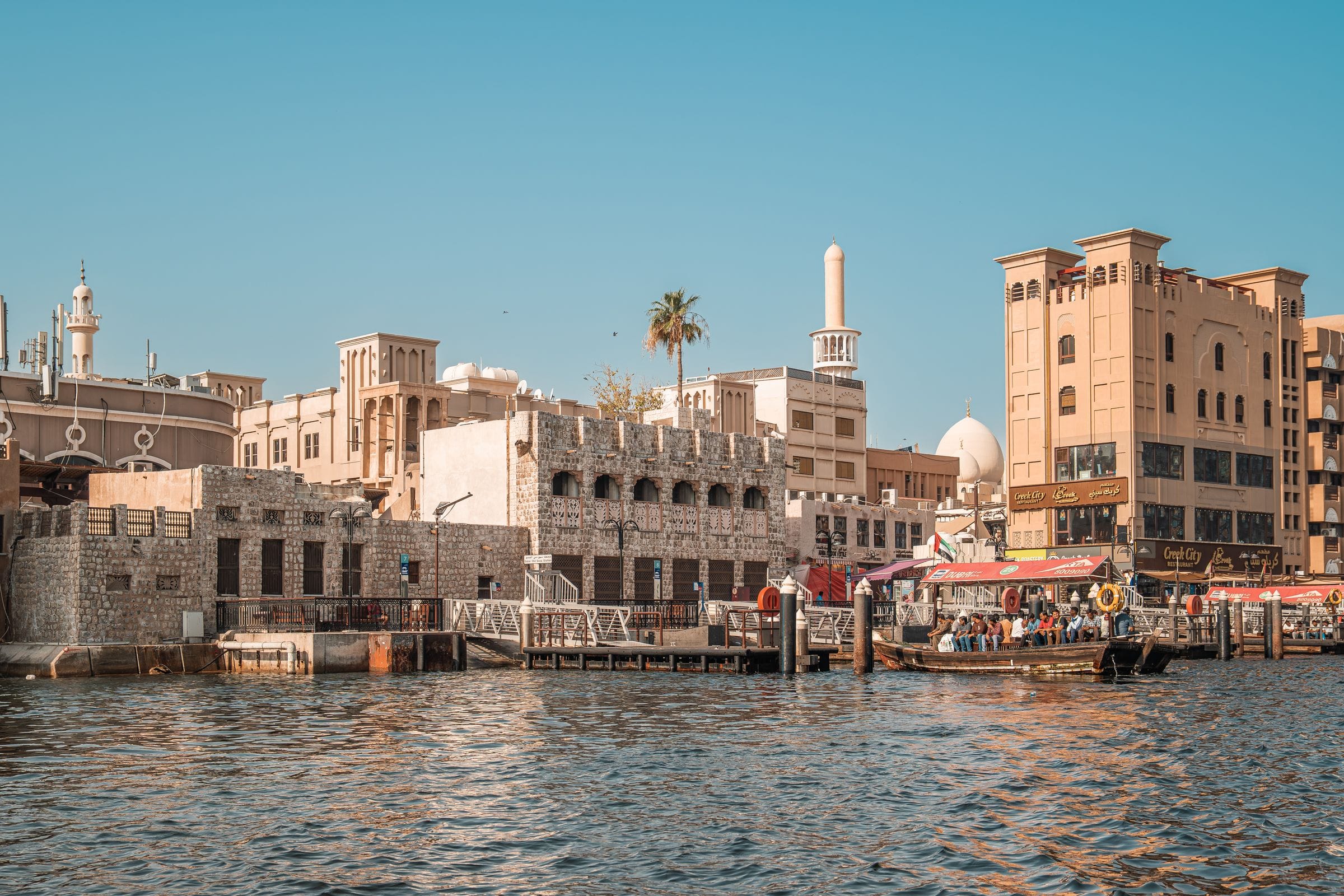
Dubai’s best food isn’t sold in the malls but in the small cafeterias of the old districts. There, karak costs a couple of dirhams, shawarma is wrapped in front of you, and the queue for kebabs is made of people who’ve lived here for decades.
I run a food tour every week, and I know how easy it is to get lost in the choice. This post covers what to try, which neighbourhoods to explore, how to order and how to put together a street food evening on your own.
What street food in Dubai actually is
Dubai’s street food isn’t only Emirati cooking. Most of what the cafeterias sell was brought to the city by people who came here to work: from India, Pakistan, Iran, Lebanon and Syria. So in one evening you can try five cuisines without leaving the old town.
There’s a local institution too: the cafeteria. These are small cafes with a serving window that stay open late. Many customers never get out of the car: they pull up, order and eat inside. Cafeterias are often run by people from Kerala, and the regulars are known by name.
What to try: a short list
Karak chai
Strong black tea brewed with milk, sugar and cardamom. Every cafeteria has its own spice recipe and brewing time. People drink karak at any hour, and simple places serve it in small glasses. If you want to feel the city, start here.
I don’t know anyone who doesn’t love karak. It came to the region from India and is a variation of masala chai. In December 2025 I shared my home recipe in my stories: 2 teaspoons of black tea, a spoonful each of cardamom and cinnamon, 3–4 cloves, 200 ml of milk and 350 ml of water, all boiled together. And my basic order in the old town is a chicken shawarma, a watermelon juice (ask for no ice and no sugar) and a karak.
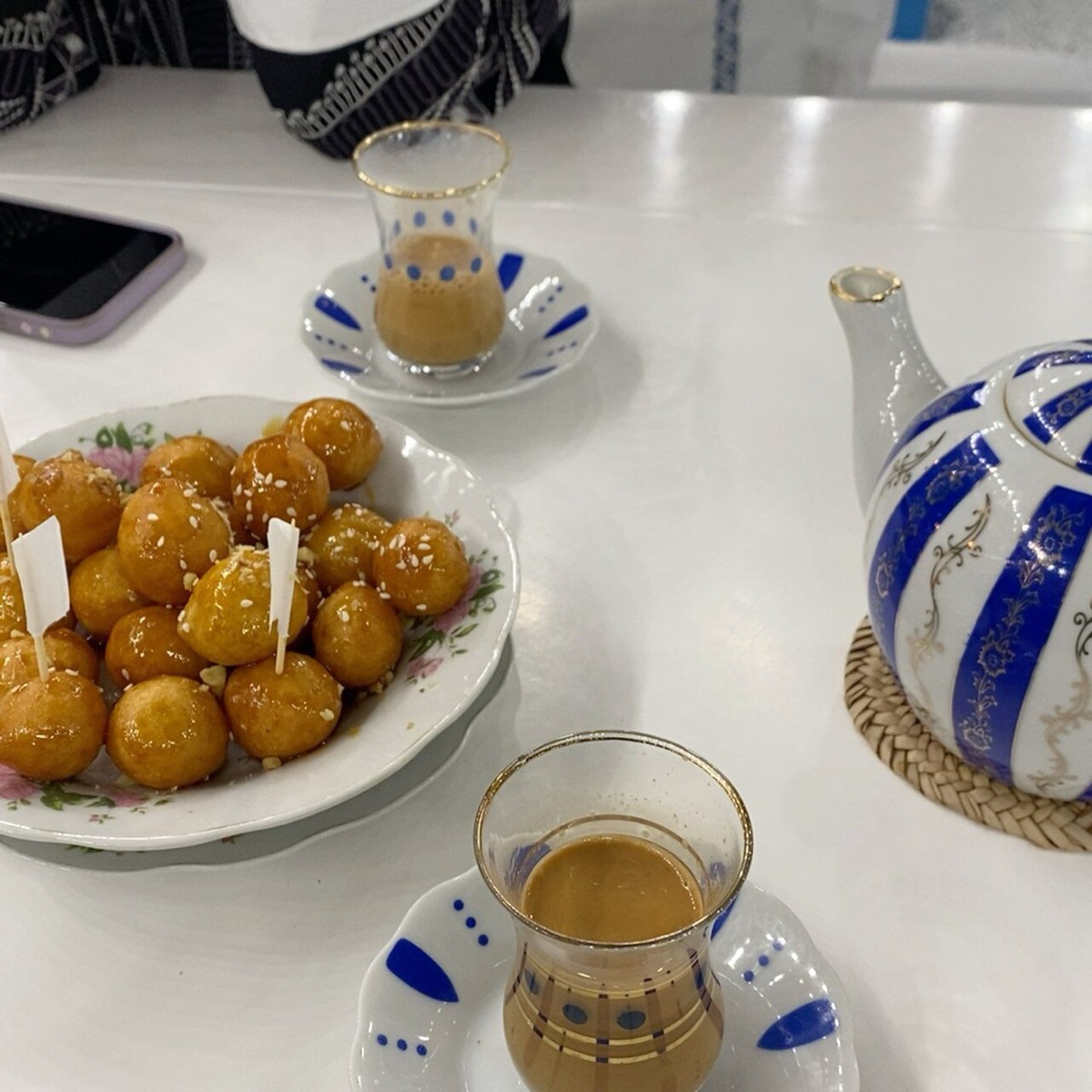
Luqaimat with date syrup and karak: the classic pair. Photo: Rawan Rayef, CC BY-SA 4.0, Wikimedia Commons.
Luqaimat
Crunchy dough balls fried golden and drizzled with date syrup and sesame. It’s an Emirati dessert, sold both at street stalls and in Emirati restaurants. On my tour I explain why these “doughnuts” are considered the healthiest dessert in the UAE.
Regag and chebab
Regag is a thin, crisp flatbread cooked on a griddle and folded around cheese, honey or egg. Chebab is a fluffy yellow pancake made with saffron and yeast. Both are Emirati breakfasts, easy to find in the morning at cafes serving old-style cooking.
Shawarma
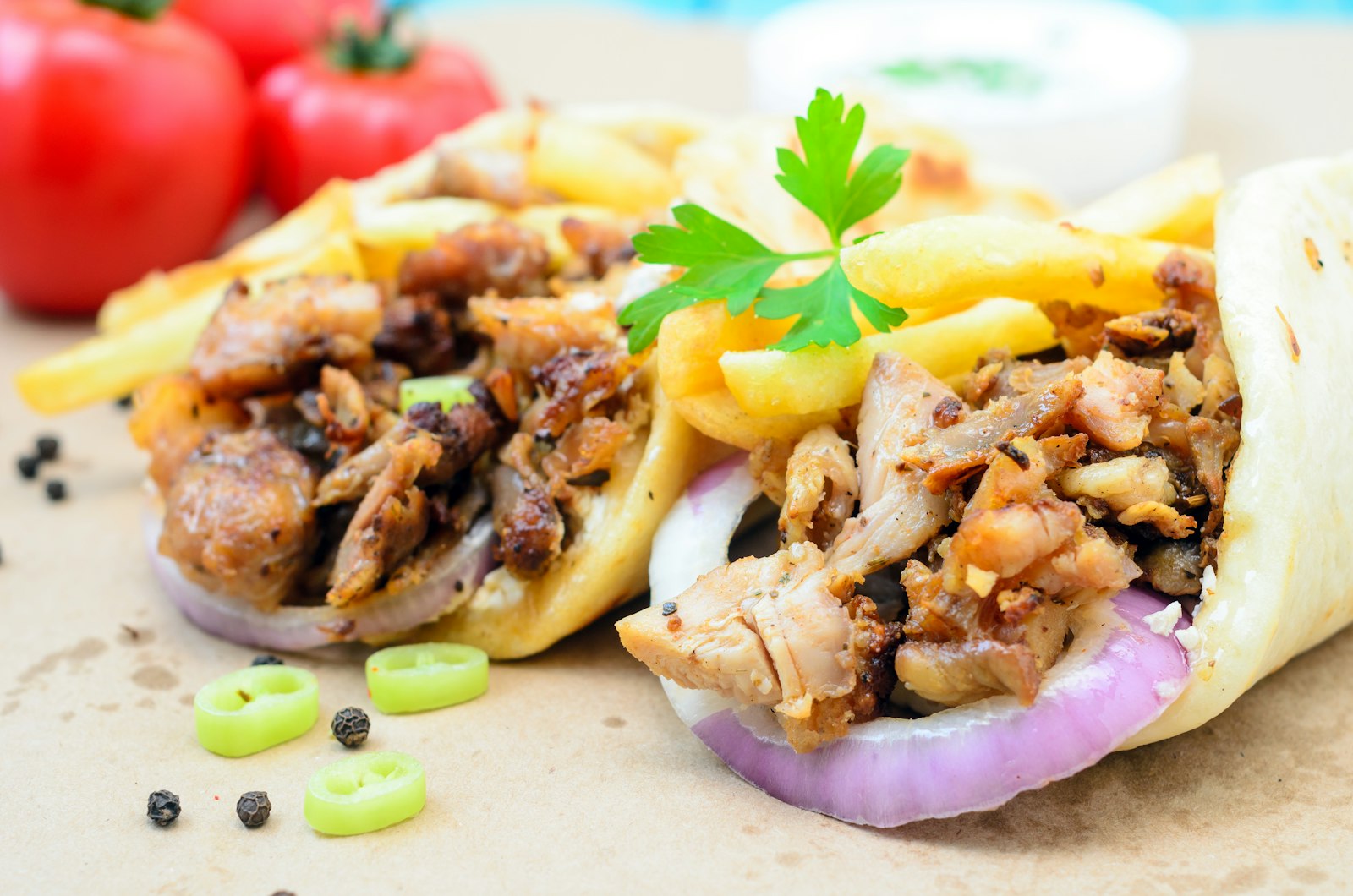
Here people eat it at any time. Chicken shawarma is usually wrapped with pickles, garlic paste and fries; beef and lamb come with tahini, onion and tomatoes. If you already know shawarma, try it side by side with manakish.
Manakish
A Lebanese flatbread from the oven topped with za’atar, cheese or a mix of both. It’s best hot, straight from a Lebanese bakery.
The Chips Oman sandwich
The Emirati food meme. A flaky paratha is filled with processed cheese, hot sauce and crushed Chips Oman, sometimes with an omelette. It sounds strange, but it’s a cafeteria classic across the country.
Biryani, Iranian kebab, Pakistani food
Biryani is spiced rice with meat or chicken, cooked in the Indian and Pakistani cafes of Karama and Bur Dubai. Iranian kebabs are grilled over charcoal and served with saffron rice and flatbread. Pakistani food means above all karahi and handi: meat stewed in a metal pot with tomatoes and spices.
Neighbourhoods: where to look
Bur Dubai and Al Fahidi. The easiest place to start. This is home to Al Khayma Heritage Restaurant, an Emirati restaurant with a Bib Gourmand. Michelin inspectors recommend the bread baked in front of guests, a lamb machboos to share and luqaimat for dessert. Nearby, in Mankhool by Al Fahidi metro station, is Al Ustad Special Kabab, serving Iranian kebabs since 1978. A walk through the district pairs well with my Old Dubai walking route.
Deira. Old streets that smell of spices, small cafeterias and places serving mandi. At the Waterfront Market you can buy fresh fish and have it cooked at the kitchens next door. On the Creek, on the second floor of the Radisson Blu hotel, is Shabestan, a Persian restaurant with a view of the Creek run by the third generation of one family. According to the Michelin Guide its signature dish is kashk-e bademjan, an aubergine dish, and it also has a Bib Gourmand.
Karama. The district for Indian, Pakistani, Keralan and Filipino food. Here, at Al Hara Cafeteria, karak cost 1–2.5 AED a glass according to Gulf News in May 2025.
Satwa. Home to the original Ravi, a Pakistani restaurant that opened in 1978. Satwa also has Al Mallah, known for shawarma, falafel and fresh juices. Other places in the city trade under the Ravi name, but their link to the Satwa restaurant is disputed, so if you’re going for the legend, head to Satwa.
Then there’s Berenjak, the London Iranian restaurant that holds a Bib Gourmand in Dubai. It’s at Dar Wasl on Al Wasl Road and is known for charcoal kebabs and mezze. It isn’t street food, but it’s a good step from cafeteria to restaurant. If you want to go further, to the level of stars, I have a separate guide to Michelin restaurants in Dubai.
What it costs
Street food is the cheapest way to eat in Dubai. Benchmarks I found in reviews:
- karak at a simple cafeteria in Karama: 1–2.5 AED (Gulf News, May 2025); in trendy cafes 5–7 AED and up;
- shawarma in the older districts: about 8–15 AED (The Better Vacation review, 2026);
- biryani: about 15–25 AED a portion (same review, 2026).
These are benchmarks, not a price list. Prices change, so check the menu on the spot. Keep a little cash for the small cafeterias; more on that in my guide to money and cards in Dubai.
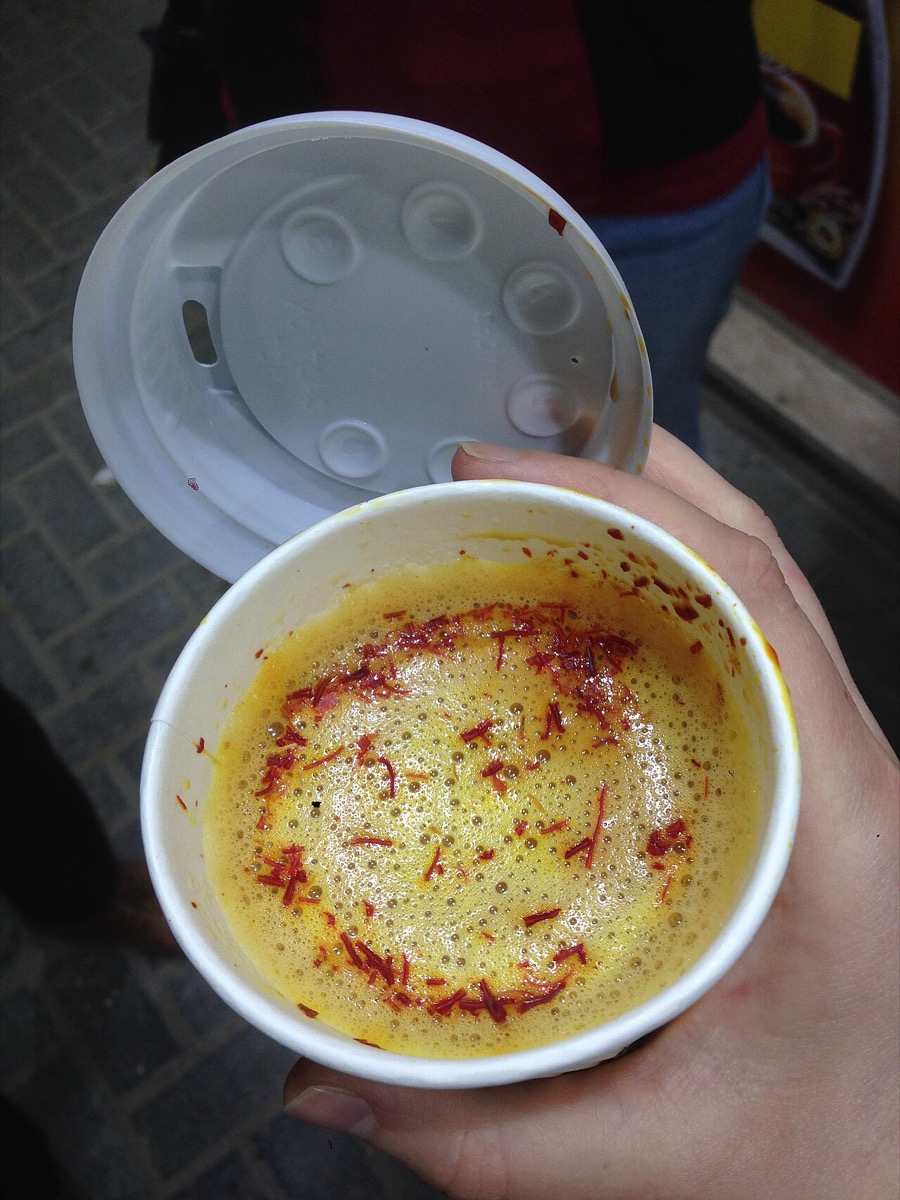
Saffron karak to go: this is how people drink it on the move in the old districts. Photo: Carole Marxer, CC BY-SA 4.0, Wikimedia Commons.
How to order
- Order a little at several places. One shawarma here, one karak there. That turns the evening into a route rather than one heavy dinner.
- Spice level. In Indian and Pakistani cafes, say “not spicy” or “medium”. For locals, “a little spicy” can be very spicy.
- Portions. Biryani and karahi are often meant for two. Ask about the size before you order.
- Eating in the car. If you’re driving, you can order from a cafeteria’s serving window without getting out. It’s normal local practice.
- With your hands. If you eat with your hands, use your right hand.
Hygiene and comfort
Choose busy places with a high turnover: the food is fresh. A good sign is meat grilled and bread baked in front of you. If your stomach is sensitive, start with bread, kebabs and shawarma, and try raw salads and sauces later. Carry wet wipes and water.
The best time for street food is the evening. From October to April you can walk between stops; in summer I suggest driving between them and eating indoors with air conditioning.
Ramadan and Fridays
Ramadan. Most cafes and restaurants stay open in the daytime for people who aren’t fasting, but some change their hours and open fully for iftar. Eating and drinking on the street in front of people who are fasting is impolite during the day, even without a formal ban. After iftar, though, the old districts come alive, and some places stay open until suhoor. More in my guide to Ramadan in Dubai for tourists.
Fridays. Since January 2026 the Friday sermon and prayer in all UAE mosques start at 12:45. Around that time the areas near mosques are busy, so I plan Friday street food for the evening.
How to plan a street food evening on your own
A realistic 3–4 hour plan for the cooler season:
- 16:30, Al Fahidi. A walk through the district, karak and luqaimat.
- 17:30, an abra across the Creek. The boat crossing to Deira and the Spice Souk.
- 18:30, Deira. Shawarma or manakish at a cafe in the old streets.
- 19:30, taxi to Satwa or Karama. A Pakistani or Indian dinner: karahi, biryani.
- 21:00, one last karak. And dessert, if there’s still room.
Allow time for taxis between districts: the old areas can be congested in the evening. If you’d like a guided walk through the old town, look at my Old Dubai tour. And general advice on choosing a restaurant for the occasion is in my post on where to eat in Dubai.
How I can help
If you’d rather not work it all out yourself, join my Culinary Tour. It’s a 4-hour street food tour in a BMW X7 for up to 6 people: I pick you up at your hotel and we drive to the most unusual street food stops. You’ll find out where they make the best shawarma, which tea locals prefer and why doughnuts are the healthiest dessert in the UAE. We’ll try dishes from the Emirates, India, Yemen, Syria and Pakistan, have lunch at a restaurant the Ruler of Dubai is fond of, and stop at a street cafe made famous by the hosts of the Russian travel show Oryol i Reshka (Heads and Tails).
As of October 2026 the tour costs 1,470 AED per car for 1–4 guests and 1,655 AED for 5–6 guests. Food isn’t included: expect 75–180 AED per person. There’s also a shorter format: a 3-hour local food tour by convertible for up to 3 guests, 1,280 AED per car. All prices are on my prices page.
Come hungry.
Checked on 11 October 2026. Sources: MICHELIN Guide, Emirates 24|7, What’s On, The National, Gulf News, Khaleej Times, New Lines Magazine.
Practical answers
Frequently asked questions
What street food should I try in Dubai?
Karak chai, shawarma, manakish, regag, luqaimat, a Chips Oman paratha sandwich, biryani, Iranian kebab and Pakistani karahi. It isn't only Emirati food: Dubai's street food is cooked by people from India, Pakistan, Iran and the Levant.
Where is the best street food in Dubai?
In the older districts: Deira, Bur Dubai with Al Fahidi, Karama and Satwa. You can eat in Downtown and Dubai Marina too, but there it's mostly restaurants and food courts rather than cafeterias.
How much does street food cost in Dubai?
Little by the city's standards. According to 2025–2026 reviews, shawarma in the older districts costs about 8–15 AED, and a glass of karak at a simple cafeteria in Karama 1–2.5 AED. Prices change, so check the menu on the spot.
Is street food in Dubai safe to eat?
Usually yes, if you choose busy places and food cooked in front of you. For first-timers I suggest starting with mild dishes and asking for not spicy, then trying the hot stuff a little at a time.
Can I eat outside in Dubai during Ramadan?
In the daytime it's better to eat indoors: most cafes serve people who aren't fasting, but eating on the street in front of people who are fasting is impolite. After iftar the old districts come alive, and that's the best time for street food.
Is there a guided food tour in Dubai?
Yes, my Culinary Tour: 4 hours in a BMW X7 with hotel pick-up, up to 6 people. There's also a shorter format: a 3-hour street food tour by convertible for 1–3 guests.