It’s easy to take the Emirates for a country of skyscrapers and malls. But step out of the car in old Dubai, walk into a majlis or catch a wedding dance, and you see that the traditions haven’t gone anywhere. They just don’t push themselves forward.
I’ve lived in the UAE for more than 15 years, and every week I show guests the old town and the desert. The questions I hear most are always the same: how to behave so as not to offend anyone, and where to see real traditions rather than a show. Here is a short guide.
Hospitality: coffee, dates and the majlis
The first thing you’ll meet is Arabic coffee, gahwa. It’s served in hotels, in people’s homes and at desert camps, often with a plate of dates. It isn’t just a drink but a signal: you’re welcome here.
Dates come with coffee almost every time, and there’s a fine point here. In spring 2026 I filmed two dates of the same variety, medjool, for my Instagram: the only difference between them was freshness. At the market, ask for the freshest ones, from the fridge. The local harvest comes at the end of summer, and the tastiest dates, to my mind, are from Abu Dhabi: sometimes I stop at the market for them after a tour.
UNESCO has inscribed Arabic coffee on its intangible heritage list as a symbol of generosity. The rules are simple:
- elders and guests are served first;
- the cup is poured and taken with the right hand;
- when you don’t want any more, gently shake the cup: the host will understand you’ve finished.
If you simply put down an empty cup, you’ll most likely get a refill. That isn’t pushiness, it’s good manners.
Coffee is usually drunk in the majlis, literally “the place where people sit”. It’s a large room with rugs on the floor and cushions along the walls. Here people discuss the news, receive guests, reconcile neighbours, offer condolences and celebrate weddings. Women have their own majlis. The majlis is on the UNESCO list too, together with Saudi Arabia, Oman and Qatar.
Greetings
Emirati men greet each other by touching noses, then shake hands, embrace and wish each other peace. It’s a gesture among their own: nobody expects it from a visitor.
A simple “as-salamu alaykum”, or just “hello” with a smile, is enough for a tourist. My one piece of advice: if you’re a man meeting an Emirati woman, wait to see whether she offers her hand. Many don’t shake hands with men, and it isn’t rudeness.
What Emiratis wear
- Kandura: the long, usually white robe worn by men.
- Ghutra: the headscarf, white or red-checked, and the agal, the black cord that holds it in place.
- Bisht: a cloak worn over the kandura on formal occasions. The finest were once woven from camel hair; in 2025 bisht making was added to the UNESCO list.
- Abaya: the long black over-garment worn by women, with the shayla, a headscarf.
Nobody expects tourists to wear national dress. In the city, covered shoulders and knees are appropriate, and swimwear is for the beach and the pool only. Mosques are stricter: at Sheikh Zayed Grand Mosque women need loose, ankle-length clothes with sleeves to the wrist and a headscarf, and men need long trousers and a shirt with sleeves.
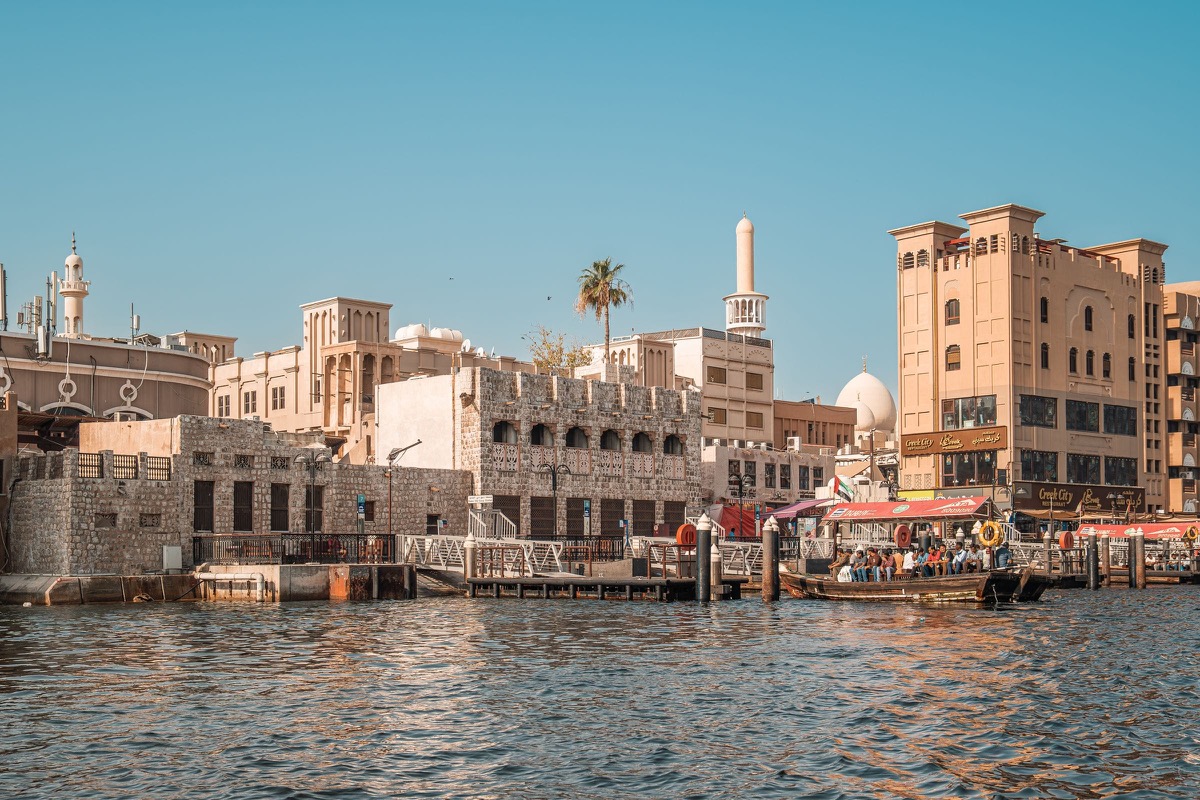
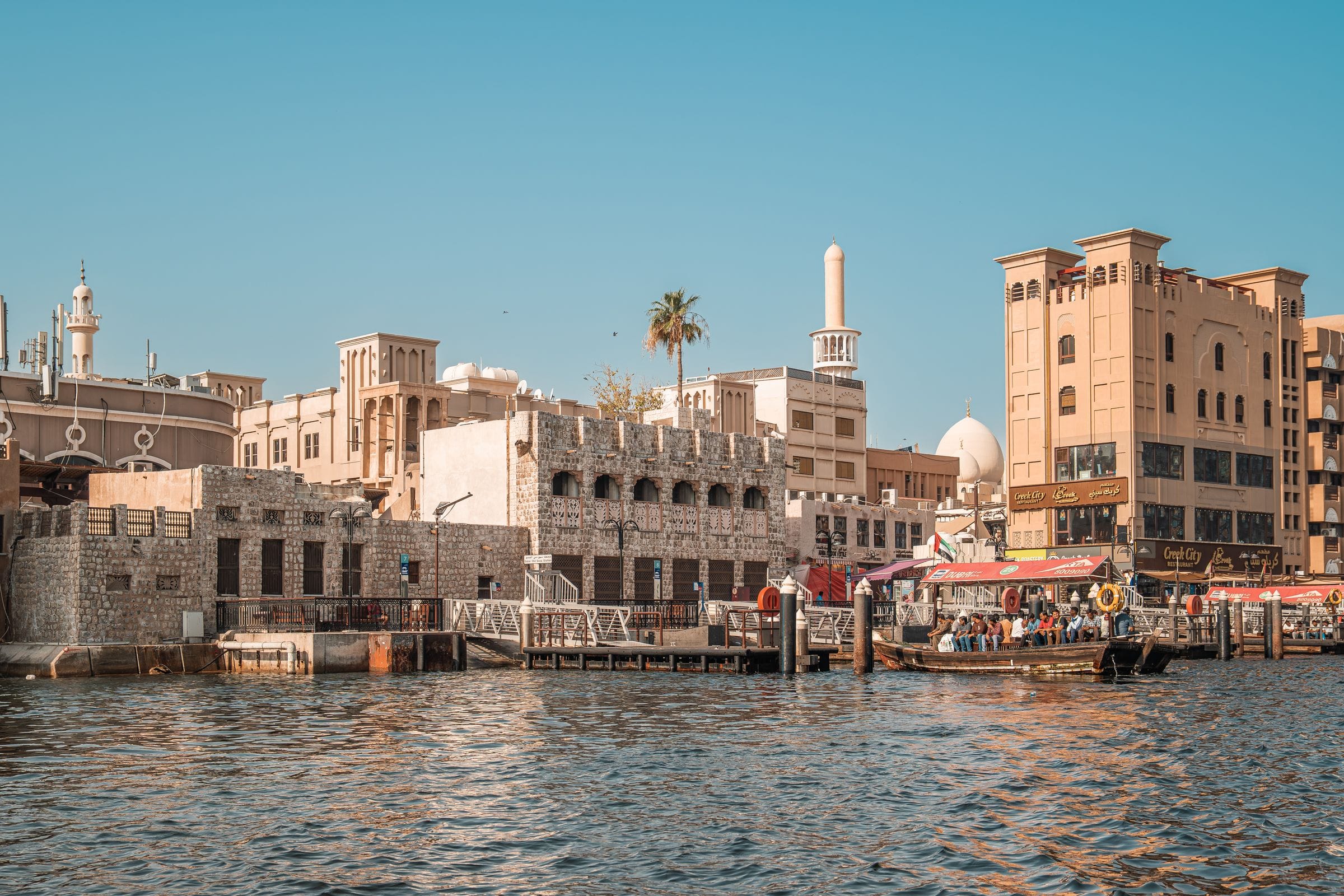
Old Dubai on the Creek: wind towers, minarets and abras. This is the easiest place to start getting to know the traditions. Photo: mikecogh, CC BY-SA 2.0, Flickr
Falcons
Falconry is one of the oldest traditions on the peninsula. It began as a way to find food in the desert; today it is a sport and a source of national pride. UNESCO inscribed it as the shared heritage of 24 countries, the UAE among them.
Falcons here are treated like members of the family. Abu Dhabi has a dedicated falcon hospital: at the end of the hunting season the birds have a check-up, and every one of them is microchipped.
The easiest way to see a falcon at work is on a traditional desert safari: a falcon show at sunset, Arabic coffee and dates at the camp, henna and camel rides.
Camel racing and robot jockeys
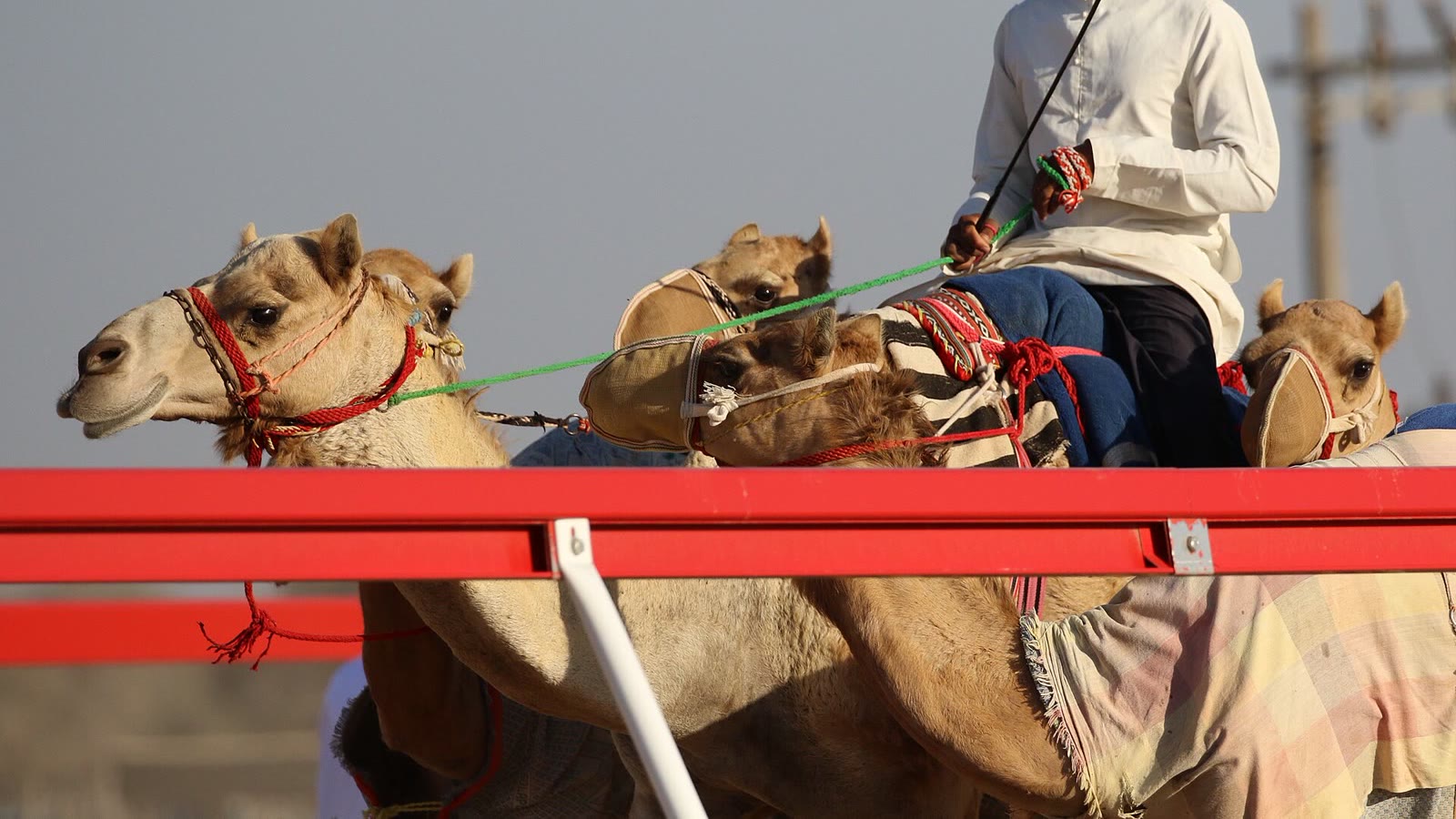
Camel races used to be held at weddings, celebrations and when sheikhs visited the Bedouin. Today it’s an organised sport with prizes in the millions of dirhams. In 2020 UNESCO inscribed camel racing for the UAE and Oman. A race usually has 15–20 camels, and the distance depends on the animals’ age.
The jockeys are what surprises guests most. By 2005 the UAE and Qatar had banned the use of children as riders. Now a small robot with a remote-controlled whip sits on the hump, while the trainer drives alongside on the road in a 4x4 and gives commands through a speaker. During a race a whole convoy of cars speeds along the track, and that’s a sight in itself.
Dances: al-ayyala and al-razfa
At weddings and national celebrations you may see al-ayyala. Two lines of men, about twenty in each, face each other holding thin bamboo canes in place of spears and swords. Drummers stand between them, and in the UAE girls in traditional dresses sometimes stand at the front, swinging their long hair. It depicts a battle, and people of any age can take part. Al-ayyala has been on the UNESCO list since 2014, for the UAE and Oman.
Al-razfa is similar: two lines again, a song sung in turns and dancers with wooden replica rifles. It was once a victory celebration; today it’s danced at weddings and on national holidays. Al-razfa has been on the UNESCO list since 2015.
Henna and crafts
Henna is part of celebrations: the birth of a child and weddings. In 2024 UNESCO inscribed henna traditions for 16 Arab countries at once, including the UAE. You can try henna at a desert safari camp or at heritage festivals.
Another craft worth noticing is al sadu, Bedouin weaving with bright geometric patterns. In 2025 UNESCO moved al sadu onto the main heritage list for the UAE.
Ramadan, Eid and National Day
The time when traditions are most visible is Ramadan. Muslims fast during the day, and in the evening the whole country gathers for iftar. I explain how tourists should behave at that time in my guide to Ramadan in Dubai. After Ramadan comes Eid Al Fitr, and a little over two months later Eid Al Adha. Islamic holiday dates depend on the moon and are announced close to the time.
National Day is 2 December: on that day in 1971 the emirates united as one country. The holiday is 2 and 3 December. Cars and houses are decorated with flags, and there are fireworks and concerts in the streets.
Etiquette: dos and don’ts
Do:
- accept coffee and dates when they’re offered;
- take food and pass things with your right hand;
- ask permission before photographing people;
- dress more modestly in the old town, at the souks and in government offices;
- keep your voice down in mosques and museums.
Better not:
- photograph women and families without asking;
- kiss and hug in public;
- argue about religion and politics;
- point at people with your finger or sit with the soles of your shoes facing someone;
- eat and drink openly in the street during the day in Ramadan.
Where to see the traditions
- Al Fahidi (Bastakiya) and Al Shindagha: the old quarters by the Creek, with wind towers, museums and galleries. I show them on my Old Dubai tour, and there’s a self-guided route in my old Dubai walking route.
- Sheikh Mohammed Centre for Cultural Understanding (SMCCU) at House 26 in Al Fahidi. Its motto is “Open Doors. Open Minds.” It runs Emirati breakfasts of about an hour and a half with a conversation about traditions, and tours of Jumeirah Mosque.
- Heritage Village in Abu Dhabi, on the breakwater by Marina Mall. A souk, a mosque, a camp, potters, glassblowers and a loom.
- Sheikh Zayed Festival in Al Wathba, Abu Dhabi: a winter festival with a heritage village, crafts, country pavilions and fireworks on Saturdays. Check the festival website for the season’s dates.
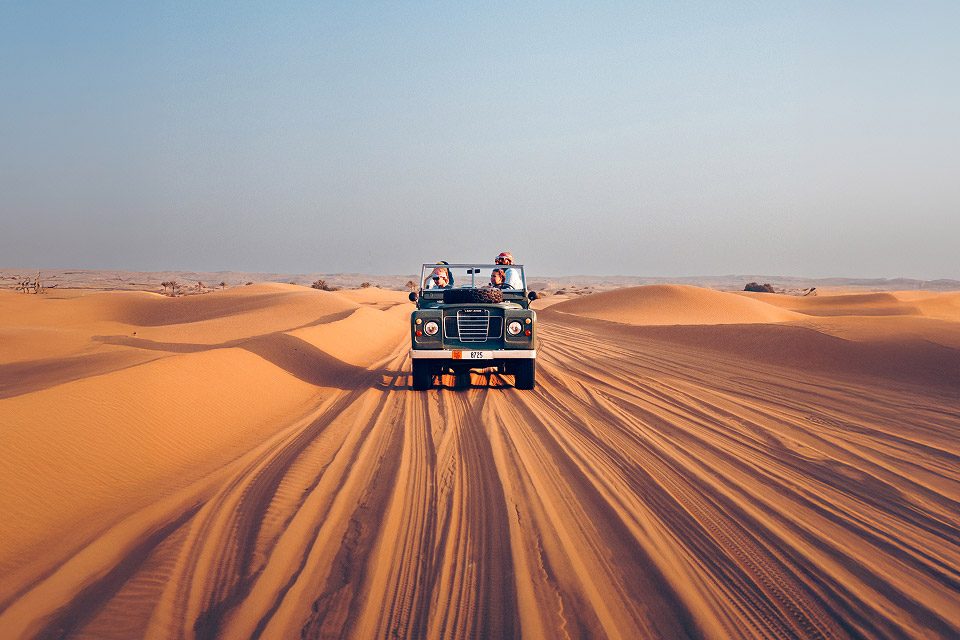
- The desert: a traditional safari in the conservation reserve with vintage Land Rovers, falcons and a Bedouin camp.
How I can help
I don’t show traditions from a textbook but where people live them: on my Old Dubai tour we cross the Creek by abra and walk into the souks and the wind-tower houses. For those who want the desert without the adrenaline, I book the traditional safari with falcons, and on the Abu Dhabi day tour there’s Sheikh Zayed Grand Mosque and Qasr Al Hosn. Tell me what interests you, and I’ll put together a programme for you.
Checked on 11 October 2026. Sources: UNESCO intangible cultural heritage lists, UAE government portal u.ae, Experience Abu Dhabi, Sheikh Zayed Grand Mosque visitor rules (szgmc.gov.ae), SMCCU website (cultures.ae).
Practical answers
Frequently asked questions
What are the main traditions in the UAE?
Hospitality with Arabic coffee and dates, the majlis, falconry, camel racing, the al-ayyala and al-razfa dances, henna and al sadu weaving. Many of them are on the UNESCO intangible heritage lists.
How do you drink Arabic coffee as a guest?
Take the cup with your right hand, and when you don't want any more, gently shake it: the host will understand you've finished. Elders and guests are served first.
How should tourists dress in the UAE?
In the city and in malls, covered shoulders and knees are always appropriate; swimwear is for the beach and the pool only. At Sheikh Zayed Grand Mosque women need long, loose clothes with long sleeves and a headscarf, and men need long trousers.
Can I take photos of local people?
Only with permission. This matters most with women and families: ask first, and don't take offence if the answer is no.
Where can I see UAE traditions in Dubai?
In the Al Fahidi and Al Shindagha historic districts, at the Sheikh Mohammed Centre for Cultural Understanding, on a traditional desert safari with falcons and, in winter, at the Sheikh Zayed Festival in Abu Dhabi.
When is UAE National Day?
On 2 December: the union of the emirates began on that day in 1971. The holiday is 2 and 3 December, and streets and houses are decorated with flags well in advance.