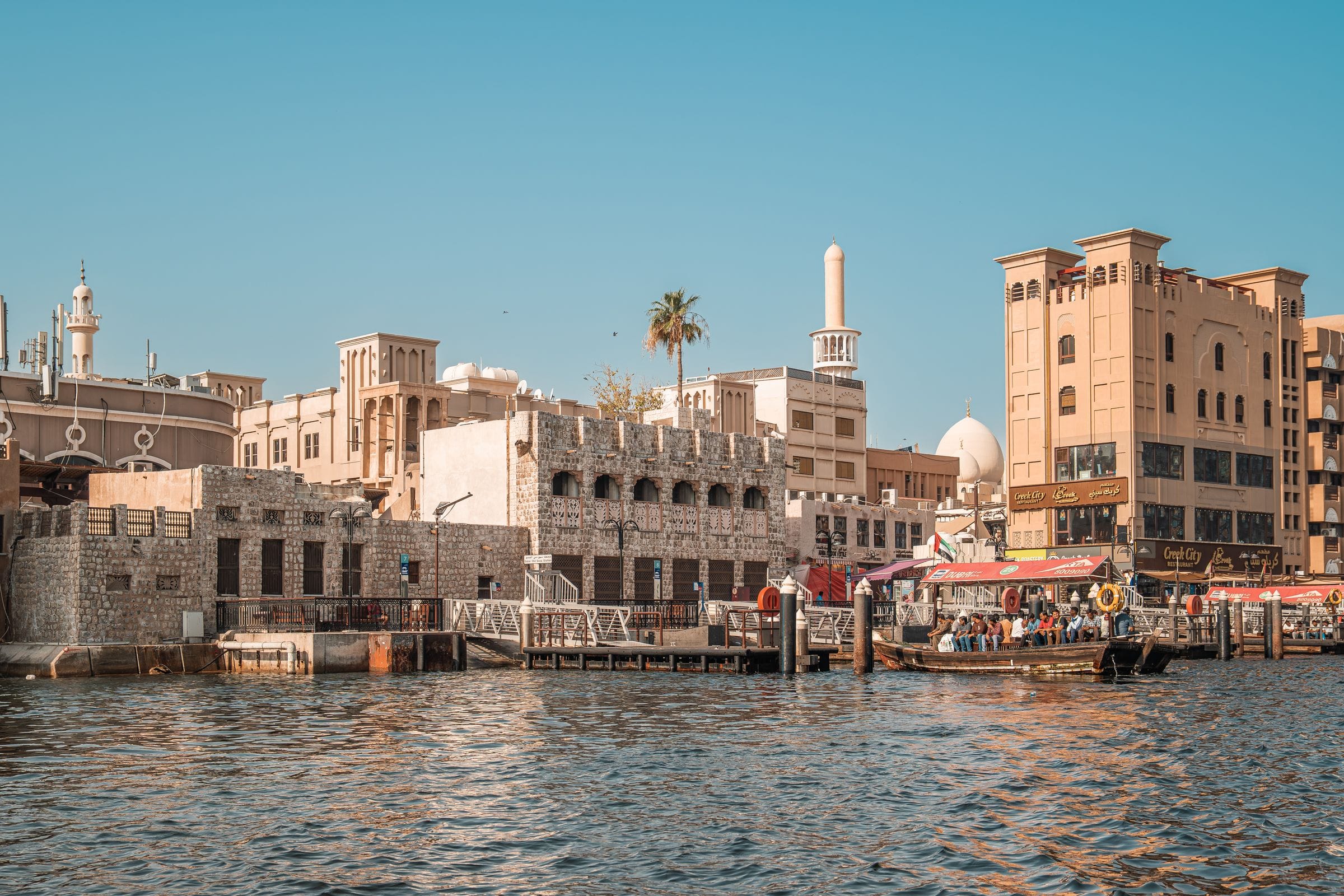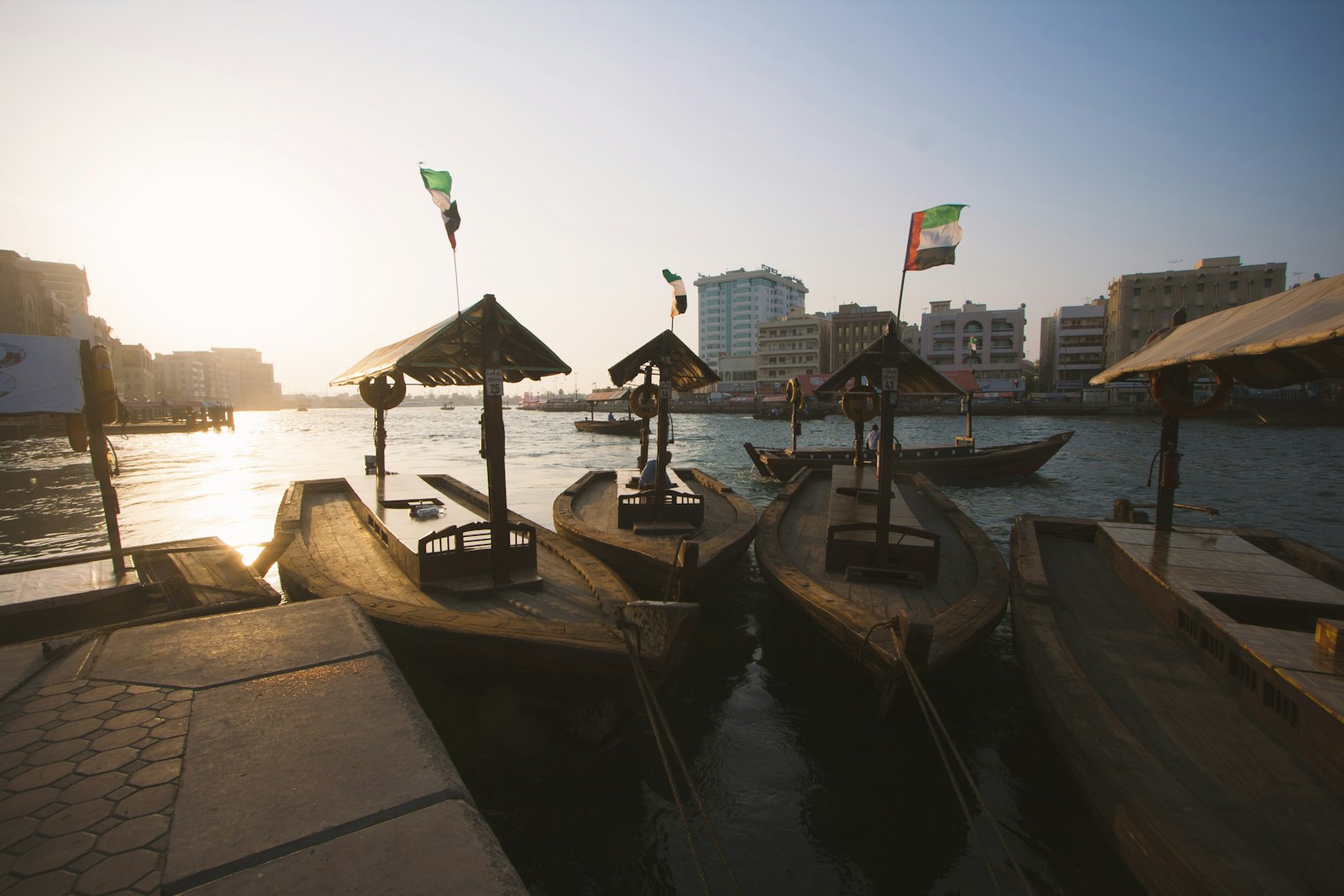
Almost every guest asks me the same question: “What was here before?” The answer fits into one inlet. Dubai grew up on Dubai Creek, a narrow arm of the sea where people fished, dived for pearls and traded. Everything since, from Jebel Ali port to the Burj Khalifa, continues the same idea: make trading here easier than anywhere else.
Below is the history of Dubai in the dates I use on my tours, plus a plan for seeing it with your own eyes in a single day.
Before 1833: an inlet, fish and pearls
People lived here long before the city. The first written mention of Dubai is usually dated to 1095, in the Book of Geography by Abu Abdullah al-Bakri. But Dubai as the settlement that grew into today’s city counts its history from 1833.
That year about 800 members of the Bani Yas tribe, led by the Al Maktoum family, came to the Creek and settled on its bank. Maktoum bin Butti became the first ruler. One dynasty has ruled Dubai ever since: the current ruler, Sheikh Mohammed bin Rashid Al Maktoum, is the tenth. I cover the ruling houses of all seven emirates in a separate post, the ruling families of the UAE.
The Creek was a natural harbour. Fishermen and pearl divers lived here, and trading boats called in. Pearls stayed the coast’s main source of wealth for a long time, a story I tell in detail in the UAE before oil.
1901: the free port
The decision that shaped Dubai’s character was the free port. In 1901 the fifth ruler, Sheikh Maktoum bin Hasher Al Maktoum, made Dubai a port without trade duties. Gulf News dates the end of customs fees to 1902: when Iranian ports raised their taxes, merchants started shipping goods through the Creek instead.
Dubai still runs on that logic today: free zones, low barriers and a welcome for traders from the whole region. The merchant Dubai of those years is easiest to imagine in the Al Fahidi district, among the wind-tower houses right by the Creek.
1920s to 1950s: the end of the pearl era
In the 1920s the pearl trade collapsed. The history museum at The View at The Palm gives three reasons: the First World War, the Great Depression and Japanese cultured pearls, which were cheaper than natural ones. For a coast that lived on pearls, it was a hard blow.
Sheikh Saeed bin Maktoum ruled Dubai from 1912 to 1958. The first land reclamation project began in the 1950s: Dubai’s airport started life as a single runway of compacted sand laid over salt flats.
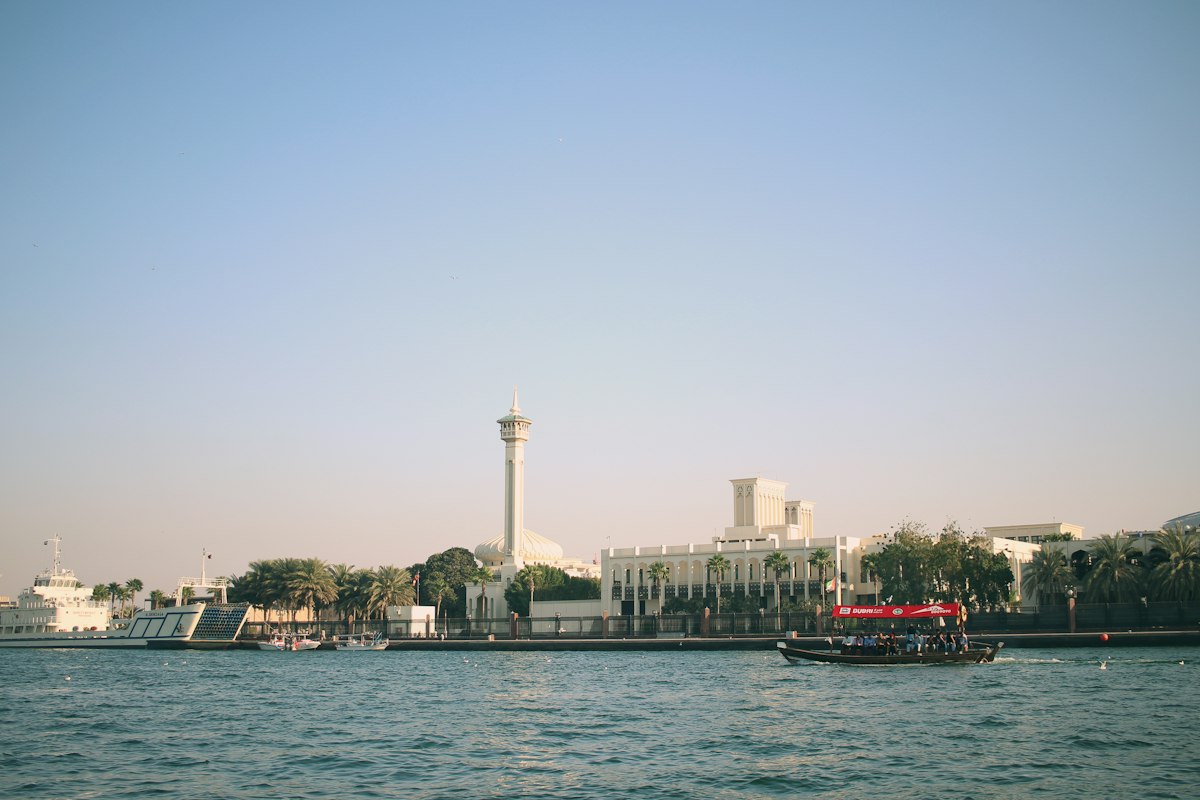
Bur Dubai from the water. Until Al Maktoum Bridge opened in 1962, people crossed the Creek on foot at low water or by abra. Photo: J Shim, Unsplash.
1958 to 1990: Sheikh Rashid and the decision to dredge the Creek
Sheikh Rashid bin Saeed Al Maktoum became ruler in 1958 and ruled until 1990. The official UAE portal credits him with turning the emirate into a modern, thriving city. One of his first big projects was the Creek itself.
The Creek was silting up, and large vessels couldn’t get in. In 1958 Sheikh Rashid borrowed 400,000 pounds sterling from the Emir of Kuwait, Sheikh Abdullah, to deepen it. According to British archive papers cited by The National, the British Bank of the Middle East arranged the loan, and Dubai paid it back in ten equal annual instalments. Work began in 1959, and afterwards ships of up to 500 tonnes could enter the Creek.
Notice the order of events: Dubai invested in its port before it found oil. In 1960 the city got its first master plan, in 1962 Al Maktoum Bridge across the Creek, and in 1967 it started building Port Rashid, which opened in 1972.
1966: oil, but not much of it
Dubai found oil in 1966, at the offshore Fateh field. The first export followed in 1969: about 180,000 barrels. With the first shipments came a period of rapid building.
But the reserves were modest. Gulf News reports that production peaked in 1991 at 410,000 barrels a day and has fallen since. So Dubai started thinking almost immediately about life after oil: trade, logistics and the people who come here.
In 1971 Dubai, together with Abu Dhabi and the other emirates, became a founding member of a new country. I explain how that happened in how the UAE was formed.
1979: Jebel Ali port
In 1975 Sheikh Rashid decided that growing trade needed a new port, far bigger than the old one, and 40 km from the city of the time, practically in the desert.
Jebel Ali port opened on 26 February 1979. Queen Elizabeth II came for the opening on the royal yacht Britannia. Gulf News calls it the largest man-made harbour in the world, and in the 1990s the port doubled in size. According to The National, it is now the ninth busiest container port in the world.
1985: Emirates airline
On 25 October 1985 flight EK600 took off from Dubai for Karachi. That was the start of Emirates: 10 million dollars of start-up capital and two aircraft leased from Pakistan International Airlines. Today Dubai is a major global hub, and many of our guests see the city for the first time on a layover (more on that in a Dubai layover tour).
I love telling guests this story, and in October 2023, on the anniversary of the first flight, I told it on my Instagram too. The airline was set up in about six months, and Sheikh Mohammed warned that there wouldn’t be a cent more than the budget. One of the biggest airlines in the world grew out of that modest start.
In the 1980s and early 1990s Dubai made a strategic decision to become a world-class tourist destination. The hotels, beaches, shopping festivals and man-made islands all come from that decision. For the most famous of the islands, read how Palm Jumeirah was built.
2006 to today: Sheikh Mohammed, the Burj Khalifa and Expo
On 4 January 2006 Sheikh Mohammed bin Rashid Al Maktoum, Sheikh Rashid’s son, became ruler of Dubai. The same year he became Vice President and Prime Minister of the UAE.
The Burj Khalifa opened on 4 January 2010. Guinness World Records lists it at 828 metres, the tallest building in the world. The developer was Emaar Properties and the architects were Skidmore, Owings & Merrill.
From 1 October 2021 to 31 March 2022 Dubai hosted the World Expo, Expo 2020. Over 182 days it recorded 24,102,967 visits, and 192 countries took part. Today people of more than 200 nationalities live and work in the emirate.
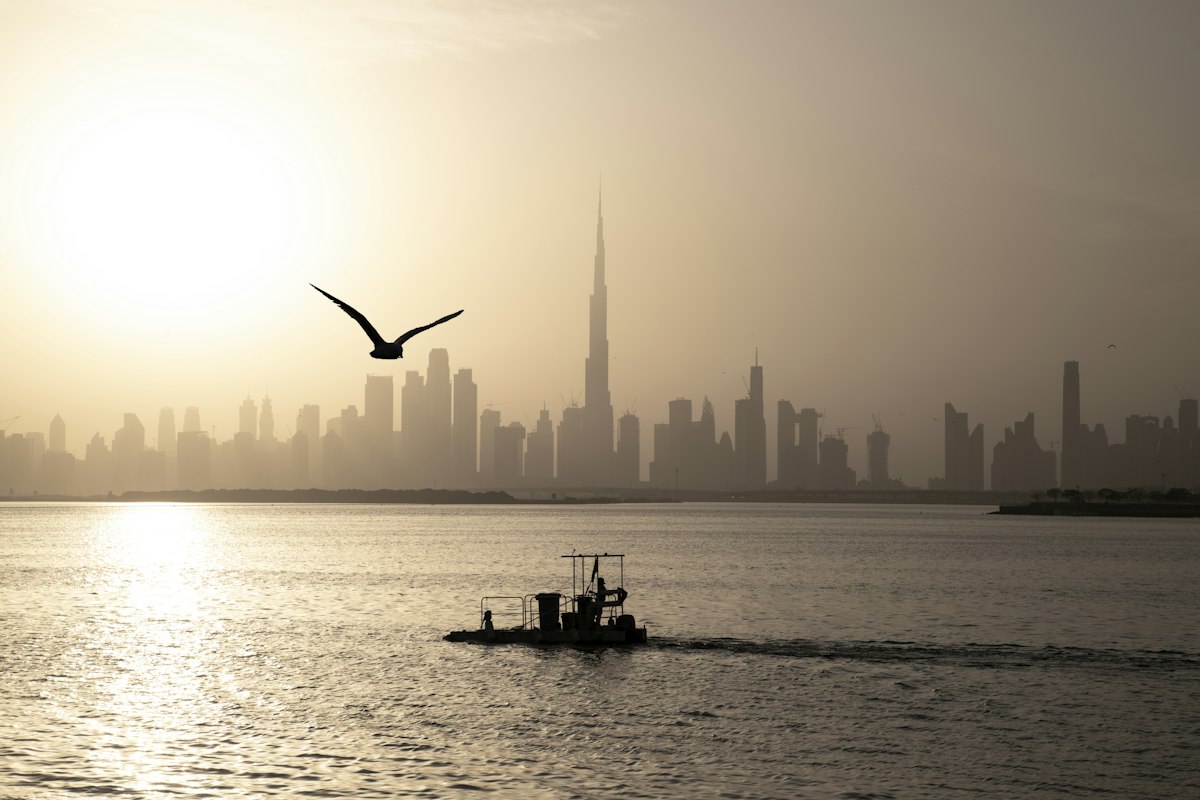
The same Creek, only at its mouth: from the water to the Burj Khalifa you can see almost the whole history of the city. Photo: Ziad Al Halabi, Unsplash.
How to see the history of Dubai in one day
I run my old Dubai programme every week, and I usually suggest following history in the order the city grew: from the water to the skyscrapers. A realistic plan for the day:
| Time | What to see | Why |
|---|---|---|
| 08:30–10:00 | Al Shindagha and the Al Shindagha Museum | The largest open-air museum in the UAE; its Dubai Creek: Birth of a City house |
| 10:00–11:30 | Al Fahidi historic district | Old houses by the Creek, wind towers, Arabic coffee |
| 11:30–12:00 | Abra across the Creek | Cross the way residents do |
| 12:00–13:30 | Spice and gold souks in Deira | The trade the port was built for |
| 13:30–15:00 | Lunch and a break | Indoors, always, in summer |
| 16:00–19:00 | Downtown and the Burj Khalifa | The city after 2000, sunset and the fountains |
My old Dubai walking route covers this on your own. If you want the view over the whole city, my guide to observation decks in Dubai will help you choose one.
A few practical tips:
- From October to April mornings and sunsets are comfortable for walking. In summer start by 8:30 and move the outdoor part to the evening.
- Museums and souks keep different hours: check museum times on the day, while souk shops usually stay open later.
- Comfortable shoes matter more than smart ones: the old town is paving stones and wharves.
- Don’t put the old town and the Palm in one day with the beach: history needs time and attention.
How I can help
I show old Dubai on my Old Dubai tour: Bastakiya, an abra across the Creek, the souks and Al Shindagha Museum, with the stories of pearls, merchants and Sheikh Rashid. If you want to see the city’s whole journey in one outing, from the old quarters to the Burj Khalifa and the Palm, the Arabian Dream city tour is the one: I pick you up from your hotel and set the route to your pace.
Checked on 11 October 2026. Sources: u.ae, Dubai Protocol Department, Dubai Culture, The National, Gulf News, Guinness World Records, Dubai Media Office.
Practical answers
Frequently asked questions
How old is Dubai?
As a town ruled by the Al Maktoum family, Dubai dates from 1833, so it is almost 200 years old. The first written mention of Dubai is usually dated to 1095, in the Book of Geography by Abu Abdullah al-Bakri.
Who founded Dubai?
In 1833 about 800 members of the Bani Yas tribe, led by Maktoum bin Butti, settled on Dubai Creek. Maktoum bin Butti became the first ruler, and the Al Maktoum family has ruled the emirate ever since.
When was oil discovered in Dubai?
In 1966, at the offshore Fateh field. The first oil was exported in 1969, production peaked in 1991 and has declined since.
Did Dubai get rich from oil?
Oil paid for the first big projects, but there was never much of it, and the city bet early on trade, ports, aviation and tourism. Dubai became a free port in 1901, long before oil.
Where can I see the history of Dubai?
In Al Shindagha, with its open-air museum, in the Al Fahidi historic district and on Dubai Creek with its abras and souks. The story of how the UAE was formed is told at Etihad Museum in Jumeirah.
Can you see old and new Dubai in one day?
Yes. Give the morning to Al Shindagha, Al Fahidi and an abra crossing, then head to Downtown and the Burj Khalifa in the afternoon. In one day you see the whole story, from the wharf to the tallest building in the world.